Heritage · Country
Marshall Islands Culture and Heritage
The Marshall Islands charts its memory in the swells of the open ocean and the mats woven for the dead, from the stick charts of its master navigators to the fine jaki-ed cloth passed between generations. It also keeps a graver memory in Bikini Atoll, inscribed by UNESCO as a place of remembrance for the nuclear age and the communities it displaced.Written to last.
By Confinity Heritage Editorial · Updated 2026-07-31 · 8-minute readQuiet tools, kept out of the way.
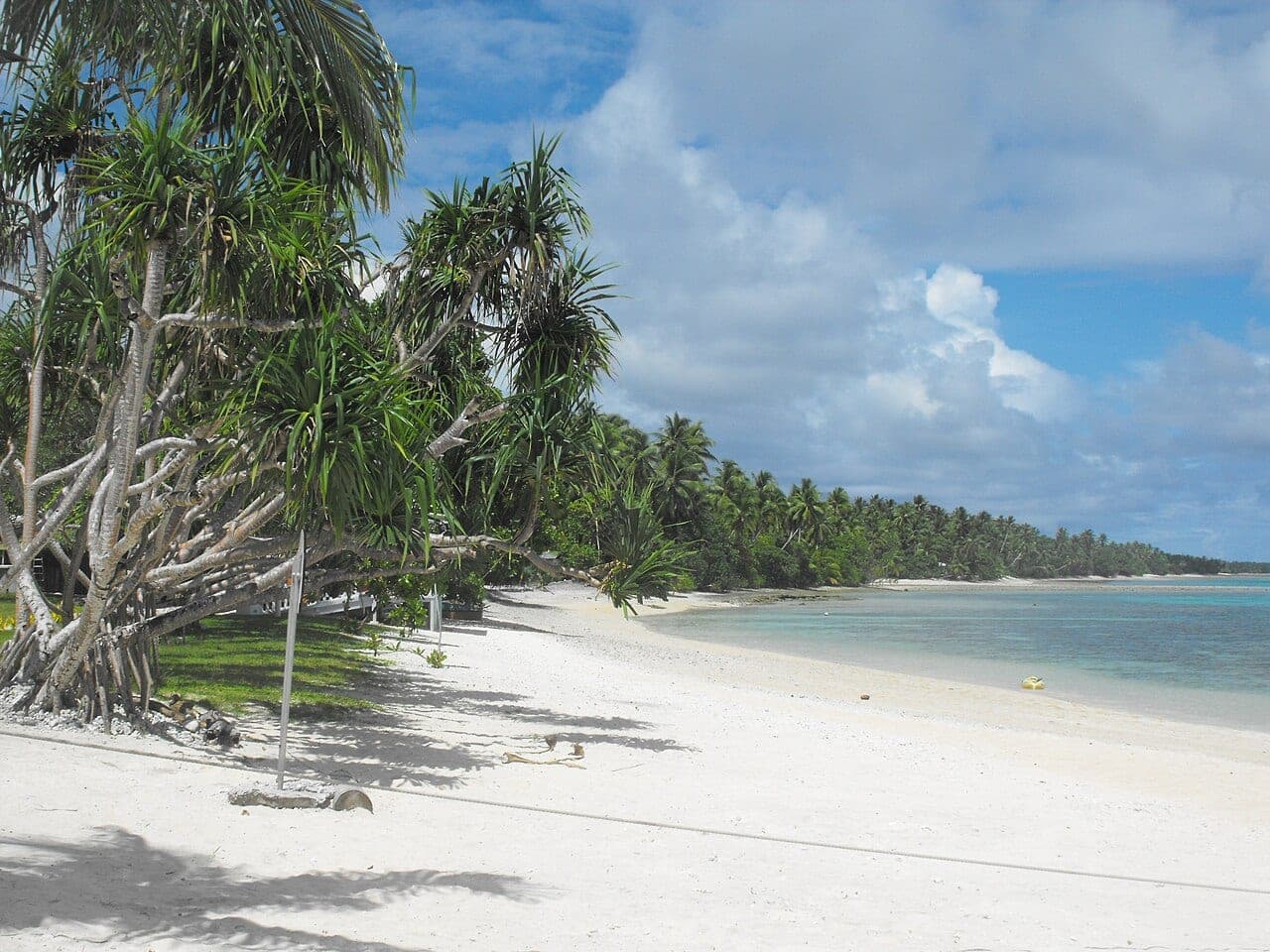
The Republic of the Marshall Islands is a nation made almost entirely of ocean. Its coral atolls and islands, strung in two long parallel chains across the central Pacific, hold fewer than two hundred square kilometres of land inside a sea territory of roughly two million, and by one common measure some 98 percent of the country's area is lagoon and open water, the highest ratio of water to land of any sovereign state (Britannica). In a place so nearly without ground, heritage cannot rest in stone. It lives instead in knowledge carried on the body and the sea: the navigator's reading of ocean swells, the fine mats woven for ceremony and the dead, and the memory held by matrilineal clans whose title to scarce land is the closest thing the country has to an archive.
That inheritance now sits beside a memory unlike any other nation's. Between 1946 and 1958 the United States detonated 67 nuclear weapons in the Marshall Islands, and whole communities were moved from their home atolls so that testing could proceed. In 2010 UNESCO inscribed the Bikini Atoll Nuclear Test Site on the World Heritage List as a place of memory, a witness to the dawn of the nuclear age and to the lasting human and environmental cost borne by the Marshallese (UNESCO).
The Marshall Islands lies in Micronesia, north of the equator and west of the international date line, organised by nature and custom into two chains: the Ratak, or sunrise, chain to the east, and the Ralik, or sunset, chain to the west. Together they hold 29 low coral atolls and 5 solitary islands, with well over a thousand islets, few rising more than two metres above the tide. The population is small, around forty thousand people, most living on Majuro and on Ebeye in Kwajalein Atoll, while the outer atolls keep an older rhythm of fishing and copra.
Politically the country is a sovereign state in free association with the United States, formalised by the Compact of Free Association that took effect in 1986 and has been renewed since. Under that compact the United States provides economic support and assumes responsibility for defence, Marshallese citizens may live and work in the United States, and the US dollar is the national currency. The arrangement frames the nation's continuing negotiations over the legacy of nuclear testing.
Majuro. The capital is a ribbon of islets along the southern rim of Majuro Atoll, joined by causeway into a single settled strip. Its urban core is often called DUD, after the districts of Delap, Uliga and Djarrit that run together end to end. Uliga holds the Alele Museum, Library and National Archives, the country's principal memory institution.
Ebeye. On Kwajalein Atoll, the small island of Ebeye is the country's second population centre and one of the most densely settled places in the Pacific. Its crowding is a consequence of history: many residents work, or descend from workers, at the large United States Army installation on nearby Kwajalein Island, part of a missile testing range that occupies the world's largest lagoon.
The atolls. Beyond the two towns, the atolls themselves are the true landmarks of Marshallese life. Jaluit was the administrative seat under German and Japanese rule, and Wotje and Mili were fortified in the Second World War. Bikini, Enewetak and Rongelap carry the heaviest memory of all, their names bound to the testing years and to the communities displaced from them.
The ancestors of the Marshallese were Austronesian voyagers who settled these atolls in the second millennium BCE, part of the long eastward expansion that peopled the Pacific (Britannica). What they built here was, above all, a mastery of open-ocean navigation for crossing hundreds of kilometres of empty sea by reading the behaviour of waves, alongside a society of matrilineal clans in which land and rank descend through the mother. Authority rested with the iroij, the paramount chiefs, supported by the alap who managed clan lands and the rijerbal who worked them, a structure that still shapes landholding and respect today.
European contact came slowly. Spanish navigators sighted the atolls in the sixteenth century, but the islands took their present name from the British captain John Marshall, who sailed through in 1788. Spain held a nominal claim until the late nineteenth century, when it sold its rights in the region to Germany; Germany established a protectorate in 1885 and ran a copra trade centred on Jaluit. Japan seized the islands at the start of the First World War in 1914 and governed them under a League of Nations mandate, eventually fortifying them.
The Second World War reached the atolls with great force, and it should be remembered soberly. In early 1944 United States forces fought costly battles to take Kwajalein and Enewetak from their Japanese garrisons, leaving dead on all sides. After the war the islands became part of the United States-administered Trust Territory of the Pacific Islands under United Nations trusteeship, and it was in these years that the testing began. From 1946 to 1958 the United States conducted 67 nuclear detonations in the Marshall Islands, 23 of them at Bikini Atoll, whose people had been moved from their home in 1946 after being asked to leave for what they were told was the good of mankind (UNESCO). The Bikinians were relocated first to Rongerik, where they went hungry, and eventually to Kili Island, which had no lagoon to sustain them; the people of Enewetak were likewise moved to Ujelang. On 1 March 1954 the Castle Bravo test, at roughly 15 megatons the largest the United States ever detonated, spread heavy fallout across Rongelap and Utrik and beyond, causing acute radiation illness among Marshallese who had received no warning (Remembrance Day). The displacement, the illness and the long contamination of home atolls remain the defining injuries of modern Marshallese history. Self-government followed, culminating in the Compact of Free Association that took effect in 1986.
The national language is Marshallese, known to its speakers as Kajin Majōl, a member of the Micronesian branch of the Oceanic subgroup of the Austronesian family. It is spoken by nearly the whole population in two closely related dialects that follow the two island chains, Ratak and Ralik, and it is written today in a Latin orthography with special letters for sounds English lacks. English is the second official language, used in government and schooling, so most Marshallese move between the two.
The country's English name preserves the memory of Captain John Marshall's 1788 passage, while its own name reaches into the language and the sea. In Marshallese the republic is Aolepān Aorōkin Ṃajeḷ, an expression that gathers the idea of the whole assembly or entirety of the Marshalls, with Ṃajeḷ itself the Marshallese rendering of the borrowed surname.
At the centre of Marshallese heritage is wayfinding. The islands produced one of the most refined navigational sciences in the Pacific, built on reading how ocean swells bend, reflect and interfere as they pass around low islands (Marshall Islands stick chart). This knowledge was recorded in the famous stick charts, frameworks tied from the midribs of coconut fronds, with shells or knots marking the islands. There were several kinds: the mattang, an abstract teaching chart for learning how swells behave; the meddo, mapping the swells and islands of part of a chain; and the rebbelib, covering a whole chain or most of the archipelago. A navigator did not carry the chart to sea; he memorised it beforehand, then lay in the hull of his canoe to feel the swells through his body. The masters who held this training were the ri-Meto, the people of the sea, whose knowledge was guarded and passed down with care.
The vessel that carried them was the outrigger canoe, and its greatest form was the walap, a large oceangoing proa built for voyaging between atolls (Marshallese Arts Project). Like all Pacific proas the walap sails with its outrigger to windward and does not tack but shunts, reversing direction so that either end may serve as the bow; its keel is a single breadfruit log, the planks sewn with coconut-fibre lashing and sealed with tree sap. The paddling korkor and the mid-sized tipnol served the lagoons.
Marshallese women hold a parallel mastery in fibre. Jaki-ed, fine dress mats woven from prepared pandanus and coloured with natural dyes, were once worn as clothing and given at the most important occasions (Smarthistory). Their production declined sharply in the early twentieth century as imported cloth replaced them, but the art has since been recovered through dedicated revival work. Song, chant and dance complete the cultural round, from the massed voices of church choirs to the standing dances of feast days, and the kemem, the great first-birthday feast, remains a central family celebration. The cuisine rests on breadfruit, pandanus, coconut and arrowroot, and above all on the reef and the sea, with fish at the heart of the table.
The Marshall Islands is overwhelmingly Christian, the majority belonging to Protestant churches descended from the Congregational mission of the nineteenth century, alongside Roman Catholic, Assemblies of God, Latter-day Saint and other communities (Britannica). Church life orders the week and the year, and hymn singing is among the most cherished of the arts.
Older belief did not vanish so much as settle beneath the surface of the new faith. Before conversion the Marshallese world was populated by spirits and by the presence of ancestors, understood to remain near the living and to carry into death much of the character they held in life, sometimes protecting their kin and sometimes to be feared. Traditional knowledge of healing, weather and the protection of voyages accompanied these beliefs. Many Marshallese today hold the two together without contradiction, keeping Christian devotion while honouring the sense that the dead and the ancestors are not wholly gone.
Marshallese mourning is a matter for the whole clan, and it unfolds over an extended period rather than a single day. When a death occurs the body remains with the family through a wake that may last many days, with relatives keeping vigil, singing and receiving the community; burial follows, coral gravel is spread and tended over the grave, and further observance gathers the family again at the grave site in the days afterward. Because Marshallese society is matrilineal, obligations of care, gift and hospitality flow along clan lines, and the closest relatives carry particular duties toward the deceased. Christian rites now frame these gatherings, the pastor and the hymn set alongside older forms of vigil and feast.
 Twenty-three nuclear devices were detonated at Bikini between 1946 and 1958. The people who lived there were moved off and have never been able to return, and UNESCO inscribed the atoll in 2010 as evidence of what was done. Image by NASA, public domain, via Wikimedia Commons.
Over this personal grief the nation carries a shared and public remembrance. The displaced communities of Bikini, of Enewetak and of Rongelap keep alive the memory of homes made uninhabitable and of relatives lost to radiation illness and its long aftermath, and that memory belongs to the whole country. Each year on 1 March the Marshall Islands observes Nuclear Victims Remembrance Day, a national holiday marking the anniversary of the 1954 Castle Bravo test and honouring the victims and survivors of the testing years (Remembrance Day). It is a day of church services, testimony and mourning, and of a continuing call for recognition and justice. In it the Marshallese practice of holding the dead close is turned toward a wound inflicted from outside, and made a matter of national conscience.
Marshallese land, and therefore Marshallese genealogy, passes through women, and the record is kept by the clan rather than by the government.
A Marshallese belongs to a bwij, a matrilineage, and to a jowi, a clan, through the mother. Rights to land come with that membership, so knowing a lineage is knowing an entitlement, and the iroij, the chiefs, hold the knowledge of who belongs where. Disputes go to the Traditional Rights Court, which hears genealogical evidence.
The written record is layered by four administrations: Spanish, then German from 1885, then Japanese under mandate from 1914, then American from 1944. Each kept its own census and administrative papers, and the Japanese period in particular produced detailed local records. Mission registers from the American Board of Commissioners for Foreign Missions carry vital events from the 1850s.
The defining twentieth-century archive is nuclear. The United States tested sixty-seven weapons in the Marshall Islands between 1946 and 1958, evacuated Bikini and Enewetak, and exposed the people of Rongelap and Utrik to fallout from the Castle Bravo test in 1954. The medical monitoring programme that followed produced files on individuals and their descendants across decades, and the compensation claims depend on establishing exactly which family was where, and when. It is a body of genealogical evidence assembled because of an injury, and the communities displaced from Bikini have now been in exile for four generations.
The most prominent act of preservation is the 2010 inscription of the Bikini Atoll Nuclear Test Site on the UNESCO World Heritage List. UNESCO recognised the atoll under its cultural criteria as a site of memory, whose sunken fleet, vast Bravo crater and enduring exclusion of its own people bear witness to the nuclear age and to a history the world is asked not to forget (UNESCO). The designation is unusual in honouring a place for the sorrow it records rather than for beauty.
Alongside this sober monument, the country works to keep its living knowledge alive. The Alele Museum, Library and National Archives in Majuro, opened in 1981, holds the national collections and a significant archive of photographs and recordings of island life, and serves as the country's only public library (Alele Museum). The canoe-building and voyaging school Waan Aelōñ in Majel, meaning Canoes of the Marshall Islands, trains young people in traditional construction and wayfinding under navigators who carry the old learning. The revival of jaki-ed weaving has been sustained through apprenticeship circles and partnerships involving the University of the South Pacific and the Bishop Museum in Honolulu, recovering an art that had nearly lapsed.
For a low-lying nation whose land may not always keep its records safe, digital preservation carries particular weight. The revived weaving tradition has been documented online through the Virtual Museum of Marshallese Fine Weaving, created in 2013, which lets people anywhere study the finest jaki-ed held in museum collections across the world. Regional Pacific platforms also bring images of Marshallese artefacts held abroad back within reach of the islanders they belong to.
The testing history has also generated an extensive digital record, from archived government documents and radiation studies to recorded testimony from survivors and the displaced communities. Kept with the Alele archive's photographs and recordings, this material forms a body of memory that can survive beyond any single shoreline, supporting cultural transmission at home and the country's case for recognition abroad.
Two currents define Marshallese culture in the present century, and both reach back into the heritage above. The first is a broad revival of wayfinding. Through schools such as Waan Aelōñ in Majel and the work of navigators including Alson Kelen, an apprentice of the last generation of ri-Meto, young Marshallese are learning again to build and sail canoes and to read the ocean.
The second is climate advocacy, in which the Marshall Islands has taken a moral voice out of all proportion to its size. Facing rising seas against its two-metre horizons, the nation has pressed the world's forums for action, its poets and leaders carrying Marshallese memory into that argument. The poet Kathy Jetñil-Kijiner reached a global audience when she addressed a United Nations climate summit in 2014 with a poem written to her infant daughter, joining the older grief of the testing years to the newer threat of the sea. In this advocacy jaki-ed and the canoe have become emblems of a people determined to remain themselves, and to remain in place.
A place of memory recognised by the world. The 2010 UNESCO inscription of Bikini Atoll gave the Marshallese experience of the nuclear age a permanent place among humanity's shared heritage, ensuring that the displacement and the testing are remembered as history and not erased.
An art brought back from the edge. The revival of jaki-ed weaving, through apprenticeship circles and museum partnerships since the 2000s, recovered a fine-mat tradition that had almost disappeared, and it has become a symbol of Marshallese resilience.
Canoes on the water again. Waan Aelōñ in Majel has trained a new generation in building the walap and smaller canoes and in the wayfinding of the ri-Meto, keeping one of the Pacific's greatest navigational sciences alive and useful.
A small nation's large voice. Through leaders and poets such as Kathy Jetñil-Kijiner, the Marshall Islands has turned its history and its vulnerability into a widely heard call for nuclear justice and climate action.
Twenty-three nuclear devices were detonated at Bikini between 1946 and 1958. The people who lived there were moved off and have never been able to return, and UNESCO inscribed the atoll in 2010 as evidence of what was done. Image by NASA, public domain, via Wikimedia Commons.
Over this personal grief the nation carries a shared and public remembrance. The displaced communities of Bikini, of Enewetak and of Rongelap keep alive the memory of homes made uninhabitable and of relatives lost to radiation illness and its long aftermath, and that memory belongs to the whole country. Each year on 1 March the Marshall Islands observes Nuclear Victims Remembrance Day, a national holiday marking the anniversary of the 1954 Castle Bravo test and honouring the victims and survivors of the testing years (Remembrance Day). It is a day of church services, testimony and mourning, and of a continuing call for recognition and justice. In it the Marshallese practice of holding the dead close is turned toward a wound inflicted from outside, and made a matter of national conscience.
Marshallese land, and therefore Marshallese genealogy, passes through women, and the record is kept by the clan rather than by the government.
A Marshallese belongs to a bwij, a matrilineage, and to a jowi, a clan, through the mother. Rights to land come with that membership, so knowing a lineage is knowing an entitlement, and the iroij, the chiefs, hold the knowledge of who belongs where. Disputes go to the Traditional Rights Court, which hears genealogical evidence.
The written record is layered by four administrations: Spanish, then German from 1885, then Japanese under mandate from 1914, then American from 1944. Each kept its own census and administrative papers, and the Japanese period in particular produced detailed local records. Mission registers from the American Board of Commissioners for Foreign Missions carry vital events from the 1850s.
The defining twentieth-century archive is nuclear. The United States tested sixty-seven weapons in the Marshall Islands between 1946 and 1958, evacuated Bikini and Enewetak, and exposed the people of Rongelap and Utrik to fallout from the Castle Bravo test in 1954. The medical monitoring programme that followed produced files on individuals and their descendants across decades, and the compensation claims depend on establishing exactly which family was where, and when. It is a body of genealogical evidence assembled because of an injury, and the communities displaced from Bikini have now been in exile for four generations.
The most prominent act of preservation is the 2010 inscription of the Bikini Atoll Nuclear Test Site on the UNESCO World Heritage List. UNESCO recognised the atoll under its cultural criteria as a site of memory, whose sunken fleet, vast Bravo crater and enduring exclusion of its own people bear witness to the nuclear age and to a history the world is asked not to forget (UNESCO). The designation is unusual in honouring a place for the sorrow it records rather than for beauty.
Alongside this sober monument, the country works to keep its living knowledge alive. The Alele Museum, Library and National Archives in Majuro, opened in 1981, holds the national collections and a significant archive of photographs and recordings of island life, and serves as the country's only public library (Alele Museum). The canoe-building and voyaging school Waan Aelōñ in Majel, meaning Canoes of the Marshall Islands, trains young people in traditional construction and wayfinding under navigators who carry the old learning. The revival of jaki-ed weaving has been sustained through apprenticeship circles and partnerships involving the University of the South Pacific and the Bishop Museum in Honolulu, recovering an art that had nearly lapsed.
For a low-lying nation whose land may not always keep its records safe, digital preservation carries particular weight. The revived weaving tradition has been documented online through the Virtual Museum of Marshallese Fine Weaving, created in 2013, which lets people anywhere study the finest jaki-ed held in museum collections across the world. Regional Pacific platforms also bring images of Marshallese artefacts held abroad back within reach of the islanders they belong to.
The testing history has also generated an extensive digital record, from archived government documents and radiation studies to recorded testimony from survivors and the displaced communities. Kept with the Alele archive's photographs and recordings, this material forms a body of memory that can survive beyond any single shoreline, supporting cultural transmission at home and the country's case for recognition abroad.
Two currents define Marshallese culture in the present century, and both reach back into the heritage above. The first is a broad revival of wayfinding. Through schools such as Waan Aelōñ in Majel and the work of navigators including Alson Kelen, an apprentice of the last generation of ri-Meto, young Marshallese are learning again to build and sail canoes and to read the ocean.
The second is climate advocacy, in which the Marshall Islands has taken a moral voice out of all proportion to its size. Facing rising seas against its two-metre horizons, the nation has pressed the world's forums for action, its poets and leaders carrying Marshallese memory into that argument. The poet Kathy Jetñil-Kijiner reached a global audience when she addressed a United Nations climate summit in 2014 with a poem written to her infant daughter, joining the older grief of the testing years to the newer threat of the sea. In this advocacy jaki-ed and the canoe have become emblems of a people determined to remain themselves, and to remain in place.
A place of memory recognised by the world. The 2010 UNESCO inscription of Bikini Atoll gave the Marshallese experience of the nuclear age a permanent place among humanity's shared heritage, ensuring that the displacement and the testing are remembered as history and not erased.
An art brought back from the edge. The revival of jaki-ed weaving, through apprenticeship circles and museum partnerships since the 2000s, recovered a fine-mat tradition that had almost disappeared, and it has become a symbol of Marshallese resilience.
Canoes on the water again. Waan Aelōñ in Majel has trained a new generation in building the walap and smaller canoes and in the wayfinding of the ri-Meto, keeping one of the Pacific's greatest navigational sciences alive and useful.
A small nation's large voice. Through leaders and poets such as Kathy Jetñil-Kijiner, the Marshall Islands has turned its history and its vulnerability into a widely heard call for nuclear justice and climate action.
National Overview
Notable Cities
Historical Foundations
Linguistic and Etymological Roots
Cultural Identity
Religion and Spirituality
Remembrance and Mourning Traditions
Tracing a Family in Marshall Islands
Heritage Preservation Efforts
Digital Heritage
Contemporary Cultural Influences
Success Stories
References and resources
- UNESCO World Heritage Centre: Bikini Atoll Nuclear Test Site. The inscription record framing the atoll as a place of memory of the nuclear age.
- Encyclopaedia Britannica: Marshall Islands. Geography, population, history and the Compact of Free Association.
- Wikipedia: Marshall Islands stick chart. The mattang, meddo and rebbelib and the reading of ocean swells.
- Marshallese Arts Project, University of Edinburgh: Walap. Design and use of the oceangoing outrigger canoe.
- Smarthistory: Jaki-ed and weaving in the Marshall Islands. The history, decline and revival of fine-mat weaving.
- Wikipedia: Remembrance Day, Marshall Islands. Nuclear Victims Remembrance Day and the Castle Bravo test.
- Wikipedia: Alele Museum and Public Library. The national museum, library and archives in Majuro.