Heritage · Country
Chile Culture and Heritage
From the Chinchorro dead of the Atacama to the moai of Rapa Nui, Chile keeps its ancestors close across more than four thousand kilometres of desert, mountain and ice. This is a guide to Chilean heritage, and to a country that has turned the memory of its twentieth-century wounds into museums, memorials and law.Written to last.
By Confinity Heritage Editorial · Updated 2026-07-31 · 8-minute readQuiet tools, kept out of the way.
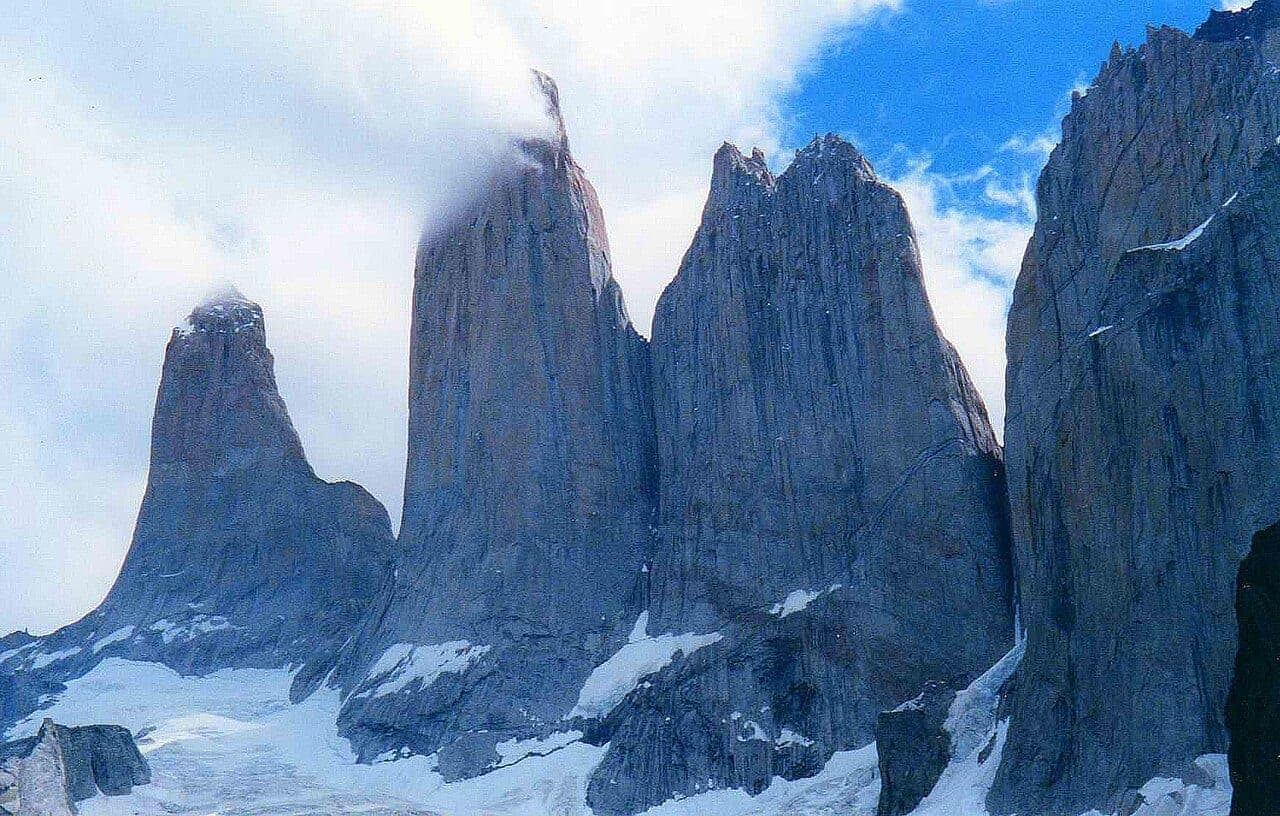
Chile is a country shaped like a coastline. It runs some 4,300 kilometres down the western edge of South America, from the driest desert on earth to the fractured ice of Patagonia, yet averages only about 175 kilometres across. That geography has made memory a matter of distance as much as of time. In the northern Atacama, marine communities preserved their dead more than seven thousand years ago, leaving the oldest deliberately mummified bodies in the world. In the far south, on the most isolated inhabited island on the planet, a Polynesian people raised stone ancestors to watch over the living.
The deepest and most contested layer of Chilean memory belongs to the twentieth century. On 11 September 1973 a military coup ended the government of President Salvador Allende and began a dictatorship that lasted until 1990, during which state agents killed, forcibly disappeared and tortured thousands of people, as two later official commissions documented. Chile has since organised its remembrance around courts, archives and memorial sites, foremost among them the Museum of Memory and Human Rights in Santiago.
Chile occupies a ribbon of land between the Andes and the Pacific, stretching roughly 4,300 kilometres from Peru to Cape Horn, while its average width is little more than 175 kilometres, and few countries hold so many climates at once. The Atacama Desert of the north is the driest place on earth; the fertile Central Valley around Santiago carries most of the population and the vineyards; and Patagonia runs south through steppe, glacier and fjord to Tierra del Fuego. Chile also administers Rapa Nui in Polynesia and claims a wedge of Antarctica.
About 19 million people live in Chile, some seven million of them in Greater Santiago. The population is largely of mixed European and Indigenous descent, and around two million people identify as Indigenous, the great majority of them Mapuche. Spanish is the national language, the peso the currency, and seven properties carry inscription on the UNESCO World Heritage List, from Stone Age burial sites in the Atacama to the moai of Easter Island.
Santiago. Founded by Pedro de Valdivia in 1541, the capital sits in a basin ringed by the Andes and holds the seat of government at the Moneda Palace, along with the country's principal museums and universities. It is a city of memory as much as commerce, home to the Museum of Memory and Human Rights, the Cementerio General, and Villa Grimaldi.
 Valparaiso, built up its hillsides in the age of sail and left behind when the Panama Canal opened. Photograph by Francesco Bandarin, CC BY-SA 3.0 IGO, via Wikimedia Commons.
Valparaíso. The great Pacific port of the nineteenth century, its historic quarter inscribed by UNESCO in 2003, climbs an amphitheatre of hills laced with funicular lifts, painted houses and steep staircases. It declined after the Panama Canal opened in 1914 but kept the architecture that made it home to Neruda and to Chile's National Congress.
Concepción. The industrial and university heart of the south-central region, repeatedly rebuilt after earthquakes, it anchors the historic frontier country along the Biobío river.
Antofagasta and Iquique. Northern ports of the nitrate and copper economy, grown from desert coast during the mining booms. Near Iquique stand the abandoned saltpeter works of Humberstone and Santa Laura.
Punta Arenas. The southernmost significant city in the Americas, on the Strait of Magellan, and the gateway to Chilean Patagonia and the Antarctic.
The human story of Chile begins deep in prehistory. At Monte Verde in the south, archaeologists have found settlement at least fourteen thousand years old, among the oldest known in the Americas. On the northern coast, the Chinchorro culture of the Atacama practised artificial mummification from around 5000 BCE, defleshing and rebuilding their dead and painting them with ochre, a treatment of the dead older than that of ancient Egypt.
Valparaiso, built up its hillsides in the age of sail and left behind when the Panama Canal opened. Photograph by Francesco Bandarin, CC BY-SA 3.0 IGO, via Wikimedia Commons.
Valparaíso. The great Pacific port of the nineteenth century, its historic quarter inscribed by UNESCO in 2003, climbs an amphitheatre of hills laced with funicular lifts, painted houses and steep staircases. It declined after the Panama Canal opened in 1914 but kept the architecture that made it home to Neruda and to Chile's National Congress.
Concepción. The industrial and university heart of the south-central region, repeatedly rebuilt after earthquakes, it anchors the historic frontier country along the Biobío river.
Antofagasta and Iquique. Northern ports of the nitrate and copper economy, grown from desert coast during the mining booms. Near Iquique stand the abandoned saltpeter works of Humberstone and Santa Laura.
Punta Arenas. The southernmost significant city in the Americas, on the Strait of Magellan, and the gateway to Chilean Patagonia and the Antarctic.
The human story of Chile begins deep in prehistory. At Monte Verde in the south, archaeologists have found settlement at least fourteen thousand years old, among the oldest known in the Americas. On the northern coast, the Chinchorro culture of the Atacama practised artificial mummification from around 5000 BCE, defleshing and rebuilding their dead and painting them with ochre, a treatment of the dead older than that of ancient Egypt.
 The moai at Anakena. Each one represents an ancestor and faces inland, watching over the settlement rather than the sea. Photograph by Joe Ross, CC BY-SA 2.0, via Wikimedia Commons.
Many Indigenous peoples took shape across this territory, from the Aymara and Atacameño of the northern highlands to the Kawésqar, Yagán and Selk'nam of the southern channels. The most numerous and historically decisive are the Mapuche, whose name means "people of the land." They halted the southward expansion of the Inca in the fifteenth century, then resisted the Spanish for more than three centuries. In 1641 the Parliament of Quilín recognised a frontier along the Biobío river and a measure of Mapuche autonomy, an arrangement almost unique in the colonial Americas. Independence south of the river endured until the Chilean state's military occupation of Araucanía in the late nineteenth century.
Far out in the Pacific, Rapa Nui, or Easter Island, was settled by Polynesian voyagers around 1200 CE. Between roughly 1250 and 1500 they carved close to 900 moai, ancestor figures cut from the tuff of the Rano Raraku quarry and set on stone platforms called ahu. The society that raised them later suffered ecological and demographic collapse, compounded from the eighteenth century by European contact, disease and, in the 1860s, Peruvian slave raids. Chile annexed the island in 1888.
Spanish conquest of the mainland began with Diego de Almagro in 1535 and Valdivia's founding of Santiago in 1541. Colonial Chile remained a poor, embattled captaincy on a frontier held against the Mapuche. Independence came with the wars of the early nineteenth century, decided at Maipú in 1818 under Bernardo O'Higgins and José de San Martín. Chile later won the War of the Pacific against Peru and Bolivia (1879–1884), gaining the nitrate-rich northern desert and leaving Bolivia landlocked. The saltpeter boom built fortunes, ports and a militant labour movement, until German synthetic fertilisers collapsed the market after the First World War.
The twentieth century brought reform and rupture. In 1970 Salvador Allende was elected president at the head of a socialist coalition. On 11 September 1973 the armed forces, led by General Augusto Pinochet, overthrew his government, and Allende died in the Moneda Palace that day. The military government ruled until 1990. Two later official inquiries, the National Commission for Truth and Reconciliation (the Rettig Report, 1991) and the National Commission on Political Imprisonment and Torture (the Valech Commission, 2004–2005), documented more than 3,000 people killed or disappeared and tens of thousands detained and tortured. A 1988 plebiscite rejected continued military rule, and elected civilian government returned in 1990.
Spanish is the language of daily life and of the state, in a Chilean variety known for rapid speech, dropped consonants and local idiom carrying loanwords from Mapudungun and Quechua. Two Indigenous languages remain especially significant. Mapudungun, the language of the Mapuche, was spoken by hundreds of thousands into the modern era, though intergenerational transmission has fallen sharply and revitalisation is now a live cause in schools and communities. On Easter Island, the Rapa Nui language, an Eastern Polynesian tongue, survives among a few thousand speakers; the island's undeciphered rongorongo script remains one of the great puzzles of writing systems.
The name of the country itself is uncertain in origin. The most widely cited explanation traces it to a Mapuche word, chilli, understood as "where the land ends," fitting a nation at the southern edge of a continent. Others propose an onomatopoeic root, cheele-cheele, a Mapuche imitation of a bird's call, or a Quechua term such as chiri, meaning cold. Whatever its source, the name has no connection to the chilli pepper, whose name comes from Nahuatl in Mexico. Spanish chroniclers recorded the region as Chile from the sixteenth century, and the republic kept it at independence.
Chile is often called a country of poets, and with reason: it has produced two Nobel laureates in literature. Gabriela Mistral, a rural schoolteacher from the Elqui Valley, became in 1945 the first Latin American to win the prize, honoured for lyric poetry of grief, motherhood and the land. Pablo Neruda, who won in 1971, wrote love poems and the epic Canto General; his houses at Isla Negra, Valparaíso and Santiago are now museums. The two met when Neruda was a schoolboy in Temuco, where Mistral directed the girls' high school.
The cueca, a courtship dance in which partners circle and flourish handkerchiefs, was declared the national dance in 1979 and fills the Fiestas Patrias each September. In the mid-twentieth century Violeta Parra travelled the country collecting and reinventing rural song, seeding the nueva canción movement whose leading voice, Víctor Jara, was murdered in the first days of the 1973 coup and remains a figure of national memory. Cuisine reflects the geography: the empanada de pino and pastel de choclo of the centre, the seafood of a long coast, the shellfish-and-meat curanto of Chiloé, the family asado, and the wines that carry the country's name abroad.
Chile is historically Roman Catholic, and Catholicism still shapes its calendar, its rites of passage and its cemeteries, though observance has fallen as evangelical and Pentecostal churches have grown. The Church held moral authority at key moments: during the dictatorship the Vicariate of Solidarity, established by the Archdiocese of Santiago in 1976, sheltered the persecuted, documented abuses and aided the families of the disappeared, work that later fed the truth commissions.
Indigenous and popular belief runs alongside the official faith. Among the Mapuche, the machi, a healer and spiritual guide, presides over ceremonies such as the ngillatun, a communal rite of prayer and renewal addressed to the ancestors. In the northern highlands, Aymara and Atacameño communities honour Pachamama, the earth mother, at planting and harvest. Andean and Catholic devotion fuse in the July festival of La Tirana near Iquique, where masked dancers fill the desert town in homage to the Virgin.
Chilean mourning follows the Catholic pattern of much of Latin America, opened out by local custom. Death is marked first by the velorio, the wake, in which family and friends gather around the body, often in an open casket surrounded by candles and flowers, keeping vigil for roughly 24 to 48 hours. Burial or cremation follows quickly, and the funeral Mass gathers the wider community. For nine days afterwards comes the novenario, evening prayers said at home or in church for the repose of the soul.
Remembrance then settles into the year. On 1 November, All Saints' Day, families visit the cemeteries to clean and adorn the graves and to spend the day near their dead. The Cementerio General de Santiago, consecrated in 1821, holds more than two million burials along broad avenues of mausoleums. A distinctly Chilean custom lines the roads with animitas, shrines raised where someone died suddenly, tended with candles by passers-by who ask the dead for favours and give thanks for them.
Over all of this lies the memory of the disappeared. Many of the dictatorship's victims were buried in secret or thrown into the sea, denying families a body to mourn, and the recovery of remains and the return of names has become a national undertaking pursued through courts, forensic teams and memorial sites. At the Cementerio General, the exhumations of Patio 29, where unidentified dead of 1973 had been buried, became a long and painful public reckoning, and the cemetery's Memorial of the Detained-Disappeared and the Politically Executed carries thousands of names around the central name of Salvador Allende. The Museum of Memory and Human Rights, inaugurated by President Michelle Bachelet in 2010, gathers testimony, documents and objects of the 1973–1990 period, while Villa Grimaldi, a former detention and torture centre, is preserved as a Peace Park. These sites treat remembrance not as argument but as obligation, the giving back of a name understood as the completion of mourning.
Chilean family records are good, and the most important twentieth-century archive was built in a church basement while the events were still happening.
The Vicaría de la Solidaridad, set up by the Archbishop of Santiago in 1976, took in the families of the detained and the disappeared, recorded their testimony, filed habeas corpus petitions that were almost always refused, and kept every piece of paper. By the end of the dictatorship it held tens of thousands of case files documenting arrests, torture and disappearances as they occurred. UNESCO added the archive to the Memory of the World Register in 2003. It became the evidentiary basis of the Rettig and Valech reports and of prosecutions that are still running.
The ordinary record is deep. Catholic parish registers survive from the sixteenth and seventeenth centuries in the older towns, and civil registration began in 1885 and is centrally administered by the Registro Civil. FamilySearch has digitised a very large part of both, so most Chilean research back to the colonial period can be done free.
Two other sources are distinctive. Chile received substantial German, Croatian, Italian, Palestinian and Basque immigration, and the passenger and colonisation records for those movements are held separately and are unusually good. And for Mapuche families, the títulos de merced, the land titles issued between 1884 and 1929 as Mapuche territory was reduced, name the head of each community and are the document most often used to establish descent today.
Chile protects its heritage chiefly through the Council of National Monuments, established in 1925, and since 2018 through a National Heritage Service within the Ministry of Cultures, the Arts and Heritage. Seven properties hold UNESCO World Heritage status. Rapa Nui National Park was inscribed in 1995 for its moai and ceremonial landscape. The sixteen timber Churches of Chiloé, fusing European and Indigenous building traditions, followed in 2000. The historic quarter of Valparaíso was added in 2003, the Humberstone and Santa Laura Saltpeter Works in 2005, and the copper-mining company town of Sewell in 2006. The Qhapaq Ñan Andean road system, shared with five countries, was inscribed in 2014 with dozens of Chilean components, and the Chinchorro sites of Arica and Parinacota joined the list in 2021.
Preservation carries real strain. The moai are exposed to erosion, and a 2022 wildfire scorched statues at Rano Raraku, while the Chinchorro mummies, preserved by desert aridity for millennia, have begun to degrade as humidity rises. Management of Rapa Nui National Park passed in 2017 to the Ma'u Henua Indigenous community, giving the Rapa Nui direct stewardship of their ancestral sites.
Chile's national digital library, Memoria Chilena, run by the National Library, has published tens of thousands of digitised documents, images, maps and sound recordings from the country's collections, organised into thematic dossiers and offered freely online. The Biblioteca Nacional Digital extends this with full manuscripts and rare printed works.
Memory has its own digital infrastructure. The Museum of Memory and Human Rights maintains an online documentation centre with testimonies, judicial records and photographs, allowing researchers and families to consult the record of the dictatorship years from anywhere, and forensic bodies keep genetic databases that continue to resolve the identities of the disappeared. Rapa Nui heritage, too, is being recorded in three-dimensional scans to study the moai and guard against loss.
Chilean literature has kept its reach. Isabel Allende became one of the most widely read novelists in the world with The House of the Spirits, Roberto Bolaño reshaped Latin American fiction with 2666, and a newer generation, among them Alejandro Zambra and Nona Fernández, writes memory and dictatorship into inventive work. Chilean cinema has drawn international attention through Pablo Larraín, whose No dramatised the 1988 plebiscite, and Sebastián Lelio, whose A Fantastic Woman won the Academy Award for best foreign-language film in 2018, Chile's first Oscar.
The folk-rock of Los Jaivas and the nueva canción of Inti-Illimani and Quilapayún, much of it made in exile after 1973, carried Chilean sound across the world, and contemporary artists such as Mon Laferte and Ana Tijoux reach global audiences while addressing memory and justice. The social uprising of 2019 and the constitutional debates that followed carried the same questions into a new century.
The world's oldest mummies recognised. In 2021 UNESCO inscribed the Chinchorro sites of Arica and Parinacota on the World Heritage List, honouring a culture that preserved its dead seven thousand years ago and bringing resources to the task of conserving them.
Names returned to the disappeared. Through the exhumations of Patio 29 and the work of Chilean forensic teams, victims of the dictatorship have been identified and returned to their families, and courts have tried those responsible decades on.
A community reclaims its ancestors. In 2017 the administration of Rapa Nui National Park passed to the Ma'u Henua Indigenous community, giving the Rapa Nui direct management of the moai their forebears made.
Chile's first Oscar. Sebastián Lelio's A Fantastic Woman won the Academy Award for best foreign-language film in 2018, a landmark for Chilean cinema.
The moai at Anakena. Each one represents an ancestor and faces inland, watching over the settlement rather than the sea. Photograph by Joe Ross, CC BY-SA 2.0, via Wikimedia Commons.
Many Indigenous peoples took shape across this territory, from the Aymara and Atacameño of the northern highlands to the Kawésqar, Yagán and Selk'nam of the southern channels. The most numerous and historically decisive are the Mapuche, whose name means "people of the land." They halted the southward expansion of the Inca in the fifteenth century, then resisted the Spanish for more than three centuries. In 1641 the Parliament of Quilín recognised a frontier along the Biobío river and a measure of Mapuche autonomy, an arrangement almost unique in the colonial Americas. Independence south of the river endured until the Chilean state's military occupation of Araucanía in the late nineteenth century.
Far out in the Pacific, Rapa Nui, or Easter Island, was settled by Polynesian voyagers around 1200 CE. Between roughly 1250 and 1500 they carved close to 900 moai, ancestor figures cut from the tuff of the Rano Raraku quarry and set on stone platforms called ahu. The society that raised them later suffered ecological and demographic collapse, compounded from the eighteenth century by European contact, disease and, in the 1860s, Peruvian slave raids. Chile annexed the island in 1888.
Spanish conquest of the mainland began with Diego de Almagro in 1535 and Valdivia's founding of Santiago in 1541. Colonial Chile remained a poor, embattled captaincy on a frontier held against the Mapuche. Independence came with the wars of the early nineteenth century, decided at Maipú in 1818 under Bernardo O'Higgins and José de San Martín. Chile later won the War of the Pacific against Peru and Bolivia (1879–1884), gaining the nitrate-rich northern desert and leaving Bolivia landlocked. The saltpeter boom built fortunes, ports and a militant labour movement, until German synthetic fertilisers collapsed the market after the First World War.
The twentieth century brought reform and rupture. In 1970 Salvador Allende was elected president at the head of a socialist coalition. On 11 September 1973 the armed forces, led by General Augusto Pinochet, overthrew his government, and Allende died in the Moneda Palace that day. The military government ruled until 1990. Two later official inquiries, the National Commission for Truth and Reconciliation (the Rettig Report, 1991) and the National Commission on Political Imprisonment and Torture (the Valech Commission, 2004–2005), documented more than 3,000 people killed or disappeared and tens of thousands detained and tortured. A 1988 plebiscite rejected continued military rule, and elected civilian government returned in 1990.
Spanish is the language of daily life and of the state, in a Chilean variety known for rapid speech, dropped consonants and local idiom carrying loanwords from Mapudungun and Quechua. Two Indigenous languages remain especially significant. Mapudungun, the language of the Mapuche, was spoken by hundreds of thousands into the modern era, though intergenerational transmission has fallen sharply and revitalisation is now a live cause in schools and communities. On Easter Island, the Rapa Nui language, an Eastern Polynesian tongue, survives among a few thousand speakers; the island's undeciphered rongorongo script remains one of the great puzzles of writing systems.
The name of the country itself is uncertain in origin. The most widely cited explanation traces it to a Mapuche word, chilli, understood as "where the land ends," fitting a nation at the southern edge of a continent. Others propose an onomatopoeic root, cheele-cheele, a Mapuche imitation of a bird's call, or a Quechua term such as chiri, meaning cold. Whatever its source, the name has no connection to the chilli pepper, whose name comes from Nahuatl in Mexico. Spanish chroniclers recorded the region as Chile from the sixteenth century, and the republic kept it at independence.
Chile is often called a country of poets, and with reason: it has produced two Nobel laureates in literature. Gabriela Mistral, a rural schoolteacher from the Elqui Valley, became in 1945 the first Latin American to win the prize, honoured for lyric poetry of grief, motherhood and the land. Pablo Neruda, who won in 1971, wrote love poems and the epic Canto General; his houses at Isla Negra, Valparaíso and Santiago are now museums. The two met when Neruda was a schoolboy in Temuco, where Mistral directed the girls' high school.
The cueca, a courtship dance in which partners circle and flourish handkerchiefs, was declared the national dance in 1979 and fills the Fiestas Patrias each September. In the mid-twentieth century Violeta Parra travelled the country collecting and reinventing rural song, seeding the nueva canción movement whose leading voice, Víctor Jara, was murdered in the first days of the 1973 coup and remains a figure of national memory. Cuisine reflects the geography: the empanada de pino and pastel de choclo of the centre, the seafood of a long coast, the shellfish-and-meat curanto of Chiloé, the family asado, and the wines that carry the country's name abroad.
Chile is historically Roman Catholic, and Catholicism still shapes its calendar, its rites of passage and its cemeteries, though observance has fallen as evangelical and Pentecostal churches have grown. The Church held moral authority at key moments: during the dictatorship the Vicariate of Solidarity, established by the Archdiocese of Santiago in 1976, sheltered the persecuted, documented abuses and aided the families of the disappeared, work that later fed the truth commissions.
Indigenous and popular belief runs alongside the official faith. Among the Mapuche, the machi, a healer and spiritual guide, presides over ceremonies such as the ngillatun, a communal rite of prayer and renewal addressed to the ancestors. In the northern highlands, Aymara and Atacameño communities honour Pachamama, the earth mother, at planting and harvest. Andean and Catholic devotion fuse in the July festival of La Tirana near Iquique, where masked dancers fill the desert town in homage to the Virgin.
Chilean mourning follows the Catholic pattern of much of Latin America, opened out by local custom. Death is marked first by the velorio, the wake, in which family and friends gather around the body, often in an open casket surrounded by candles and flowers, keeping vigil for roughly 24 to 48 hours. Burial or cremation follows quickly, and the funeral Mass gathers the wider community. For nine days afterwards comes the novenario, evening prayers said at home or in church for the repose of the soul.
Remembrance then settles into the year. On 1 November, All Saints' Day, families visit the cemeteries to clean and adorn the graves and to spend the day near their dead. The Cementerio General de Santiago, consecrated in 1821, holds more than two million burials along broad avenues of mausoleums. A distinctly Chilean custom lines the roads with animitas, shrines raised where someone died suddenly, tended with candles by passers-by who ask the dead for favours and give thanks for them.
Over all of this lies the memory of the disappeared. Many of the dictatorship's victims were buried in secret or thrown into the sea, denying families a body to mourn, and the recovery of remains and the return of names has become a national undertaking pursued through courts, forensic teams and memorial sites. At the Cementerio General, the exhumations of Patio 29, where unidentified dead of 1973 had been buried, became a long and painful public reckoning, and the cemetery's Memorial of the Detained-Disappeared and the Politically Executed carries thousands of names around the central name of Salvador Allende. The Museum of Memory and Human Rights, inaugurated by President Michelle Bachelet in 2010, gathers testimony, documents and objects of the 1973–1990 period, while Villa Grimaldi, a former detention and torture centre, is preserved as a Peace Park. These sites treat remembrance not as argument but as obligation, the giving back of a name understood as the completion of mourning.
Chilean family records are good, and the most important twentieth-century archive was built in a church basement while the events were still happening.
The Vicaría de la Solidaridad, set up by the Archbishop of Santiago in 1976, took in the families of the detained and the disappeared, recorded their testimony, filed habeas corpus petitions that were almost always refused, and kept every piece of paper. By the end of the dictatorship it held tens of thousands of case files documenting arrests, torture and disappearances as they occurred. UNESCO added the archive to the Memory of the World Register in 2003. It became the evidentiary basis of the Rettig and Valech reports and of prosecutions that are still running.
The ordinary record is deep. Catholic parish registers survive from the sixteenth and seventeenth centuries in the older towns, and civil registration began in 1885 and is centrally administered by the Registro Civil. FamilySearch has digitised a very large part of both, so most Chilean research back to the colonial period can be done free.
Two other sources are distinctive. Chile received substantial German, Croatian, Italian, Palestinian and Basque immigration, and the passenger and colonisation records for those movements are held separately and are unusually good. And for Mapuche families, the títulos de merced, the land titles issued between 1884 and 1929 as Mapuche territory was reduced, name the head of each community and are the document most often used to establish descent today.
Chile protects its heritage chiefly through the Council of National Monuments, established in 1925, and since 2018 through a National Heritage Service within the Ministry of Cultures, the Arts and Heritage. Seven properties hold UNESCO World Heritage status. Rapa Nui National Park was inscribed in 1995 for its moai and ceremonial landscape. The sixteen timber Churches of Chiloé, fusing European and Indigenous building traditions, followed in 2000. The historic quarter of Valparaíso was added in 2003, the Humberstone and Santa Laura Saltpeter Works in 2005, and the copper-mining company town of Sewell in 2006. The Qhapaq Ñan Andean road system, shared with five countries, was inscribed in 2014 with dozens of Chilean components, and the Chinchorro sites of Arica and Parinacota joined the list in 2021.
Preservation carries real strain. The moai are exposed to erosion, and a 2022 wildfire scorched statues at Rano Raraku, while the Chinchorro mummies, preserved by desert aridity for millennia, have begun to degrade as humidity rises. Management of Rapa Nui National Park passed in 2017 to the Ma'u Henua Indigenous community, giving the Rapa Nui direct stewardship of their ancestral sites.
Chile's national digital library, Memoria Chilena, run by the National Library, has published tens of thousands of digitised documents, images, maps and sound recordings from the country's collections, organised into thematic dossiers and offered freely online. The Biblioteca Nacional Digital extends this with full manuscripts and rare printed works.
Memory has its own digital infrastructure. The Museum of Memory and Human Rights maintains an online documentation centre with testimonies, judicial records and photographs, allowing researchers and families to consult the record of the dictatorship years from anywhere, and forensic bodies keep genetic databases that continue to resolve the identities of the disappeared. Rapa Nui heritage, too, is being recorded in three-dimensional scans to study the moai and guard against loss.
Chilean literature has kept its reach. Isabel Allende became one of the most widely read novelists in the world with The House of the Spirits, Roberto Bolaño reshaped Latin American fiction with 2666, and a newer generation, among them Alejandro Zambra and Nona Fernández, writes memory and dictatorship into inventive work. Chilean cinema has drawn international attention through Pablo Larraín, whose No dramatised the 1988 plebiscite, and Sebastián Lelio, whose A Fantastic Woman won the Academy Award for best foreign-language film in 2018, Chile's first Oscar.
The folk-rock of Los Jaivas and the nueva canción of Inti-Illimani and Quilapayún, much of it made in exile after 1973, carried Chilean sound across the world, and contemporary artists such as Mon Laferte and Ana Tijoux reach global audiences while addressing memory and justice. The social uprising of 2019 and the constitutional debates that followed carried the same questions into a new century.
The world's oldest mummies recognised. In 2021 UNESCO inscribed the Chinchorro sites of Arica and Parinacota on the World Heritage List, honouring a culture that preserved its dead seven thousand years ago and bringing resources to the task of conserving them.
Names returned to the disappeared. Through the exhumations of Patio 29 and the work of Chilean forensic teams, victims of the dictatorship have been identified and returned to their families, and courts have tried those responsible decades on.
A community reclaims its ancestors. In 2017 the administration of Rapa Nui National Park passed to the Ma'u Henua Indigenous community, giving the Rapa Nui direct management of the moai their forebears made.
Chile's first Oscar. Sebastián Lelio's A Fantastic Woman won the Academy Award for best foreign-language film in 2018, a landmark for Chilean cinema.
National Overview
Notable Cities
Historical Foundations
Linguistic and Etymological Roots
Cultural Identity
Religion and Spirituality
Remembrance and Mourning Traditions
Tracing a Family in Chile
Heritage Preservation Efforts
Digital Heritage
Contemporary Cultural Influences
Success Stories
References and resources
- Encyclopaedia Britannica: Chile
- UNESCO: Rapa Nui National Park
- UNESCO: Chinchorro Culture
- UNESCO: Historic Quarter of Valparaíso
- UNESCO: Churches of Chiloé
- Museum of Memory and Human Rights
- Encyclopaedia Britannica: Mapuche
- Valech Report: Chile's commissions on killings, disappearance and torture
- The Nobel Prize: Gabriela Mistral (1945)