Heritage · Country
Nunavut Culture and Heritage
Nunavut was created on 1 April 1999 out of the largest Indigenous land claim settlement in Canadian history, and covers a fifth of Canada with about 40,000 people. A guide to Inuit heritage there: the language, the naming of children after the dead, and the harms still being accounted for.Written to last.
By Confinity Heritage Editorial · Updated 2026-08-17 · 8-minute readQuiet tools, kept out of the way.
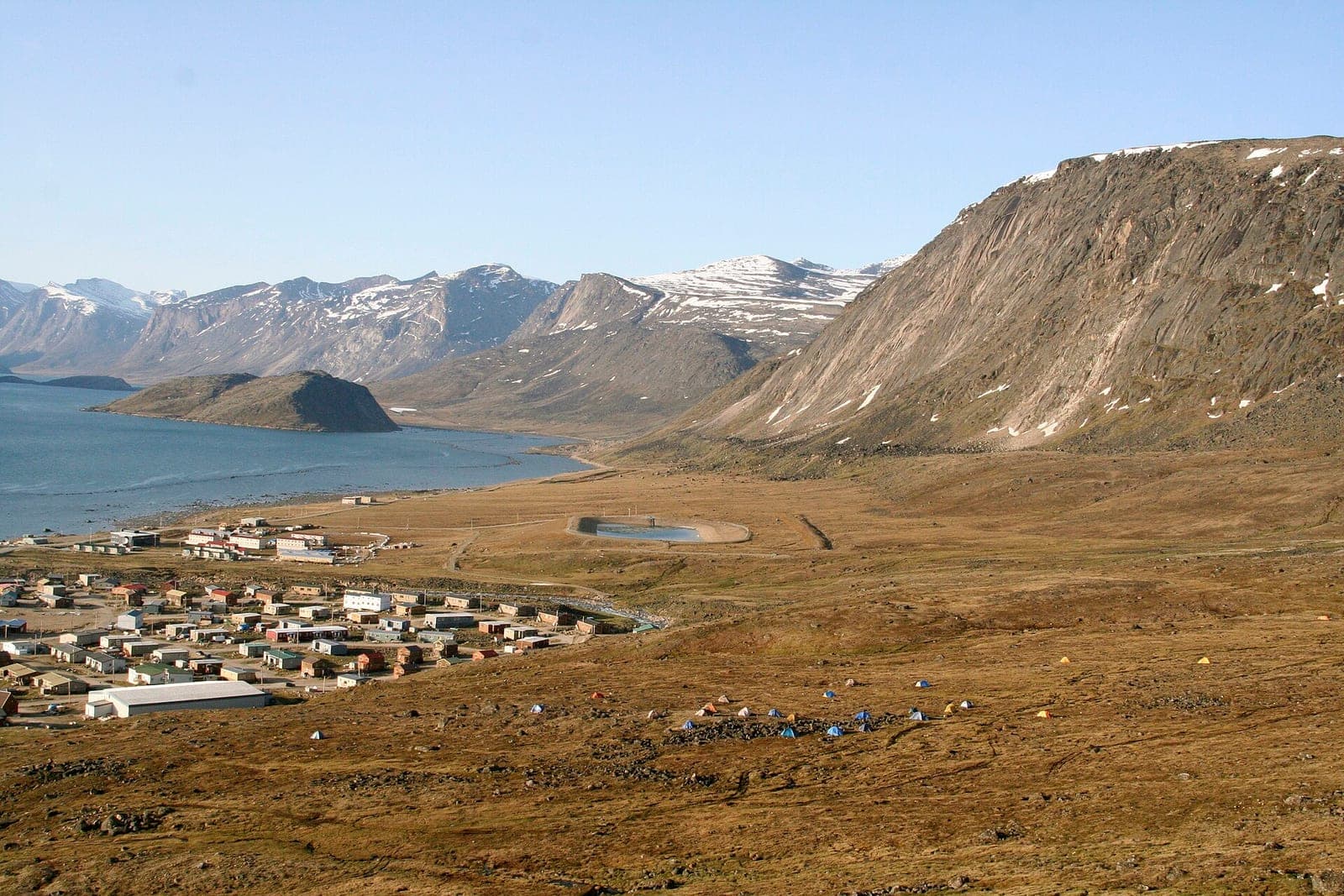
Nunavut means our land in Inuktitut, and the name was chosen before the territory existed. Canada created it on 1 April 1999, carving two million square kilometres out of the Northwest Territories under an agreement signed in 1993 that remains the largest Indigenous land claim settlement in Canadian history. About 40,000 people live there, roughly 85 per cent of them Inuit, in twenty-five communities no road connects to each other or to the south.
Heritage here is not mainly a matter of buildings. It's carried in a language spoken by a majority and losing ground anyway, in a body of knowledge written into government policy, in stone figures on the tundra that tell a traveller where to go, and in a naming practice by which a dead person's name and something of their identity pass to a living child. It's also carried in what was done to Inuit within living memory: the schools, the relocations, the killing of the sled dogs, and the numbered discs issued in place of names.
Nunavut is Canada's largest territory and its youngest, about 2,093,000 square kilometres of mainland tundra and Arctic islands reaching from the treeline north to Ellesmere Island. Its population of around 40,000 is the smallest of any province or territory and the youngest by median age. Roughly 85 per cent of residents are Inuit, a share higher among children than adults.
The government of Nunavut is a public government rather than an Inuit ethnic government: everyone who lives there votes, and the institutions serve all residents. Because the electorate is overwhelmingly Inuit, the practical effect is Inuit political control without an ethnic franchise. Inuit rights under the 1993 agreement are held separately by Nunavut Tunngavik Incorporated, which speaks for beneficiaries and negotiates with both Ottawa and the territory.
The Legislative Assembly has twenty-two members and no political parties. Members are elected as individuals, then choose the premier and cabinet among themselves by secret ballot and govern by consensus, with the whole assembly holding ministers to account rather than an organised opposition. It's genuinely unusual, though it makes a government that has lost confidence harder to remove.
Iqaluit. The capital, on Frobisher Bay at the south end of Baffin Island, with about 7,500 residents. It was Frobisher Bay until 1987, grew around a wartime American airfield, and holds the Legislative Assembly and the Nunatta Sunakkutaangit Museum.
 Iqaluit has no road connecting it to anywhere else, and it became the capital of a territory that did not exist until 1999. Photograph by Quintin Soloviev, CC BY-SA 4.0, via Wikimedia Commons.
Kinngait. Formerly Cape Dorset, on the south coast of Baffin Island, the centre of Inuit printmaking since 1959.
Pangnirtung. A fjord community below Auyuittuq National Park, known for its weaving and print studio and for the nineteenth-century whaling station on Kekerten Island in Cumberland Sound, now a territorial park reached by boat.
Uqsuqtuuq (Gjoa Haven). On King William Island, named for Roald Amundsen's ship, and the community whose oral history guided the Franklin search.
People have lived in the eastern Arctic for about 4,500 years. Archaeologists group the earliest arrivals as Pre-Dorset and then Dorset, a culture that made fine miniature carvings in ivory and antler and is remembered in Inuit oral tradition as the Tuniit, a strong and shy people already there. Around AD 1200 the Thule spread east from Alaska with dog sledges, skin boats and the toggling harpoon, which made hunting bowhead whales in open water reliable, and their winter houses of whale bone, stone and sod still show on the ground. Every Inuk in Nunavut descends from that migration.
European contact came in stages: Martin Frobisher in the 1570s, Royal Navy ships from the eighteenth century, then Scottish and American whalers who wintered in Cumberland Sound and at Kekerten from the 1840s, bringing rifles, tea, disease and wage work. Missions followed, then Hudson's Bay posts and the police.
The deepest change came after 1950. Federal administration moved Inuit families off the land into permanent settlements built around schools, nursing stations and welfare offices, a process driven by sovereignty concerns and by the collapse of the fox fur trade. Within about twenty years a hunting society organised in camps had become a territory of towns. Inuit political organising responded, through Inuit Tapirisat of Canada from 1971 and the Tunngavik Federation of Nunavut, and the Nunavut Land Claims Agreement was signed on 25 May 1993, with the Nunavut Act passed the same year and the territory created on 1 April 1999.
Inuktut is the term Nunavut uses for its Inuit language as a whole, covering Inuktitut, spoken across most of the territory, and Inuinnaqtun in the western Kitikmeot communities. It belongs to the Inuit branch of the Eskimo-Aleut family, close kin to the Kalaallisut of Greenland, and it is polysynthetic: one word carries a root plus a stack of suffixes doing what English spreads across a clause.
Most Inuktitut in Nunavut is written in syllabics, a system in which each character stands for a consonant and vowel together and rotates to change the vowel. Missionaries adapted it from the Cree syllabics devised by James Evans in the 1840s, with Edmund Peck spreading it through the eastern Arctic from the 1870s. Inuinnaqtun uses roman letters. In 2019 Inuit Tapiriit Kanatami adopted Inuktut Qaliujaaqpait, a unified roman orthography offered alongside syllabics rather than in place of them.
Inuktut is an official language of Nunavut with English and French, and the Inuit Language Protection Act of 2008 gives it protections found nowhere else in Canada, including a right to Inuktut-medium schooling. The pressure on it is real anyway. The share of Nunavummiut reporting only Inuktut as a mother tongue fell from about 70 per cent in 2001 to 53 per cent in 2021, and children under fifteen report it far less than people over fifty-five. The schooling deadline in the 2008 Act has been deferred more than once, most recently to 2039, which Inuit organisations have criticised.
Inuit Qaujimajatuqangit, usually shortened to IQ, means what Inuit have always known. It covers hunting and weather knowledge, but Nunavut frames it as a set of working principles: serving others, decision by consensus, learning by doing, resourcefulness and care for the land. The government has written IQ into legislation, policy and hiring, and departments are expected to show how it shaped a decision. It works as an operating framework rather than as folklore, and arguments about whether it is applied honestly are ordinary territorial politics.
The practical inheritance is exact. Iglu building, the snow house raised in a rising spiral of cut blocks, is taught and still used on the land. The qulliq, a crescent lamp of soapstone burning seal oil along a wick of moss, gave light, heat and a cooking fire in a snow house, appears on Nunavut's coat of arms and is lit at the opening of the Legislative Assembly. Kamiit are sealskin boots sewn waterproof with sinew, and the amauti is the woman's parka with a pouch that carries a baby against bare skin. Inuksuit, singular inuksuk, are stone figures raised to mark a route, a cache or a good place to fish, and one is on the territorial flag.
Katajjaq, throat singing, is a game between two women standing face to face, trading voiced and breathed sounds until one laughs or runs out of air. Missionaries discouraged it and drum dancing with the qilaut, and both were revived from the 1970s. Printmaking and carving became the best-known Inuit art after the West Baffin Eskimo Co-operative opened at Cape Dorset in 1959; Kenojuak Ashevak, whose stonecut The Enchanted Owl of 1960 went onto a Canadian stamp in 1970, contributed to almost every annual collection until her death in 2013. Country food, the seal, caribou, char and muktuk taken from land and sea, still moves through sharing networks that reach across families and communities.
Older Inuit belief held that animals and places had souls and that the world worked by observance: rules about what to hunt when, how to treat a killed animal, what a hunter must and must not do. Breaking them brought hunger and bad ice. The angakkuq, a person with helping spirits, negotiated with the powers behind the weather and the game, among them Nuliajuk, also called Sedna, who holds the sea mammals, and Sila, the air and the intelligence of the weather.
Anglican and Catholic missionaries arrived from the late nineteenth century and had converted most Inuit by the middle of the twentieth. Angakkuit were pressed to renounce their work, and much of the practice ended. Today most Nunavummiut are Christian, Anglican above all, and services are held in Inuktut. Older understandings persist alongside that, in observances around hunting, in respect owed to particular places and in the treatment of names, which was never abandoned.
Some of the sharpest memory in Nunavut is of things done to Inuit within the last eighty years. Inuit children were taken into residential schools and hostels, among them Turquetil Hall at Chesterfield Inlet, and the Truth and Reconciliation Commission of Canada reported in 2015 that the system amounted to cultural genocide. In 1953 and 1955 the federal government moved Inuit families from Inukjuak in northern Quebec and from Pond Inlet to Grise Fiord and Resolute Bay, more than a thousand kilometres further north, into darkness and cold they had not lived in and with far less game than they had been promised; the relocations served Canadian sovereignty in the High Arctic, and families were not returned when they asked. Canada apologised in 2010, and monuments carved by Looty Pijamini and Simeonie Amagoalik stand in the two communities.
The qimmiit are the hardest of these to set down plainly, and they need to be. Inuit sled dogs were the means of travelling, hunting and living on the land, and through the 1950s and 1960s thousands were shot, by RCMP officers and by other agents of government and the fur trade, in and around the new settlements. Families describe dogs killed in front of children, and hunters left without a team and so without the ability to leave the settlement at all. The Royal Canadian Mounted Police reviewed the matter in 2006 and concluded there had been no policy of slaughter. Inuit did not accept that, and the Qikiqtani Inuit Association funded its own inquiry: the Qikiqtani Truth Commission, which heard almost 350 witnesses between 2007 and 2010 and found the killings real, part of a wider pattern of decisions that moved Inuit off the land and left them dependent, rather than a coordinated programme of extermination. On 14 August 2019, in Iqaluit, the Government of Canada apologised to Qikiqtani Inuit for the dog killings, the relocations and the family separations of 1950 to 1975. Canada apologised separately to Nunavik Inuit in Quebec for the same practice in November 2024.
Alongside this ran the disc list. From 1941 Inuit were issued fibre discs stamped with a letter and a number, an E for the eastern Arctic and a district code, because officials found Inuit names hard to record. The number went on hospital files, ration records and grave markers. Project Surname, led by Abe Okpik between 1968 and 1971, travelled the communities to register a surname for every Inuk and end the system. Many families still have the disc.
Burial in Nunavut is shaped by ground that will not open. Permafrost and rock mean a grave often cannot be dug, so the dead were laid on the surface under a cairn of stones, sometimes with belongings beside them, and in the settlements coffins are set in shallow graves banked and covered with rock, marked by white crosses on ridges above the town. Old grave sites are left alone, and archaeologists in Nunavut work under rules the Inuit Heritage Trust helped write.
The naming practice is the centre of Inuit remembrance. A person's name, atiq, is understood to carry something of the person: their character, their relationships, a part of what made them who they were. When someone dies, the next child born in the family is commonly given that name, and is then addressed by relatives with the kin terms that belonged to the dead person, so that a small boy may be called grandmother, or an aunt may address a niece as father. A child named for a recently dead relative may be called their sauniq, their bone. This isn't a memorial gesture, and it isn't thought of as reincarnation in the usual sense; it is a way of keeping a person present in the daily speech of a family, which is why Christianity absorbed it rather than displacing it. It also explains why the disc numbers and the imposed surnames landed as they did.
Nunavut has a suicide rate many times the Canadian average, concentrated among young men, and the Legislative Assembly declared it a crisis in 2015. The responses are Inuit-led: the territorial strategy Inuusivut Anninaqtuq, agreed between the government, Nunavut Tunngavik, the Embrace Life Council and the RCMP; the Kamatsiaqtut Help Line, staffed around the clock; and the National Inuit Suicide Prevention Strategy adopted by Inuit Tapiriit Kanatami in 2016, which frames the causes as historical and social rather than individual.
Inuit family history in Nunavut runs through names, and the naming system is the genealogy.
An Inuk child is given the atiq, the name of a person who has recently died, and with the name comes a relationship: the child is addressed by the kin term the dead person held, so a grandmother may call her granddaughter mother. The name carries the person forward, and the network of names within a community is a map of who has died and who now holds them. Missionaries and administrators found this unmanageable and tried to replace it.
What they replaced it with is the most notorious document in the territory's history. From the 1940s the Canadian government issued Inuit with numbered leather or fibre discs, the E-numbers, to be worn or carried, because officials could not or would not record Inuktitut names. Disc numbers appear on records of the period instead of names. Project Surname, in 1968 and 1969, then required every Inuk family to adopt a fixed surname, usually the father's first name, which is why so many Nunavut surnames are given names.
Anglican and Catholic mission registers, the Hudson's Bay Company post journals and the RCMP records carry the written vital events.
The relocations are the open file. Families moved to the High Arctic in the 1950s, and the children taken to residential schools, are documented in federal records, and the identification of children who did not return is continuing work.
Article 33 of the Nunavut Agreement created the Inuit Heritage Trust and set out obligations to protect, keep and display Inuit archaeological material. Most of that material isn't in Nunavut. More than 200,000 archaeological and ethnographic belongings from the territory sit in Gatineau, Quebec, with much of the art collection in Winnipeg, because the territory has never had a facility built to museum storage standards. The Nunavut Inuit Heritage Centre planned for Iqaluit is meant to change that, and a contractor was appointed three decades after the obligation was written down.
The landscape is better served. Auyuittuq, Sirmilik, Quttinirpaaq, Ukkusiksalik and Qausuittuq national parks are co-managed with Inuit through joint boards, and Tallurutiup Imanga, the waters of Lancaster Sound, became a national marine conservation area in 2019 with an Inuit impact and benefit agreement attached. The wrecks of HMS Erebus and HMS Terror form a national historic site managed jointly by Parks Canada and Inuit, and in 2018 the United Kingdom transferred ownership of the artefacts to be held with the Inuit Heritage Trust.
Inuit knowledge has been mapped rather than merely archived. The Inuit Heritage Trust place names programme has recorded thousands of Inuktut names from elders and put them on official maps, restoring a layer of geography that federal cartography wrote over, and sea ice atlases have been built the same way, from the testimony of people who travel on the ice.
Film and broadcast carry the rest. Isuma, founded by Zacharias Kunuk and others in Igloolik, made Atanarjuat: The Fast Runner in 2001, the first feature film written, acted and directed entirely in Inuktitut, and publishes its work through IsumaTV. Inuktut Tusaalanga offers free language lessons in both dialects and both writing systems. The Qikiqtani Truth Commission's reports and testimony are published in full online, in Inuktut and English, so the record cannot be mislaid again.
Nunavut's music and film reach well beyond the territory. Tanya Tagaq took katajjaq into her own improvised form and won the Polaris Music Prize in 2014; Susan Aglukark, The Jerry Cans and Riit sing in Inuktut for audiences that mostly do not speak it. Alethea Arnaquq-Baril's documentary Angry Inuk, released in 2016, argued the Inuit case against seal product bans from inside the hunting economy those bans damaged.
The pressures are material. Housing is short and crowded, food costs several times what it does in southern Canada, and Nunavut has the highest rate of food insecurity in the country. The Mary River iron mine on north Baffin has divided communities between employment and the risk to narwhal and caribou. Sea ice forms later and breaks up earlier, which changes hunting, travel and safety, and strains an entire body of ice knowledge even as it makes that knowledge more valuable.
The territory keeps gaining ground. On 18 January 2024 Canada, Nunavut and Nunavut Tunngavik signed the Nunavut Lands and Resources Devolution Agreement, transferring decisions over public land, water and minerals to the territory with effect from 2027.
Franklin was found on Inuit testimony. Inuit accounts of two ships, one crushed by ice northwest of King William Island and one that drifted south, were collected in the nineteenth century and dismissed, notably when John Rae reported them in 1854. Louie Kamookak of Gjoa Haven spent decades gathering those stories and matching them to the land. HMS Erebus was located in 2014 in the area his work pointed to, and HMS Terror in 2016 in Terror Bay, after Sammy Kogvik told the search crew about a mast he had seen through the ice. The oral record had been right for a century and a half.
A territory made by agreement. The 1993 land claim and the creation of Nunavut in 1999 gave Inuit title to about 350,000 square kilometres, resource rights and a public government with an Inuit majority electorate.
Art built an economy. The Kinngait studio and the co-operatives that followed turned printmaking and carving into a livelihood and into the best-known Canadian art abroad.
A film in Inuktitut. Atanarjuat won the Caméra d'Or at Cannes in 2001, a story told in Inuktitut, on the land, by the people it belongs to.
The names came back. Frobisher Bay became Iqaluit in 1987 and Cape Dorset became Kinngait in 2020, and thousands of Inuktut place names recorded from elders are now on official maps.
Iqaluit has no road connecting it to anywhere else, and it became the capital of a territory that did not exist until 1999. Photograph by Quintin Soloviev, CC BY-SA 4.0, via Wikimedia Commons.
Kinngait. Formerly Cape Dorset, on the south coast of Baffin Island, the centre of Inuit printmaking since 1959.
Pangnirtung. A fjord community below Auyuittuq National Park, known for its weaving and print studio and for the nineteenth-century whaling station on Kekerten Island in Cumberland Sound, now a territorial park reached by boat.
Uqsuqtuuq (Gjoa Haven). On King William Island, named for Roald Amundsen's ship, and the community whose oral history guided the Franklin search.
People have lived in the eastern Arctic for about 4,500 years. Archaeologists group the earliest arrivals as Pre-Dorset and then Dorset, a culture that made fine miniature carvings in ivory and antler and is remembered in Inuit oral tradition as the Tuniit, a strong and shy people already there. Around AD 1200 the Thule spread east from Alaska with dog sledges, skin boats and the toggling harpoon, which made hunting bowhead whales in open water reliable, and their winter houses of whale bone, stone and sod still show on the ground. Every Inuk in Nunavut descends from that migration.
European contact came in stages: Martin Frobisher in the 1570s, Royal Navy ships from the eighteenth century, then Scottish and American whalers who wintered in Cumberland Sound and at Kekerten from the 1840s, bringing rifles, tea, disease and wage work. Missions followed, then Hudson's Bay posts and the police.
The deepest change came after 1950. Federal administration moved Inuit families off the land into permanent settlements built around schools, nursing stations and welfare offices, a process driven by sovereignty concerns and by the collapse of the fox fur trade. Within about twenty years a hunting society organised in camps had become a territory of towns. Inuit political organising responded, through Inuit Tapirisat of Canada from 1971 and the Tunngavik Federation of Nunavut, and the Nunavut Land Claims Agreement was signed on 25 May 1993, with the Nunavut Act passed the same year and the territory created on 1 April 1999.
Inuktut is the term Nunavut uses for its Inuit language as a whole, covering Inuktitut, spoken across most of the territory, and Inuinnaqtun in the western Kitikmeot communities. It belongs to the Inuit branch of the Eskimo-Aleut family, close kin to the Kalaallisut of Greenland, and it is polysynthetic: one word carries a root plus a stack of suffixes doing what English spreads across a clause.
Most Inuktitut in Nunavut is written in syllabics, a system in which each character stands for a consonant and vowel together and rotates to change the vowel. Missionaries adapted it from the Cree syllabics devised by James Evans in the 1840s, with Edmund Peck spreading it through the eastern Arctic from the 1870s. Inuinnaqtun uses roman letters. In 2019 Inuit Tapiriit Kanatami adopted Inuktut Qaliujaaqpait, a unified roman orthography offered alongside syllabics rather than in place of them.
Inuktut is an official language of Nunavut with English and French, and the Inuit Language Protection Act of 2008 gives it protections found nowhere else in Canada, including a right to Inuktut-medium schooling. The pressure on it is real anyway. The share of Nunavummiut reporting only Inuktut as a mother tongue fell from about 70 per cent in 2001 to 53 per cent in 2021, and children under fifteen report it far less than people over fifty-five. The schooling deadline in the 2008 Act has been deferred more than once, most recently to 2039, which Inuit organisations have criticised.
Inuit Qaujimajatuqangit, usually shortened to IQ, means what Inuit have always known. It covers hunting and weather knowledge, but Nunavut frames it as a set of working principles: serving others, decision by consensus, learning by doing, resourcefulness and care for the land. The government has written IQ into legislation, policy and hiring, and departments are expected to show how it shaped a decision. It works as an operating framework rather than as folklore, and arguments about whether it is applied honestly are ordinary territorial politics.
The practical inheritance is exact. Iglu building, the snow house raised in a rising spiral of cut blocks, is taught and still used on the land. The qulliq, a crescent lamp of soapstone burning seal oil along a wick of moss, gave light, heat and a cooking fire in a snow house, appears on Nunavut's coat of arms and is lit at the opening of the Legislative Assembly. Kamiit are sealskin boots sewn waterproof with sinew, and the amauti is the woman's parka with a pouch that carries a baby against bare skin. Inuksuit, singular inuksuk, are stone figures raised to mark a route, a cache or a good place to fish, and one is on the territorial flag.
Katajjaq, throat singing, is a game between two women standing face to face, trading voiced and breathed sounds until one laughs or runs out of air. Missionaries discouraged it and drum dancing with the qilaut, and both were revived from the 1970s. Printmaking and carving became the best-known Inuit art after the West Baffin Eskimo Co-operative opened at Cape Dorset in 1959; Kenojuak Ashevak, whose stonecut The Enchanted Owl of 1960 went onto a Canadian stamp in 1970, contributed to almost every annual collection until her death in 2013. Country food, the seal, caribou, char and muktuk taken from land and sea, still moves through sharing networks that reach across families and communities.
Older Inuit belief held that animals and places had souls and that the world worked by observance: rules about what to hunt when, how to treat a killed animal, what a hunter must and must not do. Breaking them brought hunger and bad ice. The angakkuq, a person with helping spirits, negotiated with the powers behind the weather and the game, among them Nuliajuk, also called Sedna, who holds the sea mammals, and Sila, the air and the intelligence of the weather.
Anglican and Catholic missionaries arrived from the late nineteenth century and had converted most Inuit by the middle of the twentieth. Angakkuit were pressed to renounce their work, and much of the practice ended. Today most Nunavummiut are Christian, Anglican above all, and services are held in Inuktut. Older understandings persist alongside that, in observances around hunting, in respect owed to particular places and in the treatment of names, which was never abandoned.
Some of the sharpest memory in Nunavut is of things done to Inuit within the last eighty years. Inuit children were taken into residential schools and hostels, among them Turquetil Hall at Chesterfield Inlet, and the Truth and Reconciliation Commission of Canada reported in 2015 that the system amounted to cultural genocide. In 1953 and 1955 the federal government moved Inuit families from Inukjuak in northern Quebec and from Pond Inlet to Grise Fiord and Resolute Bay, more than a thousand kilometres further north, into darkness and cold they had not lived in and with far less game than they had been promised; the relocations served Canadian sovereignty in the High Arctic, and families were not returned when they asked. Canada apologised in 2010, and monuments carved by Looty Pijamini and Simeonie Amagoalik stand in the two communities.
The qimmiit are the hardest of these to set down plainly, and they need to be. Inuit sled dogs were the means of travelling, hunting and living on the land, and through the 1950s and 1960s thousands were shot, by RCMP officers and by other agents of government and the fur trade, in and around the new settlements. Families describe dogs killed in front of children, and hunters left without a team and so without the ability to leave the settlement at all. The Royal Canadian Mounted Police reviewed the matter in 2006 and concluded there had been no policy of slaughter. Inuit did not accept that, and the Qikiqtani Inuit Association funded its own inquiry: the Qikiqtani Truth Commission, which heard almost 350 witnesses between 2007 and 2010 and found the killings real, part of a wider pattern of decisions that moved Inuit off the land and left them dependent, rather than a coordinated programme of extermination. On 14 August 2019, in Iqaluit, the Government of Canada apologised to Qikiqtani Inuit for the dog killings, the relocations and the family separations of 1950 to 1975. Canada apologised separately to Nunavik Inuit in Quebec for the same practice in November 2024.
Alongside this ran the disc list. From 1941 Inuit were issued fibre discs stamped with a letter and a number, an E for the eastern Arctic and a district code, because officials found Inuit names hard to record. The number went on hospital files, ration records and grave markers. Project Surname, led by Abe Okpik between 1968 and 1971, travelled the communities to register a surname for every Inuk and end the system. Many families still have the disc.
Burial in Nunavut is shaped by ground that will not open. Permafrost and rock mean a grave often cannot be dug, so the dead were laid on the surface under a cairn of stones, sometimes with belongings beside them, and in the settlements coffins are set in shallow graves banked and covered with rock, marked by white crosses on ridges above the town. Old grave sites are left alone, and archaeologists in Nunavut work under rules the Inuit Heritage Trust helped write.
The naming practice is the centre of Inuit remembrance. A person's name, atiq, is understood to carry something of the person: their character, their relationships, a part of what made them who they were. When someone dies, the next child born in the family is commonly given that name, and is then addressed by relatives with the kin terms that belonged to the dead person, so that a small boy may be called grandmother, or an aunt may address a niece as father. A child named for a recently dead relative may be called their sauniq, their bone. This isn't a memorial gesture, and it isn't thought of as reincarnation in the usual sense; it is a way of keeping a person present in the daily speech of a family, which is why Christianity absorbed it rather than displacing it. It also explains why the disc numbers and the imposed surnames landed as they did.
Nunavut has a suicide rate many times the Canadian average, concentrated among young men, and the Legislative Assembly declared it a crisis in 2015. The responses are Inuit-led: the territorial strategy Inuusivut Anninaqtuq, agreed between the government, Nunavut Tunngavik, the Embrace Life Council and the RCMP; the Kamatsiaqtut Help Line, staffed around the clock; and the National Inuit Suicide Prevention Strategy adopted by Inuit Tapiriit Kanatami in 2016, which frames the causes as historical and social rather than individual.
Inuit family history in Nunavut runs through names, and the naming system is the genealogy.
An Inuk child is given the atiq, the name of a person who has recently died, and with the name comes a relationship: the child is addressed by the kin term the dead person held, so a grandmother may call her granddaughter mother. The name carries the person forward, and the network of names within a community is a map of who has died and who now holds them. Missionaries and administrators found this unmanageable and tried to replace it.
What they replaced it with is the most notorious document in the territory's history. From the 1940s the Canadian government issued Inuit with numbered leather or fibre discs, the E-numbers, to be worn or carried, because officials could not or would not record Inuktitut names. Disc numbers appear on records of the period instead of names. Project Surname, in 1968 and 1969, then required every Inuk family to adopt a fixed surname, usually the father's first name, which is why so many Nunavut surnames are given names.
Anglican and Catholic mission registers, the Hudson's Bay Company post journals and the RCMP records carry the written vital events.
The relocations are the open file. Families moved to the High Arctic in the 1950s, and the children taken to residential schools, are documented in federal records, and the identification of children who did not return is continuing work.
Article 33 of the Nunavut Agreement created the Inuit Heritage Trust and set out obligations to protect, keep and display Inuit archaeological material. Most of that material isn't in Nunavut. More than 200,000 archaeological and ethnographic belongings from the territory sit in Gatineau, Quebec, with much of the art collection in Winnipeg, because the territory has never had a facility built to museum storage standards. The Nunavut Inuit Heritage Centre planned for Iqaluit is meant to change that, and a contractor was appointed three decades after the obligation was written down.
The landscape is better served. Auyuittuq, Sirmilik, Quttinirpaaq, Ukkusiksalik and Qausuittuq national parks are co-managed with Inuit through joint boards, and Tallurutiup Imanga, the waters of Lancaster Sound, became a national marine conservation area in 2019 with an Inuit impact and benefit agreement attached. The wrecks of HMS Erebus and HMS Terror form a national historic site managed jointly by Parks Canada and Inuit, and in 2018 the United Kingdom transferred ownership of the artefacts to be held with the Inuit Heritage Trust.
Inuit knowledge has been mapped rather than merely archived. The Inuit Heritage Trust place names programme has recorded thousands of Inuktut names from elders and put them on official maps, restoring a layer of geography that federal cartography wrote over, and sea ice atlases have been built the same way, from the testimony of people who travel on the ice.
Film and broadcast carry the rest. Isuma, founded by Zacharias Kunuk and others in Igloolik, made Atanarjuat: The Fast Runner in 2001, the first feature film written, acted and directed entirely in Inuktitut, and publishes its work through IsumaTV. Inuktut Tusaalanga offers free language lessons in both dialects and both writing systems. The Qikiqtani Truth Commission's reports and testimony are published in full online, in Inuktut and English, so the record cannot be mislaid again.
Nunavut's music and film reach well beyond the territory. Tanya Tagaq took katajjaq into her own improvised form and won the Polaris Music Prize in 2014; Susan Aglukark, The Jerry Cans and Riit sing in Inuktut for audiences that mostly do not speak it. Alethea Arnaquq-Baril's documentary Angry Inuk, released in 2016, argued the Inuit case against seal product bans from inside the hunting economy those bans damaged.
The pressures are material. Housing is short and crowded, food costs several times what it does in southern Canada, and Nunavut has the highest rate of food insecurity in the country. The Mary River iron mine on north Baffin has divided communities between employment and the risk to narwhal and caribou. Sea ice forms later and breaks up earlier, which changes hunting, travel and safety, and strains an entire body of ice knowledge even as it makes that knowledge more valuable.
The territory keeps gaining ground. On 18 January 2024 Canada, Nunavut and Nunavut Tunngavik signed the Nunavut Lands and Resources Devolution Agreement, transferring decisions over public land, water and minerals to the territory with effect from 2027.
Franklin was found on Inuit testimony. Inuit accounts of two ships, one crushed by ice northwest of King William Island and one that drifted south, were collected in the nineteenth century and dismissed, notably when John Rae reported them in 1854. Louie Kamookak of Gjoa Haven spent decades gathering those stories and matching them to the land. HMS Erebus was located in 2014 in the area his work pointed to, and HMS Terror in 2016 in Terror Bay, after Sammy Kogvik told the search crew about a mast he had seen through the ice. The oral record had been right for a century and a half.
A territory made by agreement. The 1993 land claim and the creation of Nunavut in 1999 gave Inuit title to about 350,000 square kilometres, resource rights and a public government with an Inuit majority electorate.
Art built an economy. The Kinngait studio and the co-operatives that followed turned printmaking and carving into a livelihood and into the best-known Canadian art abroad.
A film in Inuktitut. Atanarjuat won the Caméra d'Or at Cannes in 2001, a story told in Inuktitut, on the land, by the people it belongs to.
The names came back. Frobisher Bay became Iqaluit in 1987 and Cape Dorset became Kinngait in 2020, and thousands of Inuktut place names recorded from elders are now on official maps.
National Overview
Notable Cities
Historical Foundations
Linguistic and Etymological Roots
Cultural Identity
Religion and Spirituality
Remembrance and Mourning Traditions
Tracing a Family in Nunavut
Heritage Preservation Efforts
Digital Heritage
Contemporary Cultural Influences
Success Stories
References and resources
- Nunavut Agreement, Article 33: archaeology and heritage obligations.
- Nunavut Tunngavik Incorporated: the body representing Inuit beneficiaries.
- Nunavut Lands and Resources Devolution Agreement: the 2024 transfer of land and resource powers.
- Qikiqtani Truth Commission: the inquiry into the qimmiit killings and relocations.
- Canada's apology to Qikiqtani Inuit: the 2019 apology.
- Statistics Canada, Languages in Nunavut, 2021: Inuktut mother tongue and use.
- Inuit Heritage Trust: archaeology governance and place names.
- Parks Canada, Wrecks of HMS Erebus and HMS Terror: the discoveries and their management.
- Inuit Tapiriit Kanatami: orthography and the suicide prevention strategy.
- Embrace Life Council: Inuit-led suicide prevention in Nunavut.
- IsumaTV: Inuktitut film from Igloolik.