Heritage · Country
Andalusia Culture and Heritage
Every spring Andalusian cities spend a week carrying images of a dead man and his grieving mother through the streets, watched by everyone. In the same region there are around six hundred mapped mass graves from the Civil War, most of them never opened. This is a guide to Andalusian heritage, and to a place that performs mourning better than almost anywhere and has still not finished burying its dead.Written to last.
By Confinity Heritage Editorial · Updated 2026-08-20 · 8-minute readQuiet tools, kept out of the way.
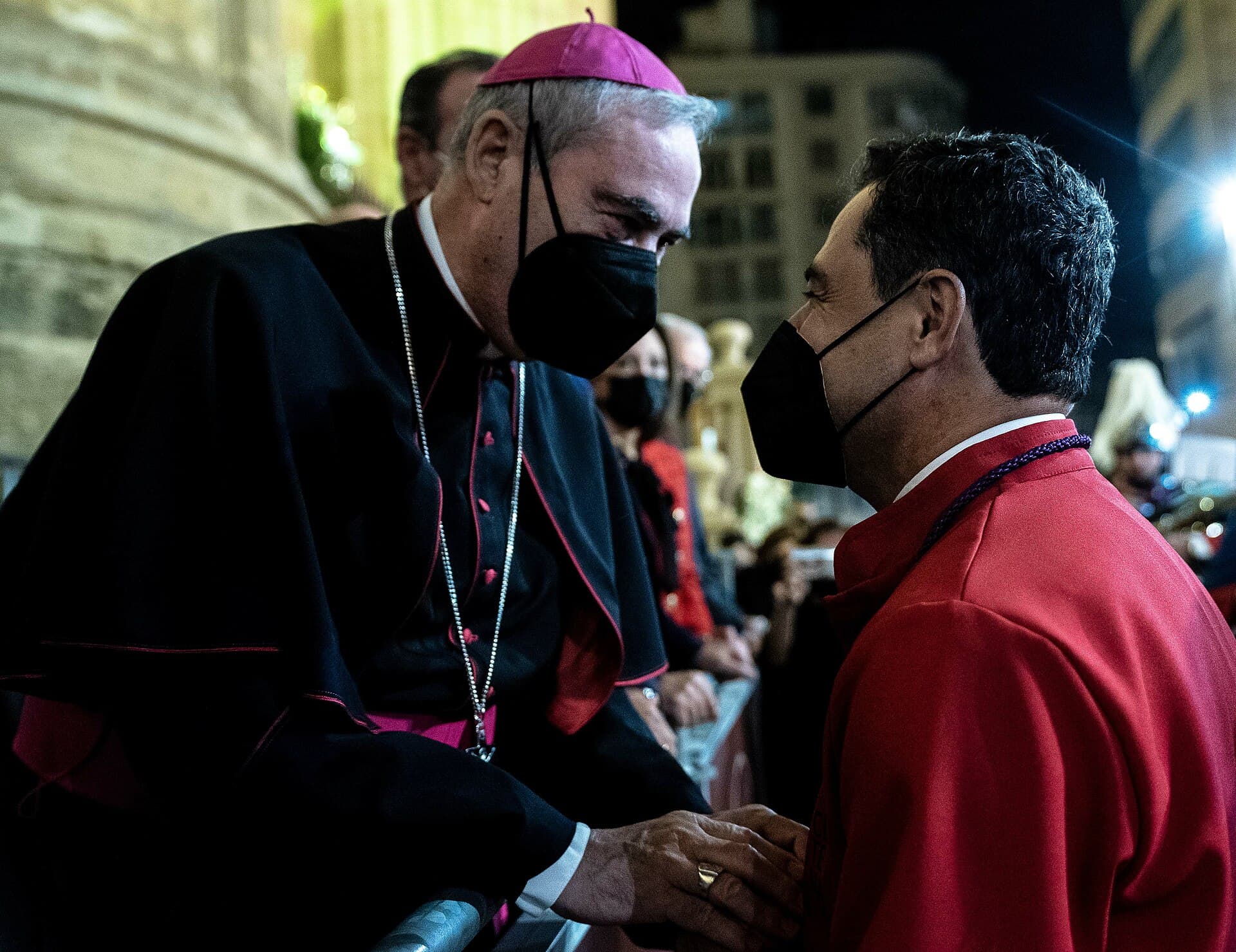
The thing to understand about Semana Santa is that it is a funeral. For a week each spring, brotherhoods in every Andalusian town carry two images through the streets: a Christ, at some stage of his execution, and behind him a Virgin dressed as a widow, under a canopy, weeping. The men underneath the float cannot see out. The crowd is silent when the float lifts. Somebody in a balcony sings a saeta, unaccompanied, straight at the image, and everything stops until they finish.
Andalusia does public grief better than almost anywhere in Europe, and it has around six hundred mapped mass graves from the Civil War and the years after it, most of which have never been opened. The region that stages the most elaborate mourning ritual on the continent contains tens of thousands of people whose families still do not know where they are.
Andalusia is the southernmost autonomous community of Spain, about 87,300 square kilometres across eight provinces, and with roughly 8.5 million residents it is the most populous region in the country. The capital is Seville. It runs from the Sierra Morena in the north across the Guadalquivir valley to the Baetic ranges and the coast, and it contains both the highest point in mainland Spain, in the Sierra Nevada, and some of the driest country in Europe.
Two facts shape everything else. It faces Africa across fourteen kilometres of water, which is why it was Muslim territory for the better part of eight hundred years. And it was, for two centuries, the door through which Spain reached the Americas, since the fleets sailed from Seville and later Cadiz under a legal monopoly. Andalusia is also poorer than most of Spain, with persistently high unemployment and a history of emigration to Catalonia, Madrid and northern Europe, which is part of why so many people elsewhere think of flamenco and Semana Santa as Spanish rather than specifically Andalusian.
Seville. The capital, with the largest Gothic cathedral in the world built on the footprint of the Almohad mosque whose minaret became the Giralda, the Alcazar palace still in royal use, and the Archivo de Indias holding the paper record of the Spanish empire in the Americas. Its Semana Santa is the most famous in Spain.
Granada. Under the Sierra Nevada, holding the Alhambra and Generalife, the palace-city of the Nasrid dynasty, and the Albayzin, the old Moorish quarter facing it across a ravine. The last Muslim kingdom in Iberia surrendered here in January 1492.
Cordoba. The capital of the caliphate and, in the tenth century, one of the largest cities in the world. The Mezquita, begun in 785, is a forest of double-tiered horseshoe arches with a cathedral inserted into the middle of it, and the argument about what the building should be called is still live.
Cadiz. On a spit in the Atlantic, plausibly the oldest continuously inhabited city in western Europe, founded by Phoenicians. Its carnival is the sharpest satirical festival in Spain.
Ubeda and Baeza. Two small Renaissance towns in Jaen inscribed together by UNESCO, built by families enriched in the sixteenth century and then left largely untouched by later prosperity.
The Guadalquivir valley held Tartessos, a wealthy metal-trading culture known to Greek and Biblical writers and still archaeologically elusive, and later became the Roman province of Baetica, which produced the emperors Trajan and Hadrian and exported oil in such volume that a hill of broken amphorae in Rome is made of Baetican pottery.
 The Court of the Lions was built for a kingdom already paying tribute to Castile and living on borrowed time. Photograph by Heparina1985, CC BY-SA 4.0, via Wikimedia Commons.
In 711 a Muslim army crossed from North Africa and within a few years controlled most of the peninsula. Al-Andalus lasted, in shrinking form, until 1492. Cordoba under the Umayyads became the intellectual centre of western Europe, with libraries, hospitals and a scientific and philosophical culture in which Muslims, Jews and Christians all participated; Maimonides was born there, Averroes worked there. After the caliphate fragmented, the Almoravids and Almohads came from the Maghreb, and by the thirteenth century Christian conquest had taken everything except Granada.
Granada held on for two and a half centuries as a tributary state and produced the Alhambra. It surrendered on 2 January 1492. The terms guaranteed religious freedom and were abandoned within a decade; Jews were expelled in 1492, forced conversion of Muslims followed, and the Moriscos, the converted Muslim population, were expelled from Spain between 1609 and 1614, which emptied whole districts of the Alpujarras and Valencia.
The modern injury is the Civil War. Andalusia was divided by the front in 1936, much of it falling to the rebels early, and the repression that followed was severe and long. Estimates of those killed and buried without record across Spain run to tens of thousands; the region's own mapping exercise found close to six hundred grave sites. Franco's dictatorship lasted until 1975, and the transition to democracy was built on an explicit decision not to prosecute, which is why the exhumations described below did not begin in earnest until the twenty-first century.
Andalusian Spanish is not a separate language but it is unmistakable, and it is spoken by more people than most European languages have speakers. Its features include seseo and ceceo, the merging of the sounds written s and z in one direction or the other depending on the district, the aspiration or loss of s at the end of a syllable, and the dropping of intervocalic d. It carries low prestige inside Spain and enormous cultural weight, because it is the accent of flamenco and of most Spanish popular music.
The Arabic layer in Spanish is largely an Andalusian inheritance. Several thousand Spanish words come from Arabic, most of them absorbed here: aceituna, azucar, alcalde, almohada, ojala. Place names carry it more heavily still, with the prefix guad from wadi, a river, giving Guadalquivir, the great river, and Guadalajara and dozens more.
Caló, the language of the Spanish Gitanos, contributed the vocabulary of flamenco and, through it, a good deal of Spanish slang. It is a mixed language, Romani vocabulary on Spanish grammar, and it is severely endangered, spoken now in fragments rather than as a full language.
Flamenco is the region's best known creation and its most misunderstood. It emerged in the eighteenth and nineteenth centuries among Andalusian Gitanos and the poor of the lower Guadalquivir, drawing on Andalusian, Romani, Jewish, Moorish and Latin American sources, and it is organised into palos, forms with their own rhythm and mood. The deepest of them, the cante jondo, is a music of lament: the siguiriya and the martinete are sung for death and imprisonment.
Lorca and Manuel de Falla, who thought the tradition was being ruined by cafe performance, organised a competition of cante jondo in Granada in 1922 specifically to find singers who had never performed professionally. UNESCO inscribed flamenco on the Representative List in 2010.
The other great expressions are communal and calendrical: the ferias, above all Seville's in April; the romerias, pilgrimages to rural shrines, of which El Rocio at Pentecost draws close to a million people walking, riding and travelling by ox-cart across the marshes; the patios of Cordoba, private courtyards opened to the public each May and inscribed by UNESCO in 2012; and the carnival of Cadiz, where the competing choirs perform political satire that is genuinely feared.
Andalusian Catholicism is organised around the hermandad or cofradia, the brotherhood, and there are thousands of them. A hermandad owns its images, maintains its chapel, admits members, elects officers, runs charitable work and, once a year, processes. Membership passes through families and is a form of belonging that survives in people who never otherwise attend church.
The Court of the Lions was built for a kingdom already paying tribute to Castile and living on borrowed time. Photograph by Heparina1985, CC BY-SA 4.0, via Wikimedia Commons.
In 711 a Muslim army crossed from North Africa and within a few years controlled most of the peninsula. Al-Andalus lasted, in shrinking form, until 1492. Cordoba under the Umayyads became the intellectual centre of western Europe, with libraries, hospitals and a scientific and philosophical culture in which Muslims, Jews and Christians all participated; Maimonides was born there, Averroes worked there. After the caliphate fragmented, the Almoravids and Almohads came from the Maghreb, and by the thirteenth century Christian conquest had taken everything except Granada.
Granada held on for two and a half centuries as a tributary state and produced the Alhambra. It surrendered on 2 January 1492. The terms guaranteed religious freedom and were abandoned within a decade; Jews were expelled in 1492, forced conversion of Muslims followed, and the Moriscos, the converted Muslim population, were expelled from Spain between 1609 and 1614, which emptied whole districts of the Alpujarras and Valencia.
The modern injury is the Civil War. Andalusia was divided by the front in 1936, much of it falling to the rebels early, and the repression that followed was severe and long. Estimates of those killed and buried without record across Spain run to tens of thousands; the region's own mapping exercise found close to six hundred grave sites. Franco's dictatorship lasted until 1975, and the transition to democracy was built on an explicit decision not to prosecute, which is why the exhumations described below did not begin in earnest until the twenty-first century.
Andalusian Spanish is not a separate language but it is unmistakable, and it is spoken by more people than most European languages have speakers. Its features include seseo and ceceo, the merging of the sounds written s and z in one direction or the other depending on the district, the aspiration or loss of s at the end of a syllable, and the dropping of intervocalic d. It carries low prestige inside Spain and enormous cultural weight, because it is the accent of flamenco and of most Spanish popular music.
The Arabic layer in Spanish is largely an Andalusian inheritance. Several thousand Spanish words come from Arabic, most of them absorbed here: aceituna, azucar, alcalde, almohada, ojala. Place names carry it more heavily still, with the prefix guad from wadi, a river, giving Guadalquivir, the great river, and Guadalajara and dozens more.
Caló, the language of the Spanish Gitanos, contributed the vocabulary of flamenco and, through it, a good deal of Spanish slang. It is a mixed language, Romani vocabulary on Spanish grammar, and it is severely endangered, spoken now in fragments rather than as a full language.
Flamenco is the region's best known creation and its most misunderstood. It emerged in the eighteenth and nineteenth centuries among Andalusian Gitanos and the poor of the lower Guadalquivir, drawing on Andalusian, Romani, Jewish, Moorish and Latin American sources, and it is organised into palos, forms with their own rhythm and mood. The deepest of them, the cante jondo, is a music of lament: the siguiriya and the martinete are sung for death and imprisonment.
Lorca and Manuel de Falla, who thought the tradition was being ruined by cafe performance, organised a competition of cante jondo in Granada in 1922 specifically to find singers who had never performed professionally. UNESCO inscribed flamenco on the Representative List in 2010.
The other great expressions are communal and calendrical: the ferias, above all Seville's in April; the romerias, pilgrimages to rural shrines, of which El Rocio at Pentecost draws close to a million people walking, riding and travelling by ox-cart across the marshes; the patios of Cordoba, private courtyards opened to the public each May and inscribed by UNESCO in 2012; and the carnival of Cadiz, where the competing choirs perform political satire that is genuinely feared.
Andalusian Catholicism is organised around the hermandad or cofradia, the brotherhood, and there are thousands of them. A hermandad owns its images, maintains its chapel, admits members, elects officers, runs charitable work and, once a year, processes. Membership passes through families and is a form of belonging that survives in people who never otherwise attend church.
 The prayer hall at Cordoba, begun in 785 and extended three times, with a cathedral later inserted into the middle of it. What the building should be called is still argued about. Photograph by Jennifer Morrow, CC BY 2.0, via Wikimedia Commons.
Devotion attaches to specific images rather than to doctrine. A city's Virgins have names, wardrobes, jewels donated over centuries and fiercely partisan followings, and the rivalry between them is real. The Macarena and the Esperanza de Triana in Seville are the obvious example. This is often described by outsiders as superstition and is better understood as a relationship with an object that has been in the same family and the same street for three hundred years.
Underneath sits the older layered history. Andalusia was Muslim for longer than it has been Christian, and the physical evidence is a cathedral inside a mosque at Cordoba, a church inside a minaret at Seville, and Mudejar craftsmanship in Christian palaces built by Muslim workmen. The region's Jewish quarters survive as street plans and a small number of synagogues. Whether and how to present this inheritance, particularly at the Mezquita, is a continuing public argument.
Semana Santa is the largest thing that happens in Andalusia and it is a week-long collective funeral. Each brotherhood processes from its church to the cathedral and back, sometimes over twelve hours or more, carrying one or two pasos: heavy carved floats bearing life-sized polychrome sculptures, many of them seventeenth-century, depicting the arrest, trial, crucifixion and burial, and separately the Virgin in mourning.
The people underneath are the costaleros, who carry the float on the back of the neck, in the dark, thirty to fifty of them, moving on the instructions of a capataz who taps the wood outside. The nazarenos walk in front in robes and the pointed capirote hood that hides the face, some barefoot, some dragging chains, because the penitence is meant to be anonymous. Bands play marches written for the purpose. At intervals a singer delivers a saeta, an unaccompanied flamenco lament sung to the image from a window, and the procession halts to listen.
Seville's Madruga, the small hours of Good Friday, is the emotional centre of the whole thing, when the most venerated brotherhoods move through the city between midnight and dawn.
Against this stands what the region has not been able to do. Spain has roughly 3,500 recorded mass graves from the Civil War and the dictatorship, and only around 800 have been exhumed in two decades. Andalusia's own official mapping, published after years of research, identified close to six hundred sites. The Historical Memory Law of 2007 and then the Democratic Memory Law of October 2022 placed a duty on public authorities to search for and exhume victims, to maintain public maps of graves, and to build a DNA database, and work at large sites such as Pico Reja in Seville has recovered substantial numbers of individuals. Progress depends heavily on which parties hold regional and municipal power, and the subject remains politically contested rather than settled.
Federico Garcia Lorca is the case that stands for the rest. Andalusia's greatest poet, whose best work is about death and whose Llanto is the most famous lament in Spanish, was taken and shot near Granada in August 1936. His body has never been found, despite repeated searches, the most recent in 2016. A region that can turn out a hundred thousand people to mourn a wooden statue cannot locate its own poet.
Andalusian records begin in the sixteenth century for most families and stop, for some, in a ditch.
Parish registers survive from the middle of the sixteenth century in most towns, and the diocesan archives hold them. Civil registration began in 1871. The notarial protocols, held in the provincial historical archives, are the richest source: an Andalusian will or dowry names three generations.
Two archives are specific to the region. The Archivo General de Indias in Seville holds the entire administrative record of the Spanish Americas, including the passenger lists to the Indies, so a family that left Andalusia for Mexico or Peru is documented in the city it left from, and the collection is digitised and free. And the Inquisition's limpieza de sangre investigations, which required proving four grandparents free of Jewish or Muslim ancestry, produced genealogical dossiers of extraordinary depth for the families investigated.
The Morisco expulsion between 1609 and 1614 removed the converted Muslim population, and the registers of departure and the resettlement of their villages record it.
The open wound is the Civil War and the repression that followed. Andalusia's own mapping has identified close to six hundred grave sites, most never opened, and the Andalusian government has run a programme of exhumation and identification since. Families searching for a great-grandfather work from municipal records, prison files, military tribunal papers and testimony, and the genealogy runs backwards from a memory towards a place in the ground.
Andalusia holds an exceptional concentration of World Heritage sites. The Alhambra, Generalife and Albayzin in Granada were inscribed in 1984 and extended in 1994; the historic centre of Cordoba in 1984 and extended in 1994; the cathedral, Alcazar and Archivo de Indias in Seville in 1987; Donana as a natural site in 1994; the Renaissance ensembles of Ubeda and Baeza in 2003; the Antequera Dolmens Site, covering megalithic tombs of the third and fourth millennia BCE together with two natural landmarks they are aligned on, in 2016; and the caliphal city of Medina Azahara, the ruined tenth-century palace-city outside Cordoba, in 2018. Flamenco and the Cordoba patios festival are on the intangible heritage lists.
The pressures are the ordinary ones of a heavily visited region: crowding at the Alhambra, which operates strict timed entry; development on the coast; and water. Donana, the wetland at the mouth of the Guadalquivir and one of the most important bird sites in Europe, has been the subject of sustained conflict over aquifer extraction for intensive agriculture, with the European Court of Justice ruling against Spain and UNESCO repeatedly warning about the site's condition.
The brotherhoods conserve a very large body of sculpture, embroidery, silverwork and music outside the museum system entirely, funded by their own members and used rather than displayed, which is an unusual model and, on the evidence, a durable one.
The Archivo General de Indias in Seville is the region's most consequential digital project. It holds the administrative record of Spanish America, tens of millions of pages, and its digitisation through the Spanish PARES portal has put material that once required a trip to Seville in front of researchers across the Americas, which changes who is able to write that history.
Memory work has its own digital infrastructure and it is deliberately public. Andalusia maintains an official map of grave sites, part of the duty created by the memory laws, and national and regional databases combine grave locations, victim censuses and DNA records so that a family submitting a sample can be matched against remains recovered anywhere. This is the practical machinery that turns a policy into a burial.
Flamenco has been documented extensively, with recorded archives, the Andalusian flamenco documentation centre, and digitised historical recordings making the older singers accessible, and the region's Islamic architectural heritage has been surveyed and modelled in detail, including reconstructions of Medina Azahara as it stood before it was sacked.
Andalusia is the source of most of what the world pictures when it pictures Spain, which is a historical accident of nineteenth-century travel writing and twentieth-century tourism promotion: flamenco, bullfighting, white villages, the guitar. Andalusians are aware of this and are ambivalent about it, since the image is both a real inheritance and a flattening of a region with an industrial past and a serious literary tradition.
The Islamic heritage has become a live cultural and political question rather than a settled historical one. Al-Andalus is claimed variously as a model of coexistence, a lost golden age, and a period of conquest, and the arguments recur around the Mezquita, around Muslim worship at heritage sites, and around how the period is taught.
The memory question is the sharpest contemporary issue. Exhumations, the removal of Francoist monuments and street names, and the interpretation of the dictatorship divide Spanish politics along party lines, and regional and municipal governments have accelerated or slowed the work depending on who holds them. For families, the practical stake is narrow and old: whether a grandmother's brother can be recovered from a ditch and buried with a name on him.
A funeral kept in working order for four centuries. The hermandades maintain, restore and use a vast body of sculpture, silver and embroidery entirely outside the museum system, funded by their members and carried through the streets once a year.
A music recognised on its own terms. Flamenco was inscribed by UNESCO in 2010 as a living practice, a century after Lorca and Falla organised a competition in Granada to find singers who had never performed for money.
Seven World Heritage sites in one region. From the Antequera dolmens of the fourth millennium BCE to the caliphal city of Medina Azahara, listed in 2018, Andalusia's inscriptions cover almost every layer of its history.
A legal duty to find the missing. The Democratic Memory Law of October 2022 obliges public authorities to search for and exhume victims, maintain public maps of grave sites and hold a DNA database, giving families a route that did not exist for the first sixty years after the war.
The prayer hall at Cordoba, begun in 785 and extended three times, with a cathedral later inserted into the middle of it. What the building should be called is still argued about. Photograph by Jennifer Morrow, CC BY 2.0, via Wikimedia Commons.
Devotion attaches to specific images rather than to doctrine. A city's Virgins have names, wardrobes, jewels donated over centuries and fiercely partisan followings, and the rivalry between them is real. The Macarena and the Esperanza de Triana in Seville are the obvious example. This is often described by outsiders as superstition and is better understood as a relationship with an object that has been in the same family and the same street for three hundred years.
Underneath sits the older layered history. Andalusia was Muslim for longer than it has been Christian, and the physical evidence is a cathedral inside a mosque at Cordoba, a church inside a minaret at Seville, and Mudejar craftsmanship in Christian palaces built by Muslim workmen. The region's Jewish quarters survive as street plans and a small number of synagogues. Whether and how to present this inheritance, particularly at the Mezquita, is a continuing public argument.
Semana Santa is the largest thing that happens in Andalusia and it is a week-long collective funeral. Each brotherhood processes from its church to the cathedral and back, sometimes over twelve hours or more, carrying one or two pasos: heavy carved floats bearing life-sized polychrome sculptures, many of them seventeenth-century, depicting the arrest, trial, crucifixion and burial, and separately the Virgin in mourning.
The people underneath are the costaleros, who carry the float on the back of the neck, in the dark, thirty to fifty of them, moving on the instructions of a capataz who taps the wood outside. The nazarenos walk in front in robes and the pointed capirote hood that hides the face, some barefoot, some dragging chains, because the penitence is meant to be anonymous. Bands play marches written for the purpose. At intervals a singer delivers a saeta, an unaccompanied flamenco lament sung to the image from a window, and the procession halts to listen.
Seville's Madruga, the small hours of Good Friday, is the emotional centre of the whole thing, when the most venerated brotherhoods move through the city between midnight and dawn.
Against this stands what the region has not been able to do. Spain has roughly 3,500 recorded mass graves from the Civil War and the dictatorship, and only around 800 have been exhumed in two decades. Andalusia's own official mapping, published after years of research, identified close to six hundred sites. The Historical Memory Law of 2007 and then the Democratic Memory Law of October 2022 placed a duty on public authorities to search for and exhume victims, to maintain public maps of graves, and to build a DNA database, and work at large sites such as Pico Reja in Seville has recovered substantial numbers of individuals. Progress depends heavily on which parties hold regional and municipal power, and the subject remains politically contested rather than settled.
Federico Garcia Lorca is the case that stands for the rest. Andalusia's greatest poet, whose best work is about death and whose Llanto is the most famous lament in Spanish, was taken and shot near Granada in August 1936. His body has never been found, despite repeated searches, the most recent in 2016. A region that can turn out a hundred thousand people to mourn a wooden statue cannot locate its own poet.
Andalusian records begin in the sixteenth century for most families and stop, for some, in a ditch.
Parish registers survive from the middle of the sixteenth century in most towns, and the diocesan archives hold them. Civil registration began in 1871. The notarial protocols, held in the provincial historical archives, are the richest source: an Andalusian will or dowry names three generations.
Two archives are specific to the region. The Archivo General de Indias in Seville holds the entire administrative record of the Spanish Americas, including the passenger lists to the Indies, so a family that left Andalusia for Mexico or Peru is documented in the city it left from, and the collection is digitised and free. And the Inquisition's limpieza de sangre investigations, which required proving four grandparents free of Jewish or Muslim ancestry, produced genealogical dossiers of extraordinary depth for the families investigated.
The Morisco expulsion between 1609 and 1614 removed the converted Muslim population, and the registers of departure and the resettlement of their villages record it.
The open wound is the Civil War and the repression that followed. Andalusia's own mapping has identified close to six hundred grave sites, most never opened, and the Andalusian government has run a programme of exhumation and identification since. Families searching for a great-grandfather work from municipal records, prison files, military tribunal papers and testimony, and the genealogy runs backwards from a memory towards a place in the ground.
Andalusia holds an exceptional concentration of World Heritage sites. The Alhambra, Generalife and Albayzin in Granada were inscribed in 1984 and extended in 1994; the historic centre of Cordoba in 1984 and extended in 1994; the cathedral, Alcazar and Archivo de Indias in Seville in 1987; Donana as a natural site in 1994; the Renaissance ensembles of Ubeda and Baeza in 2003; the Antequera Dolmens Site, covering megalithic tombs of the third and fourth millennia BCE together with two natural landmarks they are aligned on, in 2016; and the caliphal city of Medina Azahara, the ruined tenth-century palace-city outside Cordoba, in 2018. Flamenco and the Cordoba patios festival are on the intangible heritage lists.
The pressures are the ordinary ones of a heavily visited region: crowding at the Alhambra, which operates strict timed entry; development on the coast; and water. Donana, the wetland at the mouth of the Guadalquivir and one of the most important bird sites in Europe, has been the subject of sustained conflict over aquifer extraction for intensive agriculture, with the European Court of Justice ruling against Spain and UNESCO repeatedly warning about the site's condition.
The brotherhoods conserve a very large body of sculpture, embroidery, silverwork and music outside the museum system entirely, funded by their own members and used rather than displayed, which is an unusual model and, on the evidence, a durable one.
The Archivo General de Indias in Seville is the region's most consequential digital project. It holds the administrative record of Spanish America, tens of millions of pages, and its digitisation through the Spanish PARES portal has put material that once required a trip to Seville in front of researchers across the Americas, which changes who is able to write that history.
Memory work has its own digital infrastructure and it is deliberately public. Andalusia maintains an official map of grave sites, part of the duty created by the memory laws, and national and regional databases combine grave locations, victim censuses and DNA records so that a family submitting a sample can be matched against remains recovered anywhere. This is the practical machinery that turns a policy into a burial.
Flamenco has been documented extensively, with recorded archives, the Andalusian flamenco documentation centre, and digitised historical recordings making the older singers accessible, and the region's Islamic architectural heritage has been surveyed and modelled in detail, including reconstructions of Medina Azahara as it stood before it was sacked.
Andalusia is the source of most of what the world pictures when it pictures Spain, which is a historical accident of nineteenth-century travel writing and twentieth-century tourism promotion: flamenco, bullfighting, white villages, the guitar. Andalusians are aware of this and are ambivalent about it, since the image is both a real inheritance and a flattening of a region with an industrial past and a serious literary tradition.
The Islamic heritage has become a live cultural and political question rather than a settled historical one. Al-Andalus is claimed variously as a model of coexistence, a lost golden age, and a period of conquest, and the arguments recur around the Mezquita, around Muslim worship at heritage sites, and around how the period is taught.
The memory question is the sharpest contemporary issue. Exhumations, the removal of Francoist monuments and street names, and the interpretation of the dictatorship divide Spanish politics along party lines, and regional and municipal governments have accelerated or slowed the work depending on who holds them. For families, the practical stake is narrow and old: whether a grandmother's brother can be recovered from a ditch and buried with a name on him.
A funeral kept in working order for four centuries. The hermandades maintain, restore and use a vast body of sculpture, silver and embroidery entirely outside the museum system, funded by their members and carried through the streets once a year.
A music recognised on its own terms. Flamenco was inscribed by UNESCO in 2010 as a living practice, a century after Lorca and Falla organised a competition in Granada to find singers who had never performed for money.
Seven World Heritage sites in one region. From the Antequera dolmens of the fourth millennium BCE to the caliphal city of Medina Azahara, listed in 2018, Andalusia's inscriptions cover almost every layer of its history.
A legal duty to find the missing. The Democratic Memory Law of October 2022 obliges public authorities to search for and exhume victims, maintain public maps of grave sites and hold a DNA database, giving families a route that did not exist for the first sixty years after the war.
National Overview
Notable Cities
Historical Foundations
Linguistic and Etymological Roots
Cultural Identity
Religion and Spirituality
Remembrance and Mourning Traditions
Tracing a Family in Andalusia
Heritage Preservation Efforts
Digital Heritage
Contemporary Cultural Influences
Success Stories
References and resources
- UNESCO, Alhambra, Generalife and Albayzin, Granada: the 1984 inscription and its 1994 extension.
- UNESCO, Historic Centre of Cordoba: the Mezquita and the old city.
- UNESCO, Caliphate City of Medina Azahara: the 2018 inscription.
- UNESCO, Antequera Dolmens Site: the 2016 inscription of the megalithic tombs.
- UNESCO, Flamenco: the 2010 intangible heritage listing.
- Holy Week in Seville, Wikipedia: the brotherhoods, the pasos, the costaleros and the Madruga.
- Democratic Memory Law, Wikipedia: the 2022 law and the duties it creates.
- Federico Garcia Lorca, Wikipedia: the killing in August 1936 and the searches for his remains.
- Al-Andalus, Wikipedia: the eight centuries of Muslim rule and their end.
- Andalusia, Wikipedia: geography, population and administration.