Heritage · University
University of Zurich: History and Overview
Founded in 1833 by the Canton of Zurich, the University of Zurich is often described as the first university in Europe established by a democratic state rather than a church or a prince. It opened its degrees to women in the 1860s, earlier than almost anywhere else in Europe, and it granted Albert Einstein his doctorate in 1905.Written to last.
By Confinity Heritage Editorial · 2026-08-25 · 8-minute readQuiet tools, kept out of the way.
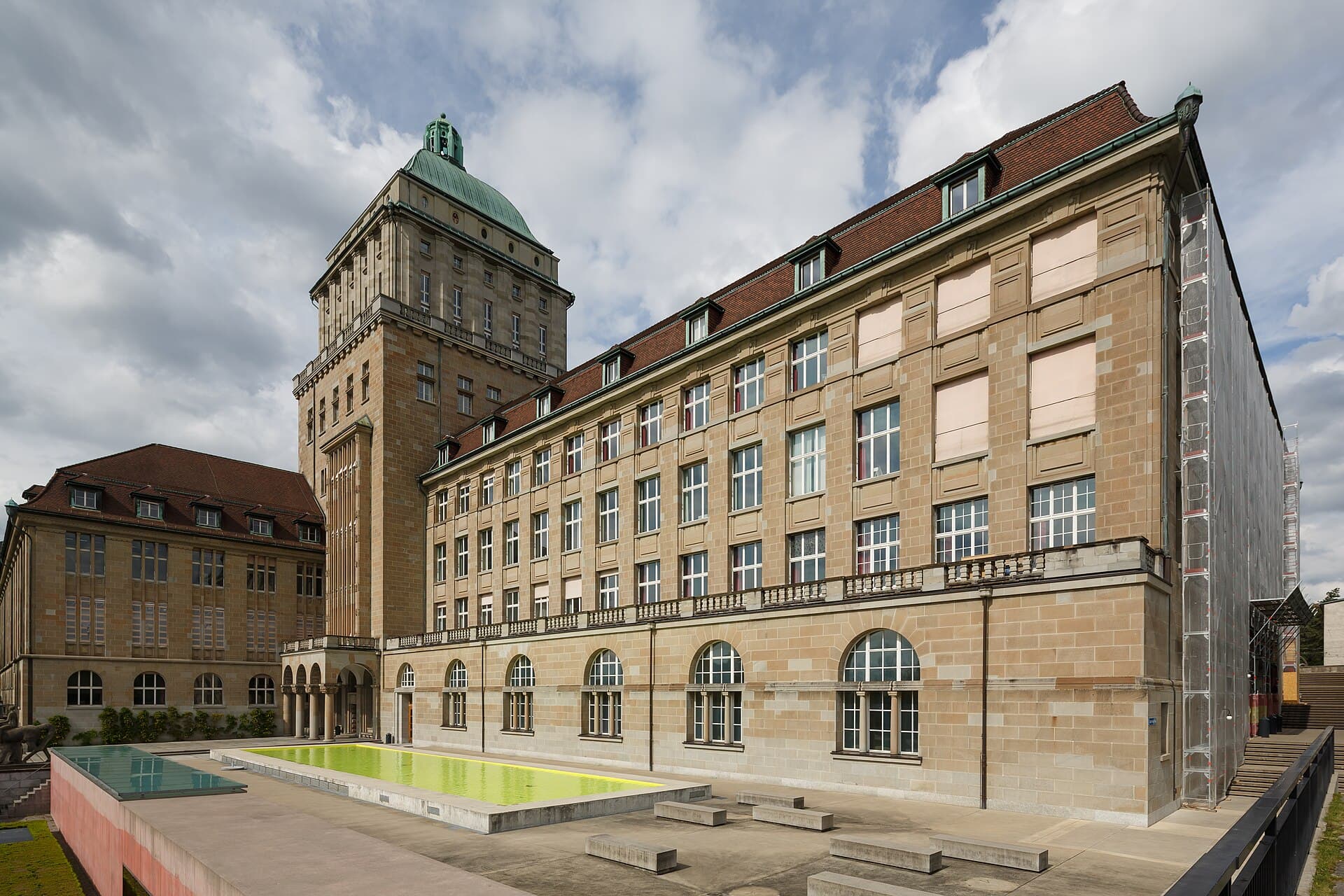
The University of Zurich stands on a terrace above the old town of the largest city in Switzerland, its domed main building looking down over the roofs to the lake and, on clear days, to the Alps beyond. It was founded in 1833 by the Canton of Zurich, and it is often described as the first university in Europe established by a democratic state rather than by a monarch or a church. The founding act itself is plain in the record: no royal charter, no papal bull, but a vote of a cantonal government answerable to its citizens.
That civic origin shaped what followed. A university that owed its existence to no throne and no altar proved readier than most to ask who else might be let in. Within a generation of its founding, Zurich was granting degrees to women while nearly every other university in Europe still turned them away at the door, and the people who walked through that open door carried its name across the continent.
The university of 1833 was new, but the learning it gathered up was not. Its oldest root reaches back to 1525, when the reformer Huldrych Zwingli established a school of theology at the Grossmünster, the college later known as the Carolinum. For three centuries that foundation, joined in time by schools of medicine and law, trained the clergy and physicians of the city. The liberal cantonal government created after the upheavals of 1830 merged these existing colleges into a single institution, and the University of Zurich opened its doors with faculties of theology, law, medicine and philosophy and a first enrolment of 161 students.
The young university grew alongside a young federal state. In 1855 the Swiss confederation opened its national polytechnic institute, the future ETH Zurich, in the same city, and for decades the two institutions shared buildings as well as a hillside. The university's decisive early act came in the 1860s, when it began to admit women, first to lectures and then, from 1867, as fully matriculated students. It was among the first universities in Europe to do so, and the consequences of that decision fill the section below.
By the beginning of the twentieth century the university had outgrown its borrowed rooms. The canton held an architectural competition, and the main building designed by Karl Moser opened in 1914 on Rämistrasse, a broad neo-classical block crowned by a tower whose dome has been the university's emblem ever since. Through the twentieth century the institution expanded from a compact cantonal school into a major research university, adding the Irchel campus on the northern edge of the city in the 1970s to house much of its science.
The university's historic heart sits on the Rämistrasse terrace above the Limmat, reached from the old town by a short climb or by the little Polybahn funicular that has hauled students up the hill since 1889. Here the arrangement of the city's higher learning can be taken in at a single glance: the main building of the university and the main building of ETH Zurich stand shoulder to shoulder along the same street, two institutions with different founders, different missions and one shared hillside. The university belongs to the canton and carries the full breadth of a classical university, including medicine and law; ETH belongs to the federal government and concentrates on science and engineering. Students cross between the two constantly, and much of the scientific history attached to Zurich was made by people who spent time in both.
Moser's main building repays a visit in its own right, its columned entrance opening onto a grand light-well hall, with several of the university's museums and collections under the same roof. The rest of the university spreads across the city: the hospitals and medical faculty near the centre, and the Irchel campus in its own park to the north, where laboratories for biology, chemistry and physics stand among ponds and sculpture.
Academically the university is organised into seven faculties spanning theology, law, business and economics, medicine, veterinary medicine, arts and social sciences, and science. Its strongest international reputation lies in medicine and the life sciences, in neuroscience, and in economics and finance, fields in which it works closely with the banks, hospitals and research institutes of the city around it.
The most consequential thing the University of Zurich ever did was to say yes to people every other university in Europe was refusing. In the 1860s a university education was closed to women almost everywhere on the continent. Zurich allowed them into its lecture halls, and in 1867 a young Russian named Nadezhda Suslova, who had been barred from further study in St Petersburg, defended her doctoral thesis in medicine there. She is widely regarded as the first woman to earn a medical doctorate at a modern European university. Her example travelled fast. Marie Heim-Vögtlin, who began her studies the following year, became the first Swiss woman to qualify as a physician, and Emilie Kempin-Spyri took a doctorate in law at Zurich in 1887, though the Swiss courts of her day still refused to let her practise.
Behind these named firsts came a migration. Through the 1870s hundreds of women, the greater number of them Russian, along with Germans, English women and others, moved to Zurich because it was the place in Europe where a woman could be a student of full standing rather than a tolerated guest. The Russian community grew so large, and so politically lively, that in 1873 the tsarist government ordered its women students home under threat of being barred from qualification in Russia. Many complied; many simply finished their degrees elsewhere in Switzerland, at Bern or at the University of Geneva, which had followed Zurich's lead. Others kept coming for decades. The German writer and historian Ricarda Huch took her doctorate at Zurich in the 1890s because no university in Germany would examine her.
It is worth pausing on what this meant in practice. A woman who wanted to become a doctor in 1870 could not do so in Russia, Germany, Austria or England. She could do so in Zurich. Many of the first women physicians of Russia, Germany and Britain carried Zurich degrees, and the university's early registers read like a roll call of the excluded finding a way in.
The university's scientific record is threaded through the story of modern physics. Wilhelm Conrad Röntgen, later the first winner of the Nobel Prize in Physics for his discovery of X-rays, took his doctorate at the University of Zurich in 1869. Albert Einstein earned his doctorate there in 1905, the year of his great papers, with a dissertation on the determination of molecular dimensions submitted to the university while he was working at the patent office in Bern; he had studied earlier at the neighbouring polytechnic, but the doctorate itself was Zurich's, and he returned as the university's professor of theoretical physics from 1909 to 1911. A decade later Erwin Schrödinger held the same chair, from 1921 to 1927, and it was during his Zurich years, in 1926, that he published the wave equation that bears his name and anchors quantum mechanics.
The university counts a dozen Nobel laureates among its professors and alumni, from Röntgen and Einstein through Paul Karrer in chemistry and Rolf Zinkernagel, whose Nobel-recognised work on how the immune system recognises infected cells was done in Zurich's Institute of Experimental Immunology. Its economics faculty, meanwhile, has become one of the most cited in the German-speaking world.
The University of Zurich is the largest university in Switzerland, with around 28,000 students. It remains a cantonal institution, funded and governed from the canton whose citizens founded it, and a member of the League of European Research Universities. Its current strengths follow long-laid foundations: university medicine conducted with the city's hospitals, neuroscience pursued jointly with ETH Zurich, and research priorities running from evolutionary biology to digital society. A large share of its doctoral students come from abroad, which is less a novelty than a continuity; the university has been educating other countries' ambitious since the 1860s.
The main building at Rämistrasse 71 sits a short walk, or one ride on the Polybahn funicular, above Central square in the middle of Zurich. Visitors can enter the main hall during opening hours, and the university's museums, including the Zoological Museum and the Ethnographic Museum, are open to the public, most of them free of charge. The terrace between the university and ETH offers one of the best free views over the old town, the Limmat and the lake. Teaching areas are best left to the students in term, which leaves the terrace, the dome hall and the view down over the old town.