Heritage · University
Imperial College London: History and Overview
Founded in 1907 on the South Kensington estate bought with the profits of the Great Exhibition, Imperial College London united three Victorian colleges of science, mines and engineering. It teaches only science, engineering, medicine and business, and counts around fourteen Nobel laureates among its people.Written to last.
By Confinity Heritage Editorial · 2026-08-23 · 8-minute readQuiet tools, kept out of the way.
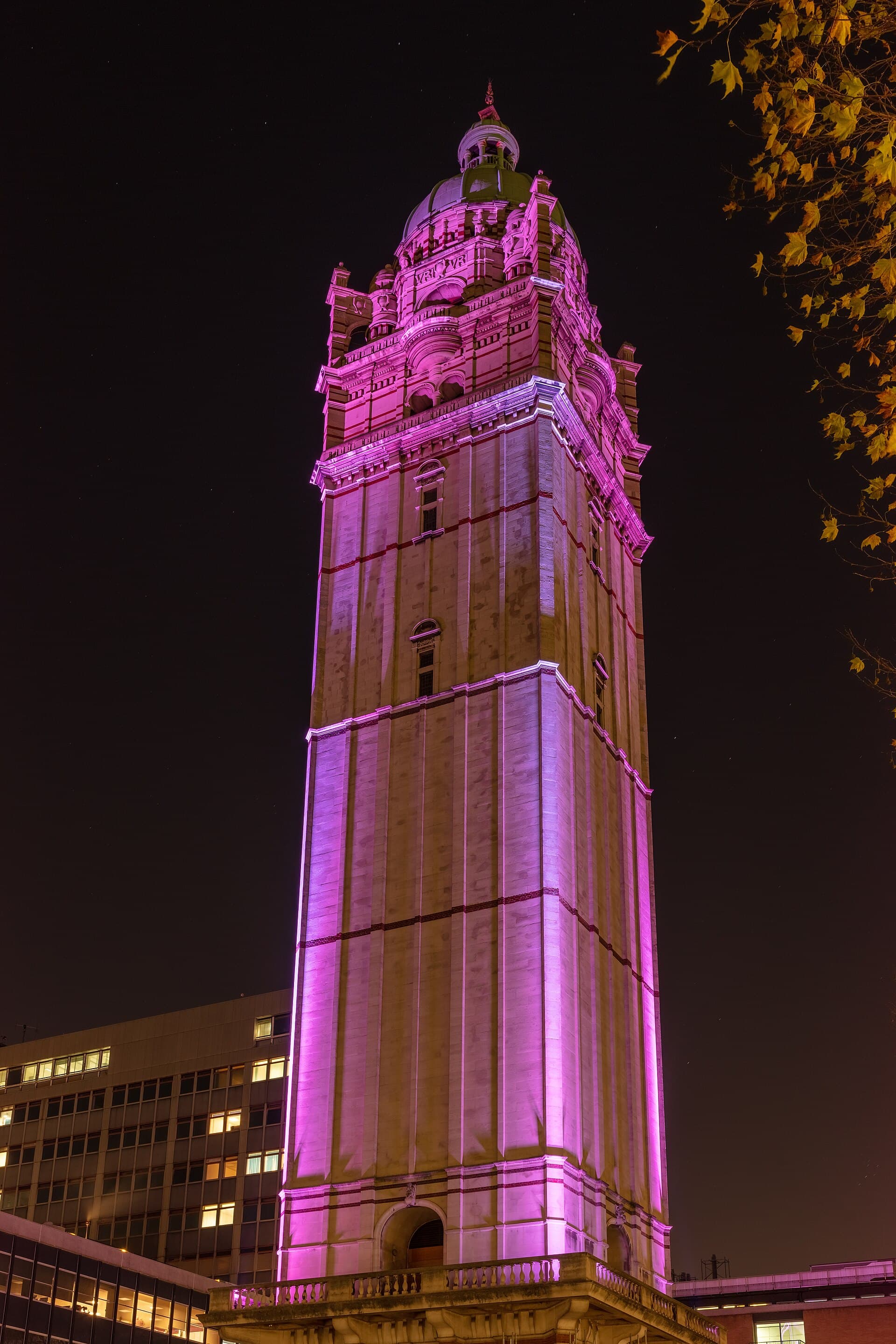
Imperial College London occupies a stretch of South Kensington that was itself an act of deliberate memory. The land was bought by the Royal Commission for the Exhibition of 1851 with the profits of the Great Exhibition, and Prince Albert's plan for it, a district of museums and colleges standing together, gave the United Kingdom the quarter Londoners nicknamed Albertopolis. Imperial's campus sits at the heart of it, sharing its streets with the Victoria and Albert Museum, the Science Museum and the Natural History Museum, so that the walk from a lecture theatre to one of the great national collections takes a few minutes on foot.
The college itself is younger than its neighbourhood and narrower than most universities of its rank. Since its founding in 1907 it has taught science, engineering, medicine and, later, business, and nothing else: there are no humanities faculties at all. That concentration has produced a remarkable record, from the discovery of penicillin at a hospital now part of its medical school to the theoretical work that unified two of nature's fundamental forces.
Imperial was created by royal charter in 1907 as a merger of three Victorian institutions that already stood on the South Kensington estate. The Royal College of Science had grown out of the Royal College of Chemistry and the Normal School of Science, where Thomas Henry Huxley taught biology and trained a generation of science teachers, among them the young H. G. Wells. The Royal School of Mines, founded in 1851, supplied the mining and metallurgical expertise of the industrial age. The City and Guilds College, established by the livery companies of the City of London, taught engineering. The new charter bound the three into a single college of the University of London, intended, in the language of the day, to give the country a technical institution to rival the great scientific schools of Germany and the United States.
The merged college expanded steadily through the twentieth century, absorbing further institutions as it grew. The most consequential additions came from medicine. St Mary's Hospital Medical School in Paddington, where Alexander Fleming noticed in 1928 that a stray mould had killed the bacteria on a culture plate, joined Imperial in 1988, and further mergers with the Charing Cross and Westminster medical schools, the Royal Postgraduate Medical School and the National Heart and Lung Institute built one of the largest medical faculties in Europe. Wye College in Kent, an agricultural school, was part of Imperial for a period in the 2000s before its courses were wound down.
The final constitutional change arrived with the centenary. In July 2007, one hundred years after its founding charter, Imperial left the University of London and became a fully independent university awarding its own degrees. The timing was deliberate: the college marked its hundredth birthday by taking its own name off another institution's parchment.
The South Kensington campus fills the blocks between Exhibition Road and Queen's Gate, immediately south of the Royal Albert Hall. Most of its Victorian fabric was replaced in a sweeping post-war rebuilding, so the campus today reads as a dense grid of twentieth-century teaching and laboratory buildings around a central walkway, with the Queen's Tower rising above them as the one tall survivor of the original scheme. The college's departments are organised into four faculties, Engineering, Medicine, Natural Sciences and the Imperial College Business School, and its student body of around twenty thousand is among the most international of any British university.
The absence of humanities departments is not an accident of history but a settled identity. Imperial teaches languages and offers humanities options through a centre for co-curricular studies, yet it has never built faculties of arts, and its charter mission remains the advancement of science, technology and medicine, with particular regard to their application in industry. Within that boundary the college ranks among the strongest institutions in the world, placing near the top of the major international league tables year after year.
The newest chapter is being written a few miles west. Since the mid-2010s Imperial has developed a second major campus at White City, on former BBC land, housing the Molecular Sciences Research Hub, biomedical research buildings and a cluster of ventures where college research is spun into companies. It is the largest expansion in the college's history, and a conscious echo of the original South Kensington idea: research, teaching and enterprise placed deliberately side by side.
The tower at the centre of the campus is all that remains of the Imperial Institute, a vast Renaissance-style building designed by Thomas Collcutt and opened by Queen Victoria in 1893 to mark her Golden Jubilee. The Institute was conceived as a showcase for the research and produce of the empire, and its long frontage dominated the estate for seventy years. When the college needed room to expand in the 1950s and 1960s, the government approved the Institute's demolition, and the decision set off a public conservation battle, with the poet John Betjeman among those who campaigned to save the building. The campaigners lost the building but won its centrepiece: the copper-domed central tower was kept, strengthened to stand alone, and left rising 287 feet above the new concrete campus.
Renamed the Queen's Tower, it is now the college's emblem, printed on its crest through era after era of rebranding. Its belfry holds a peal of ten bells, given in 1892 and named after members of Queen Victoria's family, which are rung on royal anniversaries. For an institution that replaced nearly all of its Victorian architecture, the tower carries an unusual weight: it is the single object through which the campus remembers what stood there before.
Imperial's scientific record spans both accident and theory. Fleming's 1928 observation at St Mary's became penicillin, the first of the antibiotics, and earned him a share of the 1945 Nobel Prize in Physiology or Medicine; the ward where he worked is preserved at the hospital as a small museum. Dennis Gabor, a Hungarian refugee who spent most of his career in Imperial's electrical engineering department, invented holography and received the Nobel Prize in Physics in 1971. Abdus Salam, professor of theoretical physics from 1957, shared the 1979 physics prize for the electroweak theory unifying the electromagnetic and weak forces, becoming the first Pakistani Nobel laureate in science. In all, around fourteen Nobel laureates have studied or worked at the college and its constituent schools, a list that also includes the chemist Derek Barton and the biochemist Ernst Chain, who shared Fleming's prize for turning penicillin into a usable drug.
The college's influence extends into public life in quieter ways. Its centre for global infectious disease analysis has advised governments on outbreaks for decades, and in the spring of 2020 its epidemiological modelling of COVID-19 became one of the most widely discussed scientific documents in the world, informing decisions in the United Kingdom and abroad during the first weeks of the pandemic.
Imperial today teaches roughly twenty thousand students across its faculties, more than half of them from outside the United Kingdom, and its research income places it among the best-funded universities in Europe. Its work runs from clean energy and machine learning to vaccine development and quantum technology, much of it carried out with the hospitals of its academic health science centre and the companies clustered at White City. The college appears consistently near the top of the world rankings, and in recent years several of them have named it the leading university in the United Kingdom.
The South Kensington campus sits between the Royal Albert Hall and the museums of Exhibition Road, a short walk from South Kensington Underground station. The campus walkways are open to pedestrians, and the Queen's Tower can be seen from Imperial College Road, though the tower itself is not generally open for public ascent. Most visitors combine the college with its neighbours: the Victoria and Albert Museum, the Science Museum and the Natural History Museum stand within a few hundred metres, which is the arrangement Prince Albert intended. In term the walkways belong to people hurrying between laboratories, and the public routes are the ones to take.