Heritage · University
University of São Paulo: History and Overview
Founded in 1934 after São Paulo's defeat in the Constitutionalist Revolution, the University of São Paulo gathered the state's older faculties, including the 1827 law school at Largo de São Francisco, around a new faculty launched by young French scholars such as Claude Lévi-Strauss and Fernand Braudel. It is Latin America's most productive research university and the keeper of Brazil's largest university museum collections, from the Ipiranga independence museum to millions of zoological specimens.Written to last.
By Confinity Heritage Editorial · 2026-08-24 · 8-minute readQuiet tools, kept out of the way.
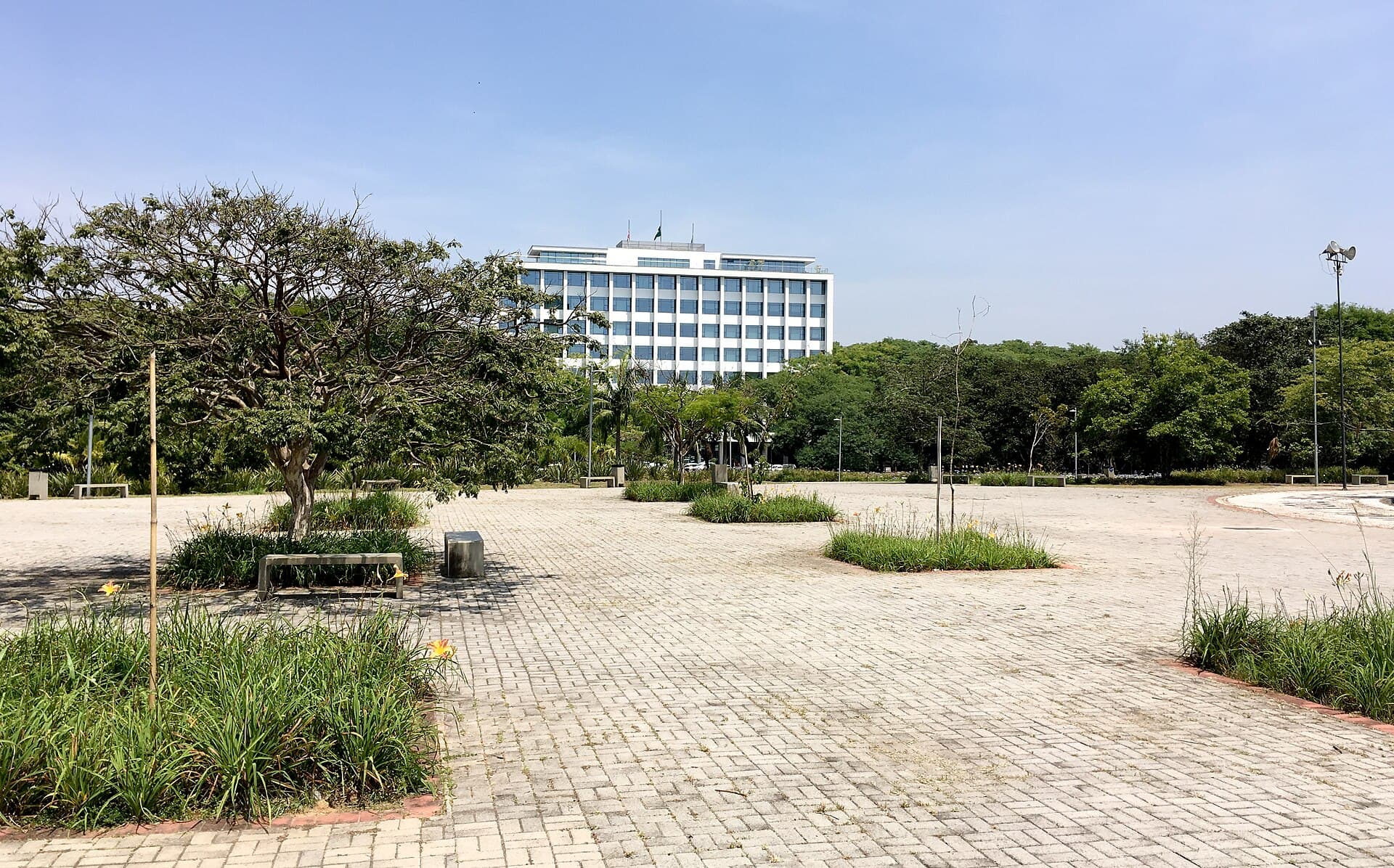
The University of São Paulo, known across Brazil simply as USP, is the largest university in the country and the most productive research institution in Latin America. It was founded in 1934, yet its oldest faculty had already been teaching for more than a century by then, and its founding story is a striking one: a state that had just lost a civil war chose to rebuild itself through scholarship.
USP is also, less famously, Brazil's largest keeper of museums. The university administers the Museu Paulista at Ipiranga, where Brazilian independence was proclaimed, along with major collections of zoology, archaeology and contemporary art. A public university holding a nation's founding site, its natural history and a great share of its modern art is an unusual arrangement, and it gives USP a second vocation alongside teaching and research: curating the memory of Brazil.
The university's roots reach back to the Empire of Brazil. In 1827, five years after independence, an imperial decree created the country's first two law courses, one at Olinda in the northeast and one in São Paulo, housed in the Franciscan convent on the square that gave the school its enduring name, Largo de São Francisco. The São Paulo law faculty became one of the oldest in Latin America and a nursery of Brazilian public life, its arcades producing jurists, poets, abolitionists and presidents of the republic. The state added a Polytechnic School in 1893, an agricultural college at Piracicaba in 1901, and a faculty of medicine in 1912, but these schools stood apart from one another.
What joined them was a defeat. In 1932 São Paulo rose against the federal government of Getúlio Vargas in the Constitutionalist Revolution and lost after three months of fighting. A circle of paulista intellectuals around the newspaper O Estado de S. Paulo, led by Júlio de Mesquita Filho, drew a deliberate lesson from the loss: if the state could not prevail by arms, it would lead by knowledge. On 25 January 1934, the anniversary of the city's founding, Governor Armando de Salles Oliveira signed the decree that united the existing faculties into a university and created a new institution at its centre, the Faculty of Philosophy, Sciences and Letters, intended to give the professional schools a common scientific and humanistic core.
That new faculty had no professors, so São Paulo went abroad to find them. Missions to Europe recruited young scholars, above all from France, and the group that arrived in 1935 turned out to be one of the most consequential faculty cohorts ever assembled. Claude Lévi-Strauss, then in his mid twenties, taught sociology and used São Paulo as the base for his expeditions to the Bororo and Nambikwara peoples of the Brazilian interior, fieldwork he later recounted in Tristes Tropiques. Fernand Braudel taught history from 1935 to 1937 while carrying the notes of his great study of the Mediterranean. Roger Bastide stayed for nearly two decades and wrote foundational studies of Afro-Brazilian religion; the geographer Pierre Monbeig mapped the coffee frontier as it moved west. The Annales school was teaching its methods in the tropics, and a generation of Brazilian scholars, Florestan Fernandes and Antonio Candido among them, formed itself in those classrooms. In physics, Gleb Wataghin, recruited from Turin, built a school of experimental work whose students would soon be heard from.
The military coup of 1964 fell hard on the university. Professors were dismissed or forced out in successive waves, and after the regime's Institutional Act No. 5, the purges of 1969 compulsorily retired some of USP's most distinguished minds, including Florestan Fernandes, the physicist Mário Schenberg and the sociologist and future president Fernando Henrique Cardoso. Students paid a steeper price. Alexandre Vannucchi Leme, a geology undergraduate, died under torture in the custody of the security services in 1973, and the memorial mass held for him at the Sé cathedral became a landmark of resistance; the university's central student directory now bears his name. With the return of civilian rule in the 1980s the purged professors were formally rehabilitated, and the campus resumed its place as one of the country's open democratic forums.
The main campus, the Cidade Universitária Armando de Salles Oliveira, spreads across the Butantã district on the west bank of the Pinheiros river. Planned from the late 1930s and built out mainly in the 1950s and 1960s, it gathered most of the faculties onto a single parkland site of modernist teaching blocks, research institutes and long avenues. Not everything moved: the law faculty remains downtown at Largo de São Francisco, where it has taught since 1827, and USP also maintains substantial campuses in Ribeirão Preto, São Carlos, Piracicaba, Bauru, Lorena and Pirassununga.
Beside the Butantã campus stands one of the university's oldest neighbours, the Butantan Institute, a São Paulo state laboratory founded in 1901 after a plague outbreak at the port of Santos. Under Vital Brazil it pioneered snake antivenom; a century later the same institute produced tens of millions of doses of the CoronaVac COVID-19 vaccine for Brazil's national immunisation programme. Butantan is not formally part of USP, but the two institutions share a fence line, joint graduate programmes and a century of staff moving between them.
USP's most distinctive holding is its museum system, through which a university effectively curates the memory of a nation. The flagship is the Museu Paulista, which most Brazilians call the Ipiranga Museum. Its palatial building, completed in 1890 to a design by Tommaso Bezzi, rises above the spot where Pedro I proclaimed Brazilian independence in 1822, and inside hangs Pedro Américo's vast canvas Independência ou Morte, the image through which generations of schoolchildren have pictured that moment. The museum opened in 1895 and passed to the university in 1963; after a nine-year closure for restoration and expansion it reopened on 7 September 2022, the bicentennial of independence itself.
The other collections are no less serious. The Museum of Zoology holds one of Latin America's great natural history collections, millions of specimens documenting the fauna of the Neotropics. The Museum of Archaeology and Ethnology on the main campus keeps material from Brazil's Indigenous peoples alongside Mediterranean and Andean collections. And the Museum of Contemporary Art, founded in 1963 when the industrialist Francisco Matarazzo Sobrinho transferred to USP the holdings of the city's old modern art museum, keeps thousands of works by artists from Modigliani and Picasso to the Brazilian modernists, displayed since 2012 in a building designed by Oscar Niemeyer's team facing Ibirapuera Park.
The university's scientific reputation was announced early. César Lattes, who studied physics at USP under Wataghin, was the lead experimentalist in the 1947 discovery of the pi meson, working with Cecil Powell's group at Bristol on photographic emulsions exposed at high altitude, and the following year produced pions artificially at Berkeley. Powell received the 1950 Nobel Prize in Physics for the work; Lattes became a founding figure of Brazilian physics. In the human sciences, Florestan Fernandes reshaped the study of race and society in Brazil, Antonio Candido did the same for literary criticism, and the geographer Milton Santos, long a professor at USP, won the Vautrin Lud Prize, geography's highest honour, in 1994.
USP's imprint on public life is broader still. The old law faculty has educated more Brazilian heads of state than any other school, from early presidents of the republic such as Prudente de Morais and Campos Sales to graduates of the USP era including Jânio Quadros and Michel Temer. Fernando Henrique Cardoso, president from 1995 to 2002, studied and taught sociology at the university before the dictatorship forced him out, an arc from purge to presidency.
USP today teaches more than ninety thousand students across its campuses and remains free of tuition, funded by a fixed share of São Paulo state tax revenue that has underwritten its independence since the 1980s. It trains a larger share of Brazil's doctorates than any other institution, and it accounts for roughly a fifth of the country's indexed scientific production. International rankings consistently place it first or second in Latin America, and its research spans tropical medicine, agriculture, engineering, physics and the social sciences that its French founders seeded ninety years ago.
The Cidade Universitária in Butantã is an open campus, reached by the Butantã station of the metro's Line 4, with the Museum of Archaeology and Ethnology on the grounds. The Museu Paulista stands in Independence Park in the Ipiranga district, with timed entry advisable since its 2022 reopening. The Museum of Contemporary Art beside Ibirapuera Park is free to enter. Next to the main campus, the Butantan Institute's grounds, serpentarium and biological museum are open to the public. Downtown, the arcades of the law faculty at Largo de São Francisco stand in the oldest quarter of the city.