Heritage · Country
South Korea Culture and Heritage
From the ancestor tables set at Chuseok to the 81,258 woodblocks that have carried a Buddhist canon intact for eight centuries, South Korea treats remembrance as a duty owed to the family line. A guide to the country's heritage, its Confucian rites of mourning, and how a divided nation keeps faith with its dead.Written to last.
By Confinity Heritage Editorial · Updated 2026-07-31 · 8-minute readQuiet tools, kept out of the way.
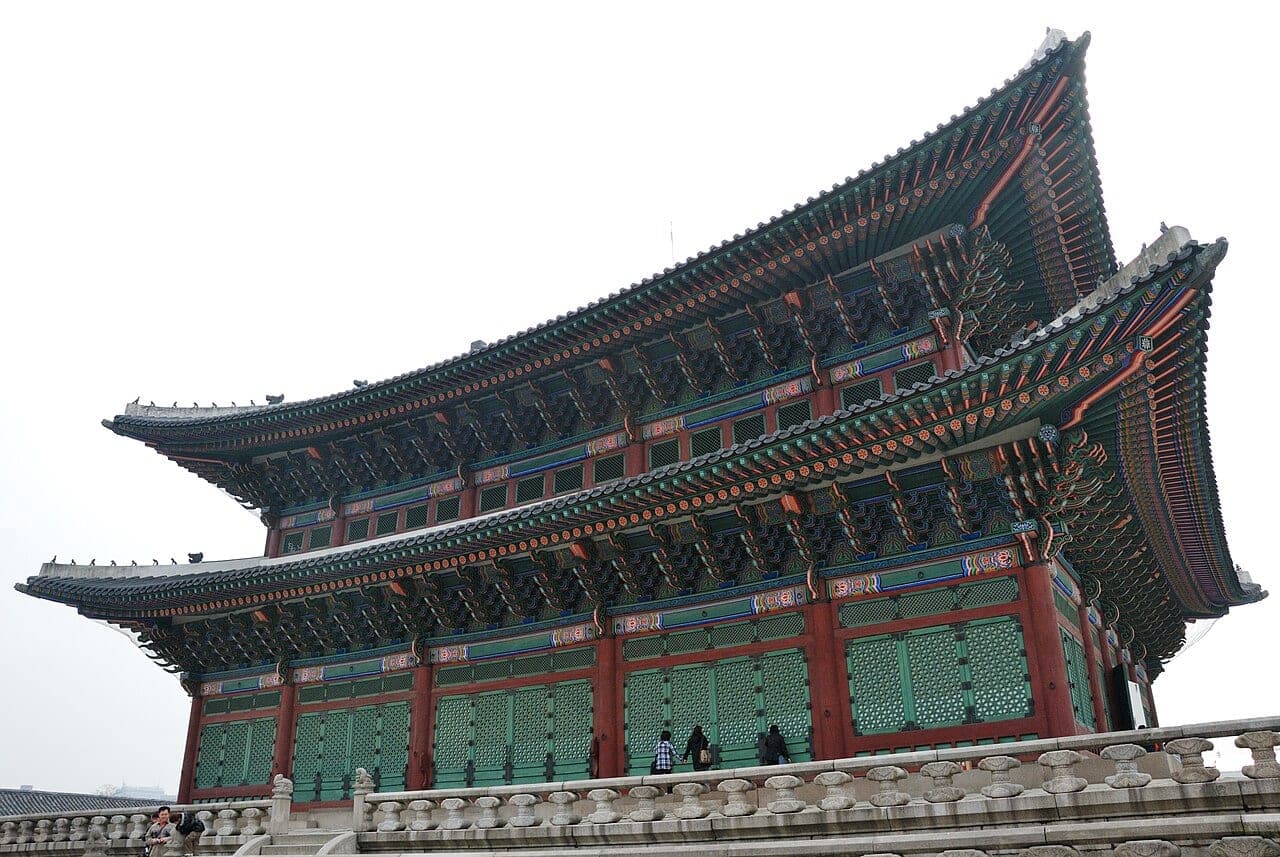
In a traditional Korean household the dead are not so much gone as moved to another room in the family's attention. On the anniversary of a death, and again at the great seasonal feasts, relatives set a table for their ancestors, arrange the food and wine the departed favoured in life, and bow before it. This is jesa, the Confucian rite of remembrance that has ordered Korean family life for centuries, and its logic runs through the country's heritage: through the shrines and royal tombs, the household genealogy that records every name for generations, and the belief that a person is not finished at death but owed attention for as long as the line endures.
South Korea carries that inheritance through one of the most compressed modern histories of any nation. Within living memory the peninsula endured colonial rule, a war that has never formally ended, and a division that still separates families who have not met since 1953; in the same span the South rebuilt from one of the poorest countries on earth into a major economy whose culture is now followed worldwide. The Republic holds 17 UNESCO World Heritage sites and guards, among much else, the 81,258 woodblocks of the Tripitaka Koreana and the royal shrine of Jongmyo, where the oldest surviving royal ancestral rite in the world is still performed.
The Republic of Korea occupies the southern half of the Korean Peninsula, bordered to the north across the Demilitarized Zone by North Korea and washed by the Yellow Sea, the East Sea and the Korea Strait. Mountains cover roughly seven-tenths of the land, pushing most people onto the western and southern plains; Jeju, the largest island, is a volcanic cone and a UNESCO natural site.
The population is around 51.7 million, among the world's most demographically aged, with a fertility rate among the lowest of any nation. More than half of all Koreans live in the Seoul metropolitan area, whose roughly 26 million residents make it one of the largest urban regions on earth. Long ethnically homogeneous, Korea is slowly diversifying through immigration; it is a presidential republic, founded in 1948 and democratic since 1987, and its post-war recovery was named the Miracle on the Han River.
Seoul. The capital was made the seat of the Joseon dynasty in 1394 as Hanyang and has governed most of Korea ever since. Its Five Grand Palaces, led by Gyeongbokgung and the garden-set Changdeokgung, a World Heritage site, frame a centre that also holds Jongmyo, the royal ancestral shrine, and the Bukchon lanes of tile-roofed hanok houses. Much of the city was destroyed in the Korean War and rebuilt, so that palaces and Joseon gates now stand among towers along the Han River.
Gyeongju. For nearly a thousand years the capital of the kingdom of Silla, Gyeongju is often called a museum without walls. Its Historic Areas, inscribed by UNESCO in 2000, gather grassed royal tomb mounds, the Cheomseongdae observatory and temple sites, while the eighth-century Bulguksa temple and Seokguram grotto nearby, the latter with its serene stone Buddha, form a separate World Heritage listing.
Busan. The second city and largest port, Busan served as the provisional capital during the Korean War. Its United Nations Memorial Cemetery, the only one of its kind in the world, holds the graves of soldiers from many nations who died in that conflict, and its film festival is now the leading cinema event in Asia.
Jeonju. The ancestral home of the Yi house that founded the Joseon dynasty, Jeonju preserves the country's largest surviving quarter of hanok houses, along with the crafts of hanji mulberry paper and the dish of bibimbap that bears its name.
Andong. The heartland of Korean Confucianism, Andong holds the Hahoe folk village, a World Heritage site where clan life continues in thatched and tiled houses along a river bend, and the Dosan Seowon academy honouring the philosopher Yi Hwang, whose mask dance-drama is still performed.
Korean tradition dates its first state, Gojoseon, to 2333 BC and the legendary founder Dangun, a story recorded much later in the Samguk Yusa. Walled polities gave way to the Three Kingdoms of Goguryeo, Baekje and Silla, rivals who received Buddhism and Chinese statecraft from the fourth century; Silla, allied with Tang China, unified most of the peninsula by 668. The Goryeo dynasty (918–1392) gave the country the name by which the world knows it, refined the pale-green celadon that remains its signature ceramic, and, under threat of Mongol invasion, commissioned the Buddhist canon carved on the Tripitaka Koreana woodblocks.
The Joseon dynasty (1392–1897), founded by the general Yi Seong-gye, made Neo-Confucianism the framework of the state for more than five centuries, producing Hangul and a bureaucracy of scholar-officials, and surviving the Japanese invasions of the 1590s before turning inward. In 1910 Japan annexed Korea, beginning a colonial period that lasted until liberation in 1945; the era remains a source of contested memory, treated more fully below. Liberation was followed by the division of the peninsula along the 38th parallel and then by the Korean War of 1950–1953, which killed several million people, separated countless families, and ended not in a peace treaty but in an armistice that still holds. From that ruin the South built an industrial economy within a generation, and after decades of authoritarian rule established a durable democracy in 1987.
Korean is spoken by some 80 million people and forms, with its Jeju variety, the small Koreanic language family; its deeper relationships remain debated. The English name Korea derives from Goryeo, the medieval dynasty whose traders carried the country's reputation abroad, while Koreans call the South Hanguk and the language Hangugeo.
For most of its history the country wrote in classical Chinese and in scripts that fitted Chinese characters awkwardly to Korean speech, mastered only by an educated few. That changed in 1443, when King Sejong the Great and his scholars devised a new alphabet, promulgated in 1446 in a document called Hunminjeongeum, "the correct sounds for the instruction of the people." Hangul is a featural alphabet, its consonant shapes modelled on the position of the tongue and lips and its letters grouped into syllable blocks, designed so that an ordinary person could learn it in days. Resisted for centuries by an elite attached to Chinese learning, it became the national script in the modern era and underpins one of the highest literacy rates in the world; the explanatory Hunminjeongeum Haerye is inscribed on UNESCO's Memory of the World register, and Hangul Day is a national holiday.
Korean identity has been shaped, more than by any single institution, by Confucian ethics inherited from the Joseon centuries. Filial piety, hyo, the duty of children to honour parents in life and after death, orders family relations and much of public conduct, and the jokbo, the printed clan genealogy, records where each person belongs. The emphasis on education, seniority and the family name descends from this system, as does the ideal of jeong, the deep attachment that binds people through shared life.
The visible culture is equally distinctive. The hanbok, its high-waisted skirt or short jacket cut in full lines, is worn today chiefly at weddings, ancestral rites and festivals, its colours once signalling age and status. The table is central: rice and soup surrounded by banchan, the small side dishes, and above all kimchi, the fermented staple made in the communal late-autumn labour of kimjang, which UNESCO inscribed as intangible heritage in 2013. Fermentation is a national craft, and food is understood as something shared rather than merely eaten.
South Korea is unusual in having no majority faith; a slight majority profess no religious affiliation, and the religious population divides mainly among Christianity and Buddhism. Buddhism arrived in the fourth century and shaped a thousand years of art, architecture and philosophy; its mountain monasteries, seven inscribed by UNESCO in 2018, keep the meditative Seon (Zen) tradition and a temple-stay culture open to visitors. Confucianism functions less as a religion than as the ethical and ritual grammar of family and public life, sustained through the seowon academies and the ancestral rites.
 The rite at Jongmyo has been performed for the Joseon kings since the fourteenth century, with its own music and choreography. Photograph by David McNally, public domain, via Wikimedia Commons.
Christianity is a recent but strong presence: Catholicism took root from the late eighteenth century, at the cost of thousands of martyrs later canonised, and Protestant churches grew rapidly through the twentieth century, so that Seoul now counts some of the largest congregations in the world. Beneath these organised faiths runs the older stratum of Korean shamanism, musok, in which a mudang, usually a woman, mediates between the living and the spirits and performs the gut, a ritual of music, dance and trance held to heal the sick, settle the restless dead or bless a venture. Long dismissed as superstition, it persists and draws renewed interest as a native inheritance.
Korean mourning is a structured, continuing relationship with the dead rather than a single farewell. At its centre is jesa, the family memorial rite: the gijesa held on the anniversary of a forebear's death, and the charye offered at the two great festivals, Seollal, the lunar new year, and Chuseok, the autumn harvest thanksgiving, when families also visit and tend the ancestral graves. The household lays out a table of ritual food according to fixed rules and bows before the spirit tablet or a photograph of the departed, inviting the ancestors to share the meal. Where custom once prescribed years of mourning, most Koreans today hold a three-day wake at a funeral hall, and cremation, once resisted, has become the majority practice.
The rite at Jongmyo has been performed for the Joseon kings since the fourteenth century, with its own music and choreography. Photograph by David McNally, public domain, via Wikimedia Commons.
Christianity is a recent but strong presence: Catholicism took root from the late eighteenth century, at the cost of thousands of martyrs later canonised, and Protestant churches grew rapidly through the twentieth century, so that Seoul now counts some of the largest congregations in the world. Beneath these organised faiths runs the older stratum of Korean shamanism, musok, in which a mudang, usually a woman, mediates between the living and the spirits and performs the gut, a ritual of music, dance and trance held to heal the sick, settle the restless dead or bless a venture. Long dismissed as superstition, it persists and draws renewed interest as a native inheritance.
Korean mourning is a structured, continuing relationship with the dead rather than a single farewell. At its centre is jesa, the family memorial rite: the gijesa held on the anniversary of a forebear's death, and the charye offered at the two great festivals, Seollal, the lunar new year, and Chuseok, the autumn harvest thanksgiving, when families also visit and tend the ancestral graves. The household lays out a table of ritual food according to fixed rules and bows before the spirit tablet or a photograph of the departed, inviting the ancestors to share the meal. Where custom once prescribed years of mourning, most Koreans today hold a three-day wake at a funeral hall, and cremation, once resisted, has become the majority practice.
 The Silla royal tombs at Gyeongju are hills raised over wooden chambers, and the city grew up among them rather than around them. Photograph by riNux, CC BY-SA 2.0, via Wikimedia Commons.
The peninsula's division has added a modern layer of grief that no rite fully answers. The Korean War left millions of separated family members on either side of a sealed border, and since a first exchange in 1985 the two governments have periodically allowed brief, controlled reunions, most at the Mount Kumgang resort in the North and arranged by the Red Cross. More than 130,000 Southerners registered for the reunion lottery, but the meetings have been rare and dependent on the state of relations, and many of the mostly elderly applicants died before their turn came; the last rounds were held in 2018.
Public remembrance of the war and the colonial era is national in scale. The Seoul National Cemetery, opened in the 1950s, and its counterpart at Daejeon hold the war dead, the independence fighters and later servicemen, and on Memorial Day, Hyeonchungil, each 6 June, the country pauses in a nationwide observance. Among the most contested legacies of the colonial period is the system of military brothels the Imperial Japanese Army maintained during the war years, in which large numbers of women, many of them Korean, were held; they are known by the euphemism "comfort women," a translation of the wartime term. Japan acknowledged the military's involvement in the 1993 Kono Statement, and the two governments reached a further agreement in 2015, but disputes over wording, redress and responsibility have continued, and surviving women and their supporters have kept the issue before the public through weekly demonstrations and memorial statues. Accounts of scale and responsibility differ between the two countries, and the subject remains diplomatically sensitive.
Korea has one of the most elaborate genealogical traditions anywhere, and a very large number of Koreans can produce a printed book containing their line.
The jokbo is the clan genealogy. It records descent through the male line from a founding ancestor, is revised and reprinted every generation or two, and can run to dozens of volumes. What makes it work is the bon-gwan, the ancestral seat: a Korean surname is not enough to identify a family, because there are only a few hundred surnames and Kim alone covers a fifth of the country, but a surname plus a bon-gwan names a specific clan with a documented founder. Ask a Korean which Kim they are and the answer is a place.
The state's record is the hojeok, the household register, which the Joseon dynasty maintained and the Japanese colonial administration replaced with the koseki system from 1909. Those colonial-era registers survive and are the bridge between the jokbo and the modern record. The hoju system that succeeded them, which made a male head of household the legal centre of the family, was abolished in 2008 after a constitutional challenge, and replaced with individual family relationship certificates.
The unresolved record is the division. Around ten million Koreans were separated by the war, and the reunion programme has brought only a few thousand together in brief supervised meetings; most applicants have died waiting. The Red Cross register of separated families is one of the saddest lists any country keeps.
Heritage protection is administered by the Korea Heritage Service, and its reach is wide. South Korea's 17 World Heritage sites include the palaces and shrine of Seoul, the Silla monuments of Gyeongju, the dolmen fields of Gochang, Hwasun and Ganghwa, the Joseon royal tombs, the Baekje historic areas, the seowon academies and the Sansa mountain monasteries, together with two natural sites, Jeju island and the Getbol tidal flats. The Gaya Tumuli, burial mounds of an early confederacy, were added in 2023.
Two holdings show the depth of the tradition. At Haeinsa temple, the Janggyeong Panjeon depositories, built in the fifteenth century with lattice windows and charcoal-and-clay floors that regulate humidity by design, have kept the 81,258 woodblocks of the Tripitaka Koreana, carved in the thirteenth century, in near-perfect condition for some eight hundred years. At Jongmyo, the austere royal shrine of the Joseon kings, the Jongmyo Jerye rite and its music and dance are still performed to a form set in the fifteenth century and inscribed on UNESCO's intangible heritage list. South Korea's system for designating living bearers of intangible skills, established in 1962, was among the national models that informed UNESCO's later intangible-heritage work; its inscriptions range from pansori sung storytelling to the ganggangsullae circle dance and kimjang.
South Korea, among the most connected societies in the world, has moved its documentary heritage online at scale. The National Institute of Korean History maintains a searchable database of the Annals of the Joseon Dynasty, the Joseon Wangjo Sillok, a day-by-day court record kept across five centuries and itself a Memory of the World document. The National Museum of Korea publishes collection images and virtual exhibitions, and the Academy of Korean Studies has digitised genealogies and manuscript archives.
Digitisation also serves the country's particular sorrows. The records of separated families, their registration details and video testimony, have been gathered into databases so that a legacy of loss can outlast the applicants, and the Korea Heritage Service has built three-dimensional records of monuments as insurance against fire and decay, a priority underscored when the Namdaemun gate, the country's foremost wooden landmark, was destroyed by arson in 2008 and rebuilt from survey data.
Since the late 1990s South Korean popular culture has spread across the world under the name Hallyu, the Korean Wave, and it now ranks among the country's most recognised exports. In music, K-pop groups built on rigorous training and elaborate production reached global audiences, with BTS and BLACKPINK topping international charts and filling stadiums on several continents. In film, Bong Joon-ho's Parasite won the Academy Award for Best Picture in 2020, the first non-English-language film to do so, and in television Squid Game became one of the most watched programmes in streaming history after its 2021 release.
The wave reaches beyond entertainment. In 2024 the novelist Han Kang became the first Korean and the first Asian woman to win the Nobel Prize in Literature, honoured for prose that confronts historical trauma, including the violence of Korea's own recent past. Korean webtoons, cosmetics, cuisine and fashion have followed abroad, and interest in the culture has drawn a new generation of learners to Hangul. Much of this work carries the country's memory inside it, returning to division, dictatorship and the labour of remembering.
A canon kept intact for eight centuries. The 81,258 woodblocks of the Tripitaka Koreana, carved in the thirteenth century, have survived war and time in the halls of Haeinsa, whose natural ventilation has preserved the most complete Buddhist canon in East Asia without significant loss.
An alphabet made for everyone. Hangul, devised in 1443 and promulgated in 1446 so that ordinary people could read and write, was resisted for centuries and then embraced, and it now supports one of the highest literacy rates on earth; the explanatory Hunminjeongeum Haerye is a Memory of the World document.
A royal rite still living. The Jongmyo Jerye, the ancestral ceremony for the Joseon kings, has been performed to a fifteenth-century order for six hundred years, its music and dance intact, and is recognised by UNESCO as a ritual tradition sustained without interruption.
Recognition on the world stage. Within a few years the country's culture gathered the Best Picture Oscar for Parasite in 2020, a record streaming audience for Squid Game in 2021, and the 2024 Nobel Prize in Literature for Han Kang, carrying the nation's language and its reckoning with its past to a global readership.
The Silla royal tombs at Gyeongju are hills raised over wooden chambers, and the city grew up among them rather than around them. Photograph by riNux, CC BY-SA 2.0, via Wikimedia Commons.
The peninsula's division has added a modern layer of grief that no rite fully answers. The Korean War left millions of separated family members on either side of a sealed border, and since a first exchange in 1985 the two governments have periodically allowed brief, controlled reunions, most at the Mount Kumgang resort in the North and arranged by the Red Cross. More than 130,000 Southerners registered for the reunion lottery, but the meetings have been rare and dependent on the state of relations, and many of the mostly elderly applicants died before their turn came; the last rounds were held in 2018.
Public remembrance of the war and the colonial era is national in scale. The Seoul National Cemetery, opened in the 1950s, and its counterpart at Daejeon hold the war dead, the independence fighters and later servicemen, and on Memorial Day, Hyeonchungil, each 6 June, the country pauses in a nationwide observance. Among the most contested legacies of the colonial period is the system of military brothels the Imperial Japanese Army maintained during the war years, in which large numbers of women, many of them Korean, were held; they are known by the euphemism "comfort women," a translation of the wartime term. Japan acknowledged the military's involvement in the 1993 Kono Statement, and the two governments reached a further agreement in 2015, but disputes over wording, redress and responsibility have continued, and surviving women and their supporters have kept the issue before the public through weekly demonstrations and memorial statues. Accounts of scale and responsibility differ between the two countries, and the subject remains diplomatically sensitive.
Korea has one of the most elaborate genealogical traditions anywhere, and a very large number of Koreans can produce a printed book containing their line.
The jokbo is the clan genealogy. It records descent through the male line from a founding ancestor, is revised and reprinted every generation or two, and can run to dozens of volumes. What makes it work is the bon-gwan, the ancestral seat: a Korean surname is not enough to identify a family, because there are only a few hundred surnames and Kim alone covers a fifth of the country, but a surname plus a bon-gwan names a specific clan with a documented founder. Ask a Korean which Kim they are and the answer is a place.
The state's record is the hojeok, the household register, which the Joseon dynasty maintained and the Japanese colonial administration replaced with the koseki system from 1909. Those colonial-era registers survive and are the bridge between the jokbo and the modern record. The hoju system that succeeded them, which made a male head of household the legal centre of the family, was abolished in 2008 after a constitutional challenge, and replaced with individual family relationship certificates.
The unresolved record is the division. Around ten million Koreans were separated by the war, and the reunion programme has brought only a few thousand together in brief supervised meetings; most applicants have died waiting. The Red Cross register of separated families is one of the saddest lists any country keeps.
Heritage protection is administered by the Korea Heritage Service, and its reach is wide. South Korea's 17 World Heritage sites include the palaces and shrine of Seoul, the Silla monuments of Gyeongju, the dolmen fields of Gochang, Hwasun and Ganghwa, the Joseon royal tombs, the Baekje historic areas, the seowon academies and the Sansa mountain monasteries, together with two natural sites, Jeju island and the Getbol tidal flats. The Gaya Tumuli, burial mounds of an early confederacy, were added in 2023.
Two holdings show the depth of the tradition. At Haeinsa temple, the Janggyeong Panjeon depositories, built in the fifteenth century with lattice windows and charcoal-and-clay floors that regulate humidity by design, have kept the 81,258 woodblocks of the Tripitaka Koreana, carved in the thirteenth century, in near-perfect condition for some eight hundred years. At Jongmyo, the austere royal shrine of the Joseon kings, the Jongmyo Jerye rite and its music and dance are still performed to a form set in the fifteenth century and inscribed on UNESCO's intangible heritage list. South Korea's system for designating living bearers of intangible skills, established in 1962, was among the national models that informed UNESCO's later intangible-heritage work; its inscriptions range from pansori sung storytelling to the ganggangsullae circle dance and kimjang.
South Korea, among the most connected societies in the world, has moved its documentary heritage online at scale. The National Institute of Korean History maintains a searchable database of the Annals of the Joseon Dynasty, the Joseon Wangjo Sillok, a day-by-day court record kept across five centuries and itself a Memory of the World document. The National Museum of Korea publishes collection images and virtual exhibitions, and the Academy of Korean Studies has digitised genealogies and manuscript archives.
Digitisation also serves the country's particular sorrows. The records of separated families, their registration details and video testimony, have been gathered into databases so that a legacy of loss can outlast the applicants, and the Korea Heritage Service has built three-dimensional records of monuments as insurance against fire and decay, a priority underscored when the Namdaemun gate, the country's foremost wooden landmark, was destroyed by arson in 2008 and rebuilt from survey data.
Since the late 1990s South Korean popular culture has spread across the world under the name Hallyu, the Korean Wave, and it now ranks among the country's most recognised exports. In music, K-pop groups built on rigorous training and elaborate production reached global audiences, with BTS and BLACKPINK topping international charts and filling stadiums on several continents. In film, Bong Joon-ho's Parasite won the Academy Award for Best Picture in 2020, the first non-English-language film to do so, and in television Squid Game became one of the most watched programmes in streaming history after its 2021 release.
The wave reaches beyond entertainment. In 2024 the novelist Han Kang became the first Korean and the first Asian woman to win the Nobel Prize in Literature, honoured for prose that confronts historical trauma, including the violence of Korea's own recent past. Korean webtoons, cosmetics, cuisine and fashion have followed abroad, and interest in the culture has drawn a new generation of learners to Hangul. Much of this work carries the country's memory inside it, returning to division, dictatorship and the labour of remembering.
A canon kept intact for eight centuries. The 81,258 woodblocks of the Tripitaka Koreana, carved in the thirteenth century, have survived war and time in the halls of Haeinsa, whose natural ventilation has preserved the most complete Buddhist canon in East Asia without significant loss.
An alphabet made for everyone. Hangul, devised in 1443 and promulgated in 1446 so that ordinary people could read and write, was resisted for centuries and then embraced, and it now supports one of the highest literacy rates on earth; the explanatory Hunminjeongeum Haerye is a Memory of the World document.
A royal rite still living. The Jongmyo Jerye, the ancestral ceremony for the Joseon kings, has been performed to a fifteenth-century order for six hundred years, its music and dance intact, and is recognised by UNESCO as a ritual tradition sustained without interruption.
Recognition on the world stage. Within a few years the country's culture gathered the Best Picture Oscar for Parasite in 2020, a record streaming audience for Squid Game in 2021, and the 2024 Nobel Prize in Literature for Han Kang, carrying the nation's language and its reckoning with its past to a global readership.
National Overview
Notable Cities
Historical Foundations
Linguistic and Etymological Roots
Cultural Identity
Religion and Spirituality
Remembrance and Mourning Traditions
Tracing a Family in South Korea
Heritage Preservation Efforts
Digital Heritage
Contemporary Cultural Influences
Success Stories
References and resources
- UNESCO World Heritage Centre, Republic of Korea: the state-party page for all 17 Korean World Heritage sites.
- UNESCO Intangible Cultural Heritage, Republic of Korea: pansori, kimjang, the Jongmyo rite and other inscriptions.
- UNESCO: Haeinsa Temple Janggyeong Panjeon, Depositories for the Tripitaka Koreana: the woodblocks and the halls built to preserve them.
- UNESCO: Royal Ancestral Ritual in the Jongmyo Shrine and its Music: the Jongmyo Jerye and Jeryeak.
- Korea Heritage Service: the national agency for cultural heritage and preservation.
- National Institute of Korean History, Annals of the Joseon Dynasty: the searchable digital edition of the Joseon Wangjo Sillok.
- Encyclopaedia Britannica, Korea Under Japanese Rule: background on the colonial period, 1910 to 1945.
- The Nobel Prize in Literature 2024, Han Kang: the award and its citation.
- Encyclopaedia Britannica, South Korea: geography, history and society.