Heritage · University
Tohoku University: History and Overview
Founded in 1907 as Tohoku Imperial University, Japan's third imperial university built its identity in Sendai around two ideas: Research First and Open Doors. In 1913 it admitted the first women ever to enter a Japanese university, and its laboratories produced KS magnet steel and the Yagi-Uda antenna.Written to last.
By Confinity Heritage Editorial · 2026-08-24 · 8-minute readQuiet tools, kept out of the way.
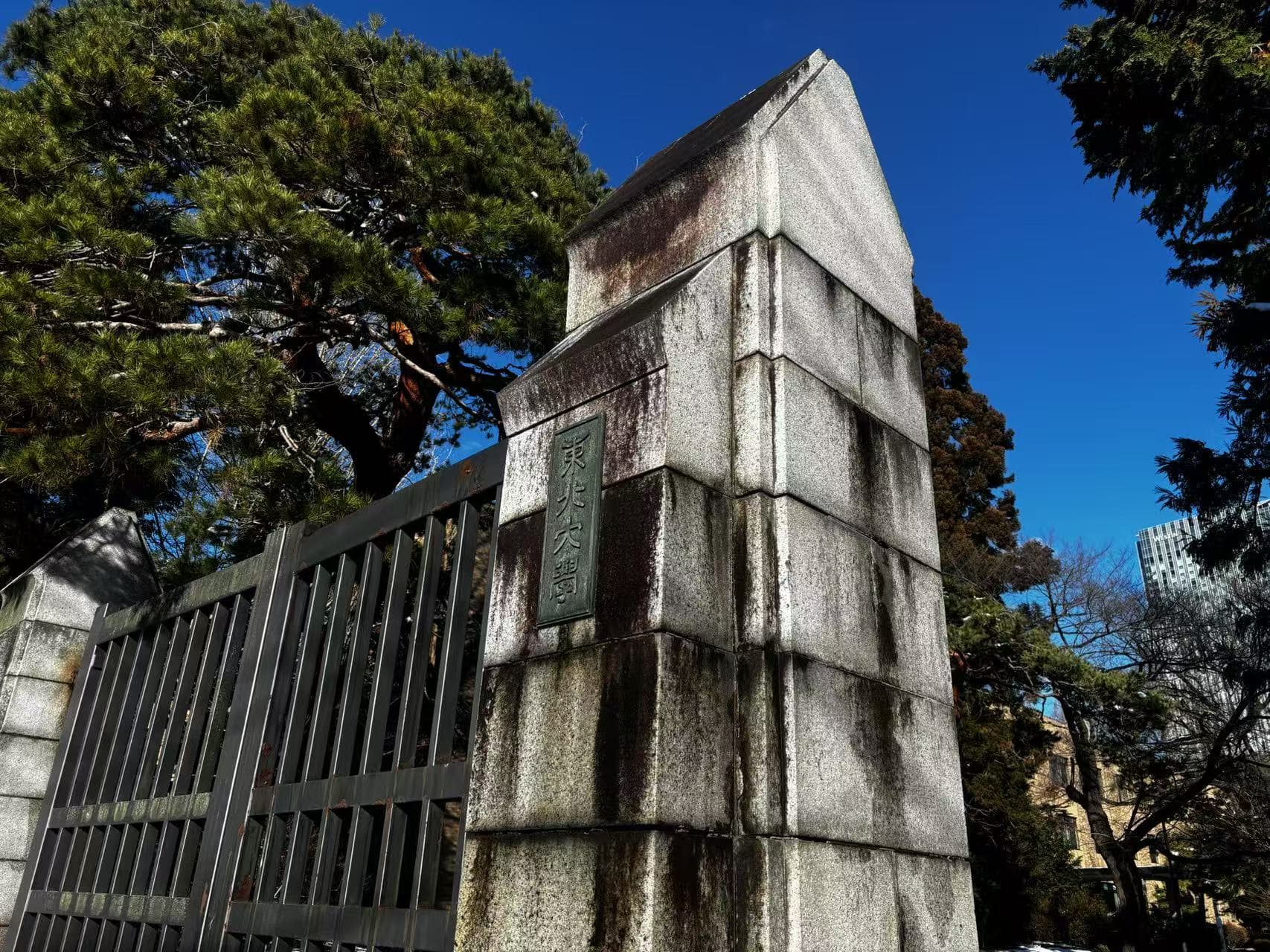
Tohoku University stands in Sendai, the largest city of Japan's northeastern Tohoku region, a deliberate distance from the Tokyo and Kyoto axis around which the country's academic life had gathered. It was founded in 1907 as Tohoku Imperial University, the third of the imperial universities, and from the beginning it treated its provincial position as a licence rather than a limitation. Two phrases from its early decades still define it. The first is kenkyu daiichi, Research First: the conviction that a new university far from the capital would earn its standing in the laboratory. The second is monko kaiho, Open Doors, and Tohoku made that phrase mean something concrete. In 1913 it admitted the first women ever to study at a Japanese university, over the objection of the education ministry, and it opened its entrance examinations to graduates of technical schools and to foreign students at a time when other imperial universities did not.
The university's original home, the Katahira campus near the centre of Sendai, keeps the physical record of that history: the brick research institutes of the early twentieth century, the main gate that serves as the university's emblem, and a preserved tiered lecture theatre in which a Chinese medical student named Zhou Shuren once sat, before he abandoned medicine, took the pen name Lu Xun, and became the founder of modern Chinese literature.
The imperial university system began in Tokyo in 1886, when the existing university there was reorganised as Japan's first imperial university, and extended to Kyoto in 1897. A decade of argument followed about whether the modernising state could afford more. Tohoku Imperial University was established in June 1907, helped by donations from the Furukawa mining family and by the Miyagi prefectural government, which wanted a university for the northeast. Its first component was an agricultural college in Sapporo, later separated to become Hokkaido University; its enduring core was the Science College that opened in Sendai in 1911 under the first president, the mathematician Masataka Sawayanagi.
Sendai already held a piece of the university's future. The Sendai Medical College, a government medical school in the city, was incorporated into the new imperial university in 1912 and grew into its Faculty of Medicine. A technical college followed, becoming the Faculty of Engineering in 1919, and a Faculty of Law and Letters opened in 1922. The university thus assembled itself in the reverse of the usual order, sciences first, and that sequence shaped its character. Where the University of Tokyo trained the administrators of the state, Tohoku recruited researchers, gave them laboratories, and measured itself by what came out of them.
Renamed simply Tohoku University in 1947, when the imperial system was dissolved after the war, it expanded into a comprehensive national university and became a national university corporation in 2004.
Tohoku University spreads across several campuses in Sendai, a green city rebuilt after wartime destruction and known in Japan as the City of Trees. Katahira, the original site, holds the administration and the great research institutes; its brick gate and early twentieth century buildings make it the university's ceremonial face. Kawauchi, on the far side of the Hirose River near the ruins of Sendai Castle, houses the humanities and social sciences and the first years of undergraduate teaching. Aobayama, on a forested hill above the city, carries science, engineering and agriculture on a modern campus reached since 2015 by its own subway line, and the Seiryo campus holds medicine, dentistry and the university hospital.
The university teaches across ten undergraduate faculties and a larger set of graduate schools, with around eighteen thousand students, a higher share of them postgraduates than at most Japanese universities. Its research institutes are central rather than peripheral. The Institute for Materials Research on the Katahira campus, founded in 1916 as the Institute for Iron, Steel and Other Metals, remains one of the leading materials laboratories in the world, and newer institutes cover fluid science, electrical communication, ageing and cancer, and disaster science.
In the summer of 1913 Tohoku Imperial University did something no Japanese university had done: it allowed women to sit its entrance examinations. Three passed and enrolled that September. Chika Kuroda and Ume Tange entered in chemistry, and Raku Makita in mathematics. The Ministry of Education sent the university a letter calling the admission of women a grave matter and asking it to explain itself. The university explained itself by proceeding. In 1916 Kuroda became the first woman in Japan to receive a Bachelor of Science; she went on to a career in chemistry, studying the pigments of plants, becoming one of the first Japanese women to hold a doctorate in science and later a professor. Tange earned a doctorate for research on vitamins, and Makita taught mathematics. Their admission is the founding story of the Open Doors tradition, and the university still dates its identity from it.
The doors opened in other directions in the same years. Tohoku admitted graduates of higher technical and normal schools, men whose schooling had not followed the narrow track through the elite higher schools that fed the other imperial universities, and it accepted students from China and elsewhere in Asia. The most famous of those Chinese students preceded the university itself. Zhou Shuren studied at the Sendai Medical College from 1904 to 1906, the only Chinese student in his class, and was treated with quiet decency by his anatomy teacher, Genkuro Fujino, who corrected his lecture notes line by line. In 1906, after a lantern slide shown in class depicted a Chinese prisoner being executed while a crowd of his countrymen looked on, Zhou concluded that his people needed their spirits healed before their bodies, left medicine, and turned to writing. As Lu Xun he became the central figure of modern Chinese literature, and in his essay "Mr. Fujino" he remembered the Sendai teacher whose photograph hung on his study wall for the rest of his life. The tiered lecture theatre where he sat survives on the Katahira campus, kept by the university with a memorial to him, and it draws visitors from China for whom the room is a site of literary pilgrimage.
Research First produced results early. The physicist Kotaro Honda, one of the university's founding professors and later its president, invented KS steel in 1917, a cobalt magnet steel that was then the most powerful permanent magnet material in the world, and built around his laboratory the institute that became the Institute for Materials Research. In 1926 Hidetsugu Yagi and Shintaro Uda of the engineering faculty invented the Yagi-Uda antenna, the directional array that carried twentieth century television reception on rooftops across the world and shaped radar in the war that came before it. Jun-ichi Nishizawa, a Tohoku professor and later its president, made early contributions to optical communication, including work on semiconductor devices and proposals for fibre optic transmission that helped prepare the ground for the optical networks in use today. The university's graduates include Koichi Tanaka, an engineering student of the class of 1983, who shared the 2002 Nobel Prize in Chemistry for methods of analysing biological macromolecules by mass spectrometry.
The Great East Japan Earthquake of 11 March 2011 struck the university's own region; the tsunami devastated the Tohoku coast and took nearly twenty thousand lives. The university turned its research toward the catastrophe, founding the International Research Institute of Disaster Science, IRIDeS, in 2012 to study earthquakes, tsunamis and recovery, and it has since become one of the world's centres of disaster science.
Tohoku University is consistently placed among Japan's leading institutions. In 2017 it was named a Designated National University in the first group of three, alongside Tokyo and Kyoto, and in recent years it has held first place in the Times Higher Education Japan University Rankings. In 2024 the government certified it as the first University for International Research Excellence, a programme that backs a small number of institutions with long term funding to compete at the highest international level. Its stated priorities remain the ones set in its first decade: research at the frontier, doors open to talent from anywhere, and results returned to society, a third principle the university added in the postwar years.
The Katahira campus sits within walking distance of central Sendai and can be strolled freely; its main gate, brick research buildings and mature trees make it a quiet counterpoint to the commercial city around it. Visitors interested in Lu Xun can see the preserved lecture theatre, though opening arrangements vary and checking ahead with the university is wise. The Aobayama and Kawauchi campuses are reached by the Tozai subway line, and Kawauchi neighbours the Sendai City Museum and the castle site on Aoba hill, so a visit combines easily with the city's own history. Sendai is about ninety minutes from Tokyo by shinkansen.