Heritage · University
Hebrew University of Jerusalem: History and the Einstein Archives
The Hebrew University of Jerusalem opened on Mount Scopus in 1925, twenty-three years before the state it would serve, with Einstein, Freud and Buber on its first board of governors. Albert Einstein willed the university his entire literary estate, and the Albert Einstein Archives in Jerusalem now keep his papers, among them the handwritten manuscript of the general theory of relativity.Written to last.
By Confinity Heritage Editorial · 2026-08-24 · 8-minute readQuiet tools, kept out of the way.
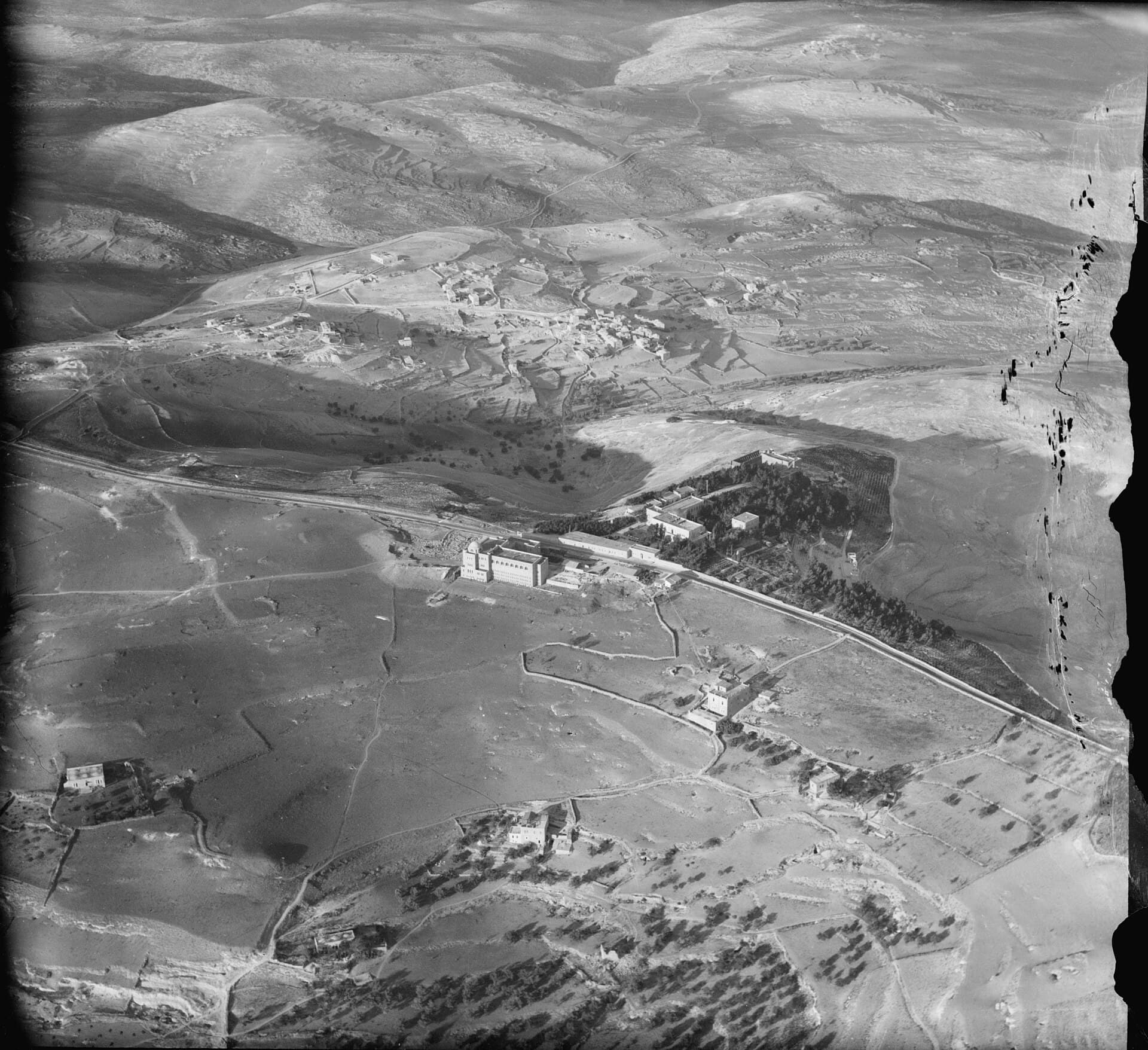
The Hebrew University of Jerusalem opened on Mount Scopus in April 1925, twenty-three years before the founding of Israel, the state whose national university it would become. Its cornerstone had been laid in 1918, while the First World War was still being fought a short distance to the north. It is one of the few universities anywhere to have been founded by a diaspora before that diaspora had a country: planned at Zionist congresses in Europe, funded by communities scattered across the world, and governed at the start by a board that included Albert Einstein, Sigmund Freud, Martin Buber and Chaim Weizmann.
Einstein's connection ran deeper than a founder's signature. He raised money for the university, delivered its first scientific lecture, served on its earliest governing bodies, and at the end of his life willed it his entire literary estate. The Albert Einstein Archives, held in Jerusalem, are the fullest record in existence of a single scientific mind, down to the handwritten pages on which the general theory of relativity was set out. A university that began as an act of anticipation became, by his choice, the keeper of his memory.
The idea preceded the institution by decades. The mathematician Hermann Schapira proposed a Jewish institution of higher learning at the First Zionist Congress in Basel in 1897, at a time when Jewish students in much of Europe faced quotas or outright exclusion. The site chosen was Mount Scopus, a ridge northeast of Jerusalem's Old City with views across the Judaean Desert to the Dead Sea. On 24 July 1918, with the war's outcome still unsettled, Chaim Weizmann presided over the laying of the foundation stones there.
The university opened formally on 1 April 1925, in an amphitheatre cut into the western slope of the mountain, with Lord Balfour delivering the inaugural address before an audience of thousands. Two years earlier, in February 1923, Einstein had visited the still unbuilt campus and given the first scientific lecture on the site, on the theory of relativity, opening with sentences read in Hebrew. The American rabbi Judah Magnes became the university's first chancellor, and the early institutes concentrated on chemistry, microbiology and Jewish studies. From the beginning the language of instruction was Hebrew, then still being remade into a language of laboratories and lecture halls.
The war of 1948 cut the university from its mountain. Fighting closed the road to Mount Scopus, and in April 1948 a convoy carrying doctors, nurses and university staff to the campus and the adjacent Hadassah hospital was attacked, with 78 people killed. Under the armistice that followed, Mount Scopus became a demilitarised enclave on the Jordanian side of the line, held by a small Israeli caretaker detachment and supplied by convoy under United Nations escort once a fortnight. The buildings, the laboratories and much of the library stood locked and largely unused for nineteen years.
The university itself carried on in exile, teaching in dozens of rented buildings scattered across western Jerusalem until a new campus could be built at Givat Ram, opened in 1958, followed by a medical campus at Ein Kerem beside the rebuilt Hadassah hospital. After the war of June 1967 Mount Scopus came under Israeli control and the enclave ended. The university rebuilt and greatly enlarged the mountain campus through the 1970s, and by 1981 the humanities, social sciences and law had returned to the place where the institution began.
The university now works across four campuses. Mount Scopus holds the humanities, social sciences, law and education, together with the original 1925 amphitheatre and a botanical garden of native plants. The Edmond J. Safra campus at Givat Ram houses mathematics, physics, chemistry, the life sciences and computer science. Ein Kerem, at the city's western edge, is the medical campus, where the faculties of medicine, dental medicine and nursing work alongside the Hadassah Medical Center. In Rehovot, on the coastal plain south of Tel Aviv, the university runs its faculty of agriculture, food and environment, founded in 1942, together with the country's school of veterinary medicine. More than 20,000 students study across the four sites.
The university's library tells a national story of its own. Its core was a collection begun in Jerusalem in 1892, which became the Jewish National and University Library when the university opened in 1925, charged with gathering the written record of the Jewish people alongside its academic role. The library moved to Givat Ram in 1960, was reconstituted by law as the independent National Library of Israel in 2008, and in 2023 moved into a new building beside the Knesset. The national library of the state began as the library of the university, and the two grew up together.
Einstein never taught at the Hebrew University and never lived in Jerusalem, yet he chose it as the custodian of everything he wrote. In his will he left the university his personal papers and his entire literary estate, along with the rights to the use of his name and likeness. After the deaths of his secretary Helen Dukas and his executor Otto Nathan, who had organised the material for decades, the papers were transferred to Jerusalem in 1982.
The Albert Einstein Archives, kept at the Safra campus, hold some 55,000 items: scientific manuscripts, lecture notes, correspondence with the leading figures of twentieth-century physics and politics, travel diaries, and personal papers running from his school years to his final week. Among them is the manuscript of the general theory of relativity, forty-six pages in Einstein's hand, written in 1916, one of the most consequential scientific documents ever produced. The archives are a working research collection as well as a treasury; the university has digitised much of the material and placed catalogues and selected documents online.
The bequest gives the university a distinctive place among the institutions on this site. Museums usually acquire their collections; here, a founder deliberated about where the record of his life's work should rest and named the university he had helped to found. The relativity manuscript is displayed publicly on occasion, and each showing repeats the point of the bequest: the papers belong in Jerusalem because Einstein decided they should.
The university's most influential intellectual partnership began in one of its seminar rooms. Daniel Kahneman took his undergraduate degree in psychology and mathematics at the Hebrew University and returned to teach there, and in 1969 he invited a younger colleague, Amos Tversky, to speak to his graduate seminar. The collaboration that followed, conducted for its first decade largely in Jerusalem, produced the studies of judgment and decision-making from which behavioural economics grew. Kahneman received the Nobel Prize in Economic Sciences in 2002; Tversky had died in 1996; Kahneman spent much of his Nobel lecture describing their joint work.
Robert Aumann, a professor at the university and a founder of its Center for the Study of Rationality, received the Nobel Prize in Economic Sciences in 2005 for his work on conflict and cooperation in game theory. In mathematics, Elon Lindenstrauss, who took his doctorate at the university and holds a chair there, received the Fields Medal in 2010, the first Israeli mathematician to do so. Beyond the laureates, the university's teachers and graduates recur year after year among the recipients of the Israel Prize, the state's highest honour, across the sciences, the humanities and public life; the novelist Amos Oz, who studied philosophy and literature there, is among the graduates whose work shaped the country's letters.
The Hebrew University remains Israel's most prominent research university and among the leading institutions of the region, with strengths running from mathematics and computer science to brain research, agriculture and Jewish studies, and it confers a large share of the country's doctorates. The founding generation's wager, that a university conceived in scattered communities could take root in Jerusalem and hold its own in world scholarship, has been settled by a century of results.
The Mount Scopus campus is open to visitors, and its western edge offers one of the best vantage points in Jerusalem, with the Old City below and the desert falling away toward the Dead Sea behind. The 1925 amphitheatre and the botanical garden are both worth seeking out, and city buses connect the mountain with the centre. The Safra campus at Givat Ram can be combined with the neighbouring government quarter and the new National Library building beside the Knesset. Security checks at campus entrances are routine, and a passport or identity document is useful. Many visitors pair the university's hilltops with the city's other institutions of memory, among them Yad Vashem on the Mount of Remembrance at Jerusalem's western edge.
History
Campus and academics
The Einstein Archives
Scholarship
The university today
Visiting
References and resources
- Hebrew University of Jerusalem, official site
- Hebrew University of Jerusalem: History (official)
- The Albert Einstein Archives (official)
- National Library of Israel, official site
- Nobel Prize: Daniel Kahneman, facts
- Encyclopaedia Britannica: Hebrew University of Jerusalem
- Wikipedia: Hebrew University of Jerusalem