Heritage · Landmark
Robben Island: The prison that became a classroom
A low, wind-scoured island in Table Bay held Dutch exiles, a leper colony, and finally the apartheid state's maximum-security prison for political prisoners, among them Nelson Mandela for eighteen years. Today former prisoners guide visitors through the cells where they were held, and their recorded testimony races the lifetimes of the men who give it.Written to last.
By Confinity Heritage Editorial · 2026-08-23 · 7-minute readQuiet tools, kept out of the way.
About seven kilometres off Cape Town, in the cold water of Table Bay, lies a low oval of land, flat, windswept, and named by Dutch sailors for the seals that once crowded its shores. From the mainland, Robben Island is a thin grey line beneath Table Mountain. For nearly four centuries the governments of South Africa, Dutch, British, and Afrikaner nationalist in turn, used that distance as a tool. The island was where the state put people it wished to remove from society: rebels, exiled leaders, the sick, the mentally ill, and finally the political prisoners of apartheid. It was inscribed on the UNESCO World Heritage List in 1999 not for beauty but for testimony, as a place whose buildings bear witness both to repression and to what UNESCO called the triumph of the human spirit over enormous hardship.
That second half of the citation is the reason the island now receives hundreds of thousands of visitors a year. Between 1961 and 1991 the maximum-security prison on Robben Island held the men the apartheid government most wanted the world to forget, including Nelson Mandela, who spent eighteen of his twenty-seven years of imprisonment there. The prison was designed to break its inmates through isolation and hard labour. Instead they organised it into something its builders never intended: a school. Prisoners taught one another in the quarry and the cells, studied by correspondence, and emerged, decades later, prepared to govern. The island that was meant to be an ending became a beginning, and the men who lived it now tell the story themselves.
Long before apartheid, Robben Island was already a place of exile. Within a few years of the Dutch East India Company settling the Cape in 1652, the island was receiving prisoners. Among the first was Autshumato, a Khoikhoi leader and interpreter who had negotiated between his people and the Dutch settlers. Banished to the island in 1658 after relations broke down, he escaped the following year in a rowing boat, one of very few people ever to get away.
The Dutch also used the island for prisoners from the far side of their trading empire. Muslim political and religious leaders from the East Indies, men who had resisted Company rule in what is now Indonesia, were shipped to the Cape and confined there. Among them was Sayed Abdurahman Moturu, a prince from the island of Madura and one of the Cape's first imams, who died on the island around 1754. The kramat, or shrine, built over his grave still stands, and Muslim prisoners in the apartheid era held it in quiet reverence.
The British, who took the Cape in the early nineteenth century, continued the pattern with Xhosa leaders captured in the frontier wars. Then, from 1846, the island's purpose shifted from punishment to quarantine. A general infirmary took in chronically ill patients, people classified as insane, and people with leprosy. The leper colony endured into the 1930s, and its church and graveyards remain part of the island's fabric. During the Second World War the island was fortified, and its artillery batteries and observation posts still dot the shoreline. By the time the apartheid government reopened it as a prison in 1961, Robben Island had already spent three hundred years absorbing the people the mainland did not want to see.
The maximum-security prison that operated from 1961 to 1991 was built substantially by the prisoners themselves, who quarried the stone for their own cell walls. It held common-law prisoners as well, but its purpose was political. As the apartheid state crushed the liberation movements in the early 1960s, the men it convicted of sabotage and conspiracy were sent to the island: Nelson Mandela, Walter Sisulu, Govan Mbeki, and Ahmed Kathrada after the Rivonia Trial of 1964, along with hundreds of members of the African National Congress, the Pan Africanist Congress, and other organisations across three decades.
Conditions in the early years were deliberately harsh. Prisoners were graded by race even inside the walls, with Black prisoners receiving less food and thinner clothing than others. Warders enforced silence, censored letters to a few hundred words twice a year, and limited visits to one a year, half an hour, no touching. Robert Sobukwe, the founder of the Pan Africanist Congress, was judged so dangerous that parliament passed a clause to keep him on the island after his sentence expired. He was held alone in a small house apart from the main prison from 1963 to 1969, forbidden to speak with other prisoners. They greeted him silently, with a raised fist or a handful of soil, as work parties passed his yard. The house still stands, and guides pause there.
At the centre of the island lies a shallow white pit, the lime quarry, where Mandela and his comrades were marched to dig for thirteen years. The work was largely pointless, punishment dressed as labour. Prisoners were denied sunglasses for years, and the damage to their eyes was lasting. Mandela's tear ducts were so harmed that press photographers were later asked not to use flash when photographing him.
Yet the quarry became the heart of what prisoners called, with dry pride, Robben Island University. Talking was easier at the rock face than in the cells, and the men organised the work groups into seminars. Those with degrees taught those without, and those without formal schooling taught what they knew of struggle and ordinary life. Literacy classes ran alongside lectures in economics, history, and political theory, with lessons scratched into the lime dust and rubbed out before the warders came near. Over time the prisoners won the right to study by correspondence, and many earned school certificates and university degrees through distance institutions, sitting examinations in their cells. Neville Alexander, who spent ten years on the island, later became a linguist at the University of Cape Town, and the island's graduates filled the benches of the first democratic parliament. Mandela called it a university in earnest, a place where a movement that had been silenced taught itself how to run a country.
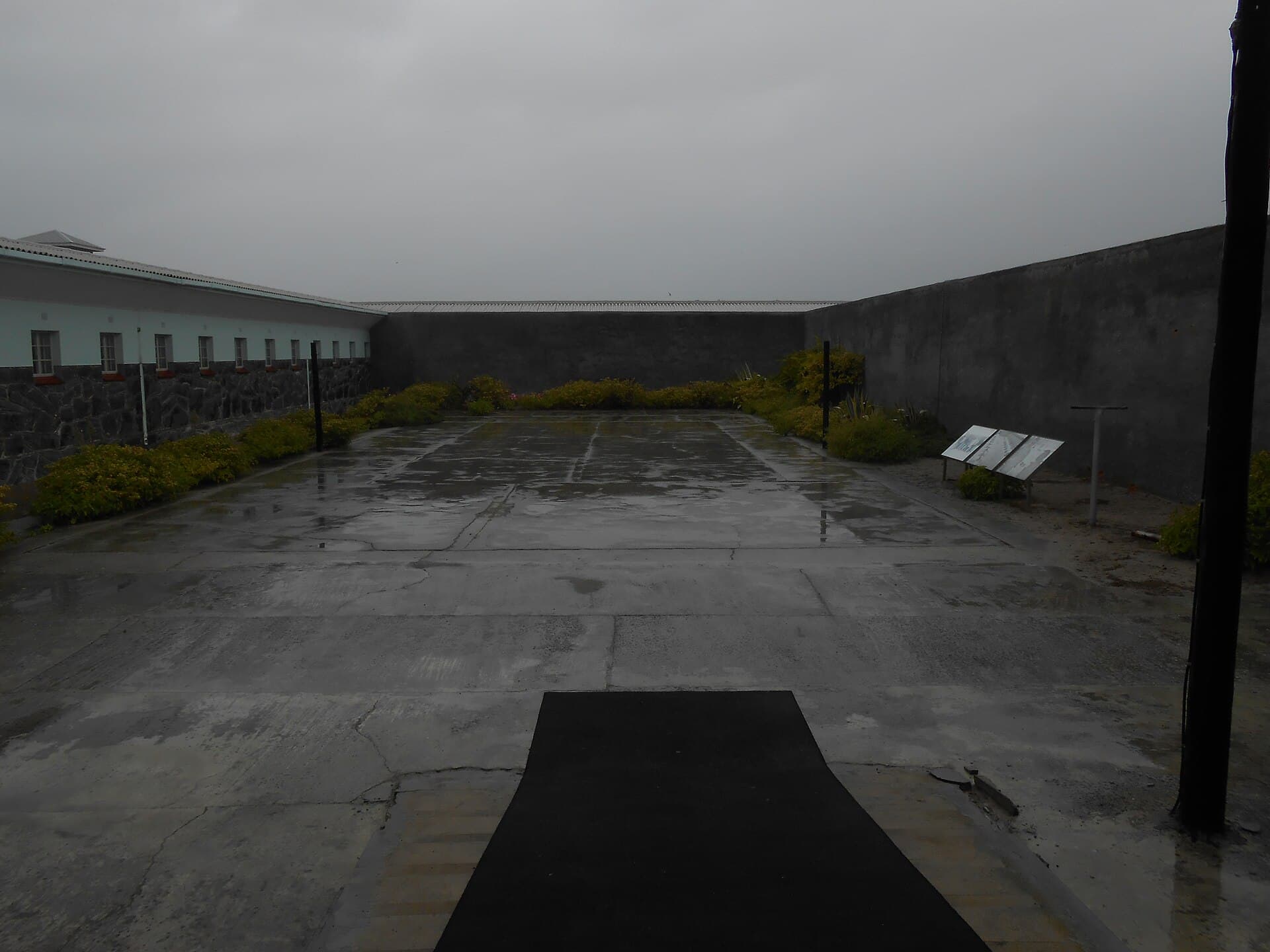
The island's most famous act of preservation was a crime by prison rules. In the mid 1970s Mandela began secretly writing his autobiography at night, passing pages to Walter Sisulu and Ahmed Kathrada for comment. Mac Maharaj copied the text into minute script and smuggled the transcription out when he was released in 1976. The original manuscript, wrapped in plastic containers, was buried in the garden of the B Section courtyard. When prison authorities began building a wall through the courtyard, workers unearthed part of it. Mandela, Sisulu, and Kathrada lost their study privileges for four years, a heavy price in a place where study was the main freedom left. The smuggled copy survived abroad and became the foundation of Long Walk to Freedom, published in 1994, the year its author became president. The book the prison tried to dig out of the ground became one of the most widely read political memoirs of the century.
The end came in stages. The last political prisoners left the island in 1991 as apartheid was dismantled, the remaining medium-security prison closed in 1996, and on 1 January 1997 the Robben Island Museum opened as the custodian of the site. UNESCO inscription followed in 1999. Visitors board a ferry at the Nelson Mandela Gateway at the V&A Waterfront for the crossing, often rough, that every prisoner once made in the hold of a boat. The tour crosses the island by bus, past the kramat, the leper church, the wartime guns, and Sobukwe's house, and ends at the maximum-security prison. Its fixed point is cell number five in B Section, a space of a few square metres holding a bedroll, a stool, and a bucket, where Mandela spent eighteen years. Its small window faces the courtyard where the manuscript was buried. The island has gentler tenants too: a colony of African penguins, re-established in the 1980s, waddles between scrub and beach, an unexpected lightness on an island with one of the heaviest histories on earth.
What distinguishes Robben Island from almost every other memorial site is who does the telling. From its first days the museum employed former political prisoners as tour guides, and a visitor walking through the cell blocks is usually led by a man who was once locked inside them. He points out his own section, describes the food and the quarry, and answers questions in the first person. Where The Apartheid Museum in Johannesburg makes its argument through architecture and archives, Robben Island makes it through testimony: the evidence stands in front of you and remembers.
That method carries a deadline. The men imprisoned in the 1960s are now in their eighties and nineties, and each year there are fewer guides who can say "my cell" rather than "this cell". The museum and partner institutions have been recording oral histories and filming interviews so that the first-person account survives its narrators. The race between recording and time is now part of the island's story, and every tour led by a former prisoner is understood to be something that will not always be possible.
Robben Island preserves an argument about memory that few places can make so plainly. A state built a prison there to silence specific men, and controlled every written word that entered or left. The prisoners answered with the oldest technologies of remembrance: teaching, repetition, hidden manuscripts, and the discipline of study. The lessons traded over lime dust outlasted the government that ordered the digging, and the buried book outlasted the wall built over it. Now the island's keepers work at the same task from the other side, recording the voices of aging guides so that testimony can outlive the witnesses. The cell with the small window is empty, but it is the most carefully kept room in South Africa, held not as a relic of what the state did, but as proof of what it failed to do.
Four centuries of banishment
The apartheid prison
The quarry and the university
The manuscript in the garden
From prison to museum
Guides who were prisoners
What the island keeps
References and resources
- UNESCO World Heritage Centre: Robben Island, property no. 916, inscribed 1999
- Robben Island Museum, official site
- Encyclopaedia Britannica: Robben Island
- Wikipedia: Robben Island
- South African History Online: Robert Mangaliso Sobukwe
- South African History Online: Autshumato
- Nelson Mandela Foundation
- Britannica: Rivonia Trial