Heritage · Country
Aland Islands Culture and Heritage
A Swedish-speaking archipelago of some 6,500 islands, awarded to Finland by the League of Nations in 1921 on condition its language was guaranteed and its shores kept unarmed. A guide to Åland's castles, stone churches and windjammers, and to how a seafaring people remembers its drowned.Written to last.
By Confinity Heritage Editorial · Updated 2026-08-17 · 8-minute readQuiet tools, kept out of the way.
Åland sits in the middle of the water between Sweden and Finland: roughly 6,500 islands, islets and skerries at the mouth of the Gulf of Bothnia, of which somewhere between sixty and eighty carry permanent households. The province belongs to Finland, speaks only Swedish, flies its own flag, prints its own stamps, keeps no garrison and sends no conscripts. It has done all that under an international guarantee since 1921, and the guarantee has held through a world war and a Cold War.
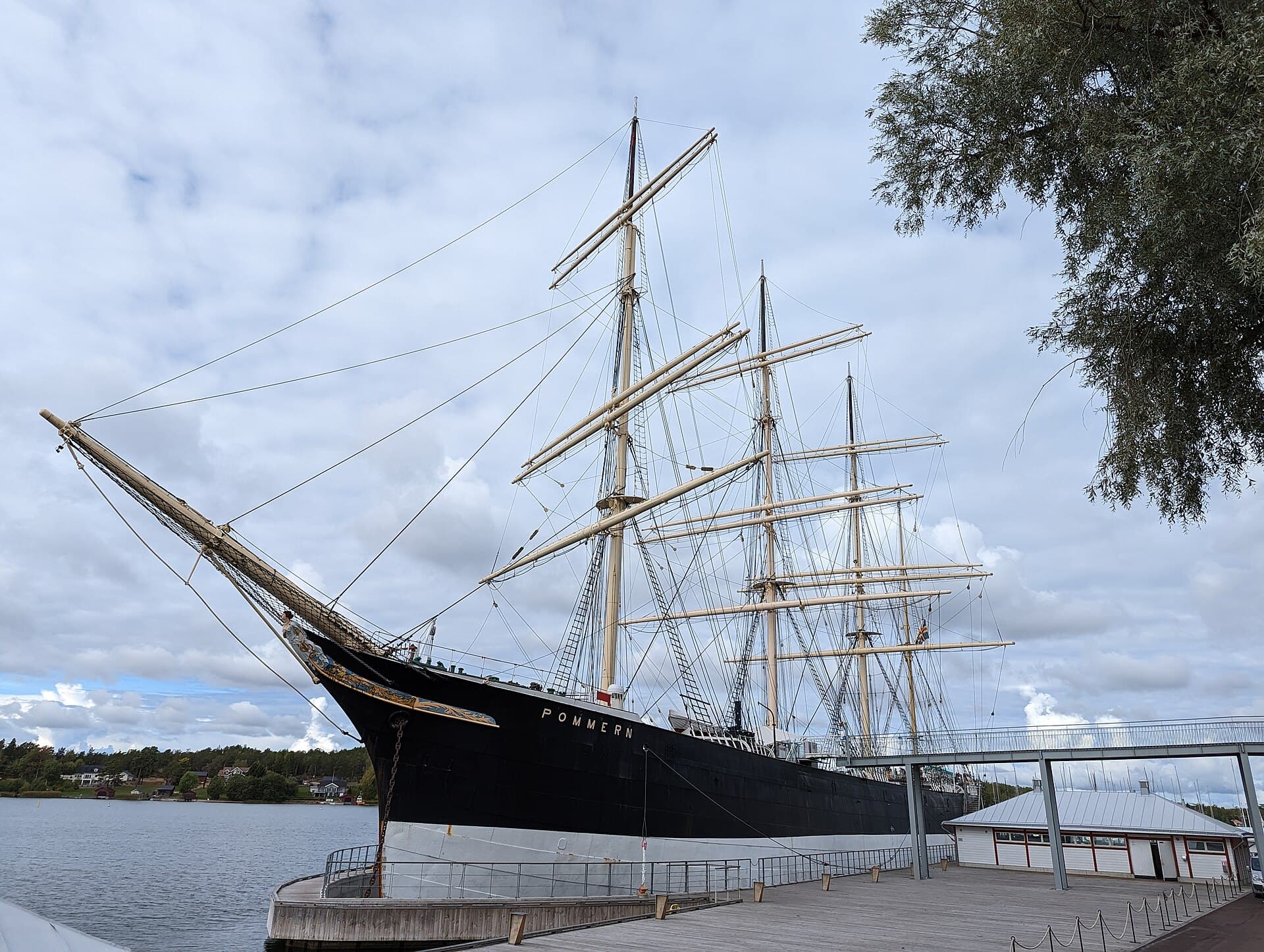
Two threads run through everything here. The first is the Åland question, the dispute over whom the islanders belonged to once the Russian empire fell apart, and the settlement the League of Nations imposed in 1921, which gave Finland sovereignty and gave the Ålanders their language. The second is the sea. For a few decades in the twentieth century a shipowner in Mariehamn kept the last commercial fleet of square-rigged sailing ships on earth, and one of those ships is still moored in the town.
Åland is an autonomous, demilitarised and neutralised region of Finland with about 30,700 inhabitants and a land area of roughly 1,580 square kilometres at the mouth of the Gulf of Bothnia (Britannica). The main island, Fasta Åland, holds most of the population and all the road network worth the name; the outer municipalities of Kökar, Föglö, Sottunga, Brändö and Kumlinge are reached by a public ferry system that works as the local bus service. Swedish is the sole official language. The regional parliament, the Lagting, and its government legislate on education, health, culture, policing, postal services, broadcasting and the environment, while Finland retains foreign affairs, most taxation, currency and the courts. Åland issues its own stamps, holds the .ax domain, and belongs to the European Union under a protocol keeping it outside the EU value added tax area.
Mariehamn. The capital was founded in 1861 by decree of Tsar Alexander II and named for his wife, the Empress Maria Alexandrovna, on a narrow neck of land with a harbour on each side. About 11,000 people live there, a third of the province. The western harbour holds the Åland Maritime Museum and the barque Pommern; the eastern harbour holds the Maritime Quarter, a working yard where wooden boats are still built and repaired alongside a smithy and small museums of boatbuilding and marine engines. Between them run the two long avenues of lime trees the Russian planners laid out, and the older streets keep the wooden villas of the shipowning families who made their money in sail.
Godby and Jomala. Outside the capital, Åland has no towns in the ordinary sense. Godby, in Finström, is the service centre for the north of the main island, while Jomala, the municipality wrapping around Mariehamn, keeps the medieval church of St Olaf and much of the province's farmland.
Sund, Eckerö and the outer parishes. Sund carries two of the heaviest sites on the islands: the medieval castle at Kastelholm and the ruined Russian fortress of Bomarsund. Eckerö, the westernmost parish, faces Sweden across the open Sea of Åland, and its enormous neoclassical Post and Customs House of 1828, designed by Carl Ludvig Engel, was built to impress travellers arriving at the western edge of the Russian empire. Kökar, far to the south east, holds the ruins of the province's only medieval monastery.
People have lived on these islands since the Stone Age, and Åland has one of the densest concentrations of Bronze Age and Iron Age burial cairns in the northern Baltic. From the early Middle Ages the archipelago was part of the Swedish realm and a link on the sailing route between Stockholm and the Finnish coast. Kastelholm Castle, first mentioned in the 1380s, was the crown's administrative seat, and collected the usual freight of royal history: Gustav Vasa stayed there in 1556, and in 1571 the deposed King Eric XIV was held prisoner there on his brother's orders (Wikipedia). A fire in 1745 left the castle a shell.
 Kastelholm was the administrative centre of the islands under Sweden. Aland's demilitarised, autonomous and Swedish-speaking status was settled by the League of Nations in 1921 and has held since. Photograph by Vitaly Repin, CC BY-SA 4.0, via Wikimedia Commons.
The modern history of Åland begins with a change of empire. In 1809 Sweden ceded Finland, and Åland with it, to Russia. From 1832 the Russians built an enormous fortress at Bomarsund, intended to command the sea approaches to the Gulf of Bothnia, and never finished it. In August 1854, during the Crimean War, an Anglo-French fleet bombarded and captured the works, which were then blown up. Two years later the Treaty of Paris attached a servitude to the settlement: Åland was to be demilitarised, and Russia undertook not to fortify it again (nordics.info). That clause, drafted to reassure Sweden about a Russian naval base on its doorstep, is the oldest continuously observed part of the islands' status.
Finland declared independence in December 1917, and the Ålanders immediately asked to leave with it. Meetings across the parishes petitioned for reunion with Sweden, and a petition circulated in 1919 was signed by an overwhelming majority of the adult population. Finland refused, arrested the leaders of the movement, and offered a self-government act instead, which the Ålanders declined. With both neighbours immovable, the dispute went to the newly founded League of Nations, which sent a commission of jurists and then a commission of rapporteurs to the islands. In June 1921 the Council of the League ruled that sovereignty lay with Finland, and that Finland must guarantee the islanders' Swedish language, their culture and their local customs, and must keep the islands demilitarised and neutral (United Nations Office of Legal Affairs). A convention signed at Geneva in October 1921 by ten states put the demilitarisation and neutralisation into treaty form. The Åland parliament met for the first time on 9 June 1922, and that date is still kept as Autonomy Day.
Åland is the only monolingually Swedish region in a country that is otherwise officially bilingual, and its language guarantee is the core of the 1921 settlement rather than a decoration on it. Schools teach in Swedish, the administration works in Swedish, and Finnish is a foreign language here in a way it is not in mainland Swedish-speaking Finland. Ålandic Swedish leans toward the dialects of Uppland and Roslagen across the water rather than the Finland Swedish of Turku, and the older parish dialects, which differ audibly between the main island and the outer skerries, keep vocabulary for boats, ice, winds and fishing gear with no counterpart in standard Swedish.
The name itself is unresolved in a way that suits an island group between two languages. The most widely accepted account derives Swedish Åland from an older Germanic form built on a root meaning water, giving something close to water land; the Finnish name, Ahvenanmaa, means perch land, and may be either an independent description of a good fishing ground or a Finnish reshaping of that same Germanic word into something Finnish speakers could hear as meaningful (Wikipedia). Parish and skerry names are almost all Swedish and almost all descriptive, so the chart of the archipelago reads as an account of what the sailors who made it saw.
Åland thinks of itself first as a sea province. Shipping is the largest private industry, the ferry lines to Sweden and Finland are Åland companies, and the islands' self-image rests on a period when a shipowner in a town of a few thousand people ran a substantial share of the world's remaining square-riggers. Gustaf Erikson, who went to sea at nine and had his first command at nineteen, spent the 1910s and 1920s buying big steel windjammers cheaply from owners moving to steam, and worked them in the Australian grain trade on voyages of thirty thousand nautical miles crewed by fewer than thirty hands (Wikipedia). His ships raced each other home with the wheat, and the annual grain race was followed in the British press as sport. It ended late: the Erikson barque Pamir rounded Cape Horn with Australian grain in July 1949, the last cargo-carrying sailing ship to do it.
Away from the water, the culture is recognisably Nordic and distinctly local. Villages raise their own midsummer poles, and the designs differ from parish to parish closely enough that people can tell where a pole comes from. The Åland pancake, thick with semolina and cardamom and served with stewed plums, and the dark island black bread appear at every celebration. The blue flag with its yellow and red cross, adopted in 1954, is flown with an enthusiasm visitors from larger places underestimate.
Åland is Lutheran, part of the Swedish-speaking Diocese of Borgå within the Evangelical Lutheran Church of Finland, and the province is unusual in that its parish churches are also its principal medieval monuments. Ten stone churches survive from the Middle Ages, a remarkable number for a population this small. St Olaf's at Jomala, built of local red granite and limestone in about 1260 to 1280, has a claim to be the oldest church in the country, and its dedication to the Norwegian king Olaf II, patron saint of Åland, records how thoroughly these islands belonged to the Baltic world of the sagas before they belonged to any modern state (Wikipedia). The largest medieval church, St John the Baptist at Sund, stands within sight of both Kastelholm and Bomarsund.
Inside, the churches carry the province's other faith. Votive ships hang from the vaults of several of them, hulls given by families or crews in thanks for a safe return or in memory of one that never came, and painted medieval vaults at Finström and Lemland show the range of a small and wealthy island church. Folk belief here ran to sea spirits, weather signs and the reading of ice, and though the practice has faded, the vocabulary survives in dialect and in the names of rocks and shoals.
Åland buries its dead in parish churchyards, in the Lutheran manner of Finland and Sweden, and keeps the northern custom of the candle. On All Saints' Day, the Saturday between the last day of October and the sixth of November, families go out to the graves at dusk and light candles on them, and the churchyards at Jomala, Finström, Sund and Saltvik glow for the evening; the same happens again on Christmas Eve. Graves are tended through the summer and often held in a family for generations, and the churchyard remains where people go on the anniversary of a death rather than only at funerals.
What distinguishes Åland is the problem of the missing. A community that sent a large share of its men to sea for two hundred years accumulated a great many deaths with no body to bury, and the islands developed the usual maritime answers. Names of the lost were entered in parish records and read from the pulpit; families cut the name of a drowned man into the family stone under the names of those actually lying beneath it, so the grave holds the whole household even when it does not hold the whole household's remains; and votive ships in the churches served as a public register of danger survived. Memorials in Mariehamn and the parishes name crews lost in the wars and in the ordinary attrition of the grain voyages, and the Maritime Museum treats its photographs, letters, discharge books and sea chests as an archive of individual lives.
That archive has a companion on the seabed. The Baltic is cold, dark, low in salt and free of the shipworm that destroys timber elsewhere, so wrecks in Åland waters survive with cargo, fittings and sometimes their crews' possessions intact. Hundreds are recorded and each is legally protected, and the rules on diving and salvage treat those hulls closer to graves than to resources.
Åland's records are Swedish in language and Finnish in jurisdiction, and its autonomy is the reason it keeps them itself.
Parish registers follow the Swedish system, so Åland has the household examination rolls that Sweden required from 1686: a rolling register of everyone in each house, updated annually with births, marriages, deaths and moves. Combined with the moving certificates issued when a person changed parish, they make Ålandic families traceable across centuries.
Russia took Finland including Åland in 1809, and Finland took Åland at independence, over the objections of most Ålanders, who wanted to join Sweden. The League of Nations settled it in 1921 by giving Finland sovereignty and Åland an autonomy that includes its own parliament, its own citizenship of a kind, the hembygdsrätt, and the right to keep Swedish as the sole official language. Acquiring the right of domicile is restricted, so the register of who holds it is a document with real consequences.
The Åland Maritime Museum and the provincial archives in Mariehamn hold the seafaring record, which is the islands' economic history: Åland ran the last commercial sailing fleet in the world, Gustaf Erikson's grain ships racing from Australia into the 1930s, and the crew lists of those voyages document a generation of Ålandic men.
The demilitarisation of the islands, in force since 1856, means there are no military service records, which is a small and telling absence.
Åland has no UNESCO World Heritage Site, and its preservation record rests instead on a few institutions doing careful work on a short list of monuments. Ålands museum holds the archaeology and social history and manages the sites in the field. Kastelholm has been consolidated and partly rebuilt over four decades and opens alongside the Jan Karlsgården open-air farm museum and the Vita Björn prison, built beside the castle in 1784 and used until 1975. At Bomarsund the shattered casemates and the Russian cemeteries have been stabilised and interpreted, with a purpose-built visitor centre opened in the 2020s. On Kökar, the ruins of the Franciscan house at Hamnö, first recorded in 1472 and closed at the Reformation, sit beside the church of St Anne of 1784 that reused its ground (Kökar municipality).
The maritime heritage has the strongest institutional backing. The Åland Maritime Museum grew out of a collection begun in the 1920s by Captain Carl Holmqvist, who could see the age of sail ending and started gathering what would otherwise be thrown away; the Åland Nautical Club formalised the effort in 1935 and the building opened in 1954 (Wikipedia). Beside it lies the museum's largest object. Pommern is a four-masted steel barque built at Glasgow in 1903, sailed for a German owner as a Flying P-Liner, bought by Gustaf Erikson in 1923 and given to Mariehamn after the Second World War (Wikipedia). No engine was ever fitted to her, which makes her the rarest kind of survivor: a deep-sea commercial sailing ship preserved much as she worked. She was docked for a full hull restoration between 2019 and 2021.
For a province of thirty thousand people, Åland's documentary record is unusually accessible. The provincial archive holds the administrative papers of self-government from 1922 onward, and the museums publish collection material through Finna, the shared discovery service for Finnish museums, libraries and archives. The National Library of Finland's digitised newspaper service carries long runs of the islands' press, including the paper Åland, founded in 1891, which makes it possible to read the Åland question week by week as the islanders themselves argued it out between 1917 and 1922.
Two more specialised bodies of material matter. The Åland Maritime Museum has been digitising its photographic archive of the windjammer fleet, much of it shot by crew members on voyage, and the results are among the best visual documentation of deep-water commercial sail anywhere. The Åland Islands Peace Institute publishes its research on autonomy, minority protection and demilitarisation openly, so the legal record is available to the negotiators who keep asking about it (Åland Islands Peace Institute).
Modern Åland lives on shipping, ferry tourism, banking and online gaming, and exports one thing that is not a product: the constitutional arrangement itself, discussed in international forums as the Åland Example. Alongside it runs a food and drink culture that trades on the archipelago's history. The Föglö wreck of the 1840s, found in 2010 with 168 bottles aboard, produced both record auction prices for its champagne and a laboratory analysis of its beer that a local brewery used to recreate a nineteenth-century Baltic ale.
The pressures are those of any small autonomous territory. Keeping public services running in Swedish for thirty thousand people is expensive, recruiting doctors and teachers who work in Swedish gets harder every year, and the right of domicile that protects the language also limits who can settle. The demilitarisation, long a settled curiosity of diplomatic history, has returned to public argument since the security situation in the Baltic changed.
A dispute settled by argument. The Åland question was a live territorial quarrel between two Nordic states with a mobilised population in the middle of it, and the League of Nations resolved it in 1921 with a ruling both sides accepted and have honoured since. It is among the League's few durable achievements, and is still taught and cited as such.
A guarantee that had to work daily. Sovereignty went to Finland, but the language, the schools, the local customs and the land were guaranteed through a self-government act, the right of domicile and a set of land acquisition rules. Those instruments are why the settlement lasted, and they are studied by anyone designing an autonomy arrangement for a minority region.
The right of domicile, explained plainly. Hembygdsrätt carries the right to vote and stand in Åland elections, to own real property on the islands and to trade there without a permit, and holders are exempt from Finnish conscription. It passes to the children of holders and can be applied for after five years of continuous residence by a Finnish citizen with adequate Swedish. Locally it is defended as the practical machinery of the language guarantee and elsewhere criticised as a limit on free movement, and both readings describe the same rules (Wikipedia).
The last windjammers kept rather than scrapped. Åland ran the final commercial square-rig fleet in the world and then kept the evidence: Pommern without an engine and largely as she sailed, the museum's papers and photographs of the crews who worked her, and a Maritime Quarter where wooden boatbuilding is still a working trade.
Kastelholm was the administrative centre of the islands under Sweden. Aland's demilitarised, autonomous and Swedish-speaking status was settled by the League of Nations in 1921 and has held since. Photograph by Vitaly Repin, CC BY-SA 4.0, via Wikimedia Commons.
The modern history of Åland begins with a change of empire. In 1809 Sweden ceded Finland, and Åland with it, to Russia. From 1832 the Russians built an enormous fortress at Bomarsund, intended to command the sea approaches to the Gulf of Bothnia, and never finished it. In August 1854, during the Crimean War, an Anglo-French fleet bombarded and captured the works, which were then blown up. Two years later the Treaty of Paris attached a servitude to the settlement: Åland was to be demilitarised, and Russia undertook not to fortify it again (nordics.info). That clause, drafted to reassure Sweden about a Russian naval base on its doorstep, is the oldest continuously observed part of the islands' status.
Finland declared independence in December 1917, and the Ålanders immediately asked to leave with it. Meetings across the parishes petitioned for reunion with Sweden, and a petition circulated in 1919 was signed by an overwhelming majority of the adult population. Finland refused, arrested the leaders of the movement, and offered a self-government act instead, which the Ålanders declined. With both neighbours immovable, the dispute went to the newly founded League of Nations, which sent a commission of jurists and then a commission of rapporteurs to the islands. In June 1921 the Council of the League ruled that sovereignty lay with Finland, and that Finland must guarantee the islanders' Swedish language, their culture and their local customs, and must keep the islands demilitarised and neutral (United Nations Office of Legal Affairs). A convention signed at Geneva in October 1921 by ten states put the demilitarisation and neutralisation into treaty form. The Åland parliament met for the first time on 9 June 1922, and that date is still kept as Autonomy Day.
Åland is the only monolingually Swedish region in a country that is otherwise officially bilingual, and its language guarantee is the core of the 1921 settlement rather than a decoration on it. Schools teach in Swedish, the administration works in Swedish, and Finnish is a foreign language here in a way it is not in mainland Swedish-speaking Finland. Ålandic Swedish leans toward the dialects of Uppland and Roslagen across the water rather than the Finland Swedish of Turku, and the older parish dialects, which differ audibly between the main island and the outer skerries, keep vocabulary for boats, ice, winds and fishing gear with no counterpart in standard Swedish.
The name itself is unresolved in a way that suits an island group between two languages. The most widely accepted account derives Swedish Åland from an older Germanic form built on a root meaning water, giving something close to water land; the Finnish name, Ahvenanmaa, means perch land, and may be either an independent description of a good fishing ground or a Finnish reshaping of that same Germanic word into something Finnish speakers could hear as meaningful (Wikipedia). Parish and skerry names are almost all Swedish and almost all descriptive, so the chart of the archipelago reads as an account of what the sailors who made it saw.
Åland thinks of itself first as a sea province. Shipping is the largest private industry, the ferry lines to Sweden and Finland are Åland companies, and the islands' self-image rests on a period when a shipowner in a town of a few thousand people ran a substantial share of the world's remaining square-riggers. Gustaf Erikson, who went to sea at nine and had his first command at nineteen, spent the 1910s and 1920s buying big steel windjammers cheaply from owners moving to steam, and worked them in the Australian grain trade on voyages of thirty thousand nautical miles crewed by fewer than thirty hands (Wikipedia). His ships raced each other home with the wheat, and the annual grain race was followed in the British press as sport. It ended late: the Erikson barque Pamir rounded Cape Horn with Australian grain in July 1949, the last cargo-carrying sailing ship to do it.
Away from the water, the culture is recognisably Nordic and distinctly local. Villages raise their own midsummer poles, and the designs differ from parish to parish closely enough that people can tell where a pole comes from. The Åland pancake, thick with semolina and cardamom and served with stewed plums, and the dark island black bread appear at every celebration. The blue flag with its yellow and red cross, adopted in 1954, is flown with an enthusiasm visitors from larger places underestimate.
Åland is Lutheran, part of the Swedish-speaking Diocese of Borgå within the Evangelical Lutheran Church of Finland, and the province is unusual in that its parish churches are also its principal medieval monuments. Ten stone churches survive from the Middle Ages, a remarkable number for a population this small. St Olaf's at Jomala, built of local red granite and limestone in about 1260 to 1280, has a claim to be the oldest church in the country, and its dedication to the Norwegian king Olaf II, patron saint of Åland, records how thoroughly these islands belonged to the Baltic world of the sagas before they belonged to any modern state (Wikipedia). The largest medieval church, St John the Baptist at Sund, stands within sight of both Kastelholm and Bomarsund.
Inside, the churches carry the province's other faith. Votive ships hang from the vaults of several of them, hulls given by families or crews in thanks for a safe return or in memory of one that never came, and painted medieval vaults at Finström and Lemland show the range of a small and wealthy island church. Folk belief here ran to sea spirits, weather signs and the reading of ice, and though the practice has faded, the vocabulary survives in dialect and in the names of rocks and shoals.
Åland buries its dead in parish churchyards, in the Lutheran manner of Finland and Sweden, and keeps the northern custom of the candle. On All Saints' Day, the Saturday between the last day of October and the sixth of November, families go out to the graves at dusk and light candles on them, and the churchyards at Jomala, Finström, Sund and Saltvik glow for the evening; the same happens again on Christmas Eve. Graves are tended through the summer and often held in a family for generations, and the churchyard remains where people go on the anniversary of a death rather than only at funerals.
What distinguishes Åland is the problem of the missing. A community that sent a large share of its men to sea for two hundred years accumulated a great many deaths with no body to bury, and the islands developed the usual maritime answers. Names of the lost were entered in parish records and read from the pulpit; families cut the name of a drowned man into the family stone under the names of those actually lying beneath it, so the grave holds the whole household even when it does not hold the whole household's remains; and votive ships in the churches served as a public register of danger survived. Memorials in Mariehamn and the parishes name crews lost in the wars and in the ordinary attrition of the grain voyages, and the Maritime Museum treats its photographs, letters, discharge books and sea chests as an archive of individual lives.
That archive has a companion on the seabed. The Baltic is cold, dark, low in salt and free of the shipworm that destroys timber elsewhere, so wrecks in Åland waters survive with cargo, fittings and sometimes their crews' possessions intact. Hundreds are recorded and each is legally protected, and the rules on diving and salvage treat those hulls closer to graves than to resources.
Åland's records are Swedish in language and Finnish in jurisdiction, and its autonomy is the reason it keeps them itself.
Parish registers follow the Swedish system, so Åland has the household examination rolls that Sweden required from 1686: a rolling register of everyone in each house, updated annually with births, marriages, deaths and moves. Combined with the moving certificates issued when a person changed parish, they make Ålandic families traceable across centuries.
Russia took Finland including Åland in 1809, and Finland took Åland at independence, over the objections of most Ålanders, who wanted to join Sweden. The League of Nations settled it in 1921 by giving Finland sovereignty and Åland an autonomy that includes its own parliament, its own citizenship of a kind, the hembygdsrätt, and the right to keep Swedish as the sole official language. Acquiring the right of domicile is restricted, so the register of who holds it is a document with real consequences.
The Åland Maritime Museum and the provincial archives in Mariehamn hold the seafaring record, which is the islands' economic history: Åland ran the last commercial sailing fleet in the world, Gustaf Erikson's grain ships racing from Australia into the 1930s, and the crew lists of those voyages document a generation of Ålandic men.
The demilitarisation of the islands, in force since 1856, means there are no military service records, which is a small and telling absence.
Åland has no UNESCO World Heritage Site, and its preservation record rests instead on a few institutions doing careful work on a short list of monuments. Ålands museum holds the archaeology and social history and manages the sites in the field. Kastelholm has been consolidated and partly rebuilt over four decades and opens alongside the Jan Karlsgården open-air farm museum and the Vita Björn prison, built beside the castle in 1784 and used until 1975. At Bomarsund the shattered casemates and the Russian cemeteries have been stabilised and interpreted, with a purpose-built visitor centre opened in the 2020s. On Kökar, the ruins of the Franciscan house at Hamnö, first recorded in 1472 and closed at the Reformation, sit beside the church of St Anne of 1784 that reused its ground (Kökar municipality).
The maritime heritage has the strongest institutional backing. The Åland Maritime Museum grew out of a collection begun in the 1920s by Captain Carl Holmqvist, who could see the age of sail ending and started gathering what would otherwise be thrown away; the Åland Nautical Club formalised the effort in 1935 and the building opened in 1954 (Wikipedia). Beside it lies the museum's largest object. Pommern is a four-masted steel barque built at Glasgow in 1903, sailed for a German owner as a Flying P-Liner, bought by Gustaf Erikson in 1923 and given to Mariehamn after the Second World War (Wikipedia). No engine was ever fitted to her, which makes her the rarest kind of survivor: a deep-sea commercial sailing ship preserved much as she worked. She was docked for a full hull restoration between 2019 and 2021.
For a province of thirty thousand people, Åland's documentary record is unusually accessible. The provincial archive holds the administrative papers of self-government from 1922 onward, and the museums publish collection material through Finna, the shared discovery service for Finnish museums, libraries and archives. The National Library of Finland's digitised newspaper service carries long runs of the islands' press, including the paper Åland, founded in 1891, which makes it possible to read the Åland question week by week as the islanders themselves argued it out between 1917 and 1922.
Two more specialised bodies of material matter. The Åland Maritime Museum has been digitising its photographic archive of the windjammer fleet, much of it shot by crew members on voyage, and the results are among the best visual documentation of deep-water commercial sail anywhere. The Åland Islands Peace Institute publishes its research on autonomy, minority protection and demilitarisation openly, so the legal record is available to the negotiators who keep asking about it (Åland Islands Peace Institute).
Modern Åland lives on shipping, ferry tourism, banking and online gaming, and exports one thing that is not a product: the constitutional arrangement itself, discussed in international forums as the Åland Example. Alongside it runs a food and drink culture that trades on the archipelago's history. The Föglö wreck of the 1840s, found in 2010 with 168 bottles aboard, produced both record auction prices for its champagne and a laboratory analysis of its beer that a local brewery used to recreate a nineteenth-century Baltic ale.
The pressures are those of any small autonomous territory. Keeping public services running in Swedish for thirty thousand people is expensive, recruiting doctors and teachers who work in Swedish gets harder every year, and the right of domicile that protects the language also limits who can settle. The demilitarisation, long a settled curiosity of diplomatic history, has returned to public argument since the security situation in the Baltic changed.
A dispute settled by argument. The Åland question was a live territorial quarrel between two Nordic states with a mobilised population in the middle of it, and the League of Nations resolved it in 1921 with a ruling both sides accepted and have honoured since. It is among the League's few durable achievements, and is still taught and cited as such.
A guarantee that had to work daily. Sovereignty went to Finland, but the language, the schools, the local customs and the land were guaranteed through a self-government act, the right of domicile and a set of land acquisition rules. Those instruments are why the settlement lasted, and they are studied by anyone designing an autonomy arrangement for a minority region.
The right of domicile, explained plainly. Hembygdsrätt carries the right to vote and stand in Åland elections, to own real property on the islands and to trade there without a permit, and holders are exempt from Finnish conscription. It passes to the children of holders and can be applied for after five years of continuous residence by a Finnish citizen with adequate Swedish. Locally it is defended as the practical machinery of the language guarantee and elsewhere criticised as a limit on free movement, and both readings describe the same rules (Wikipedia).
The last windjammers kept rather than scrapped. Åland ran the final commercial square-rig fleet in the world and then kept the evidence: Pommern without an engine and largely as she sailed, the museum's papers and photographs of the crews who worked her, and a Maritime Quarter where wooden boatbuilding is still a working trade.
National Overview
Notable Cities
Historical Foundations
Linguistic and Etymological Roots
Cultural Identity
Religion and Spirituality
Remembrance and Mourning Traditions
Tracing a Family in Aland Islands
Heritage Preservation Efforts
Digital Heritage
Contemporary Cultural Influences
Success Stories
References and resources
- Encyclopaedia Britannica, Åland Islands: geography, population and the outline of autonomy.
- Åland Islands, Wikipedia: islands and skerries, language, right of domicile and etymology.
- nordics.info, The Legal Basis of Åland's Demilitarization and Neutralization: the 1856 servitude, the 1921 convention and later treaties.
- United Nations Office of Legal Affairs, The Åland Islands Solution: the League settlement as a precedent in peaceful dispute resolution.
- Åland Islands Peace Institute, The Åland Example: autonomy, demilitarisation and language guarantees as an exportable model.
- Act on the Autonomy of Åland, Wikipedia: the self-government acts, the powers they divide and the right of domicile.
- Kastelholm Castle, Wikipedia: the medieval seat, the imprisonment of Eric XIV and the fire of 1745.
- St Olaf's Church, Jomala, Wikipedia: the thirteenth-century granite church and its claim to be Finland's oldest.
- Kökar municipality, The Monastery Ruins and Hamnö: the Franciscan house and its closure at the Reformation.
- Pommern (ship), Wikipedia: the 1903 barque, her grain voyages and her preservation at Mariehamn.
- Gustaf Erikson, Wikipedia: the Mariehamn shipowner and the last commercial windjammer fleet.
- Föglö wreck, Wikipedia: the 1840s schooner and its 168 bottles.