Heritage · University
National University of San Marcos: History and Overview
Chartered by royal decree on 12 May 1551 and opened in a Lima convent in 1553, the National University of San Marcos is the oldest officially chartered university still operating in the Americas. Its Casona on the Parque Universitario holds the archaeological museum founded by Julio C. Tello in 1919.Written to last.
By Confinity Heritage Editorial · 2026-08-25 · 8-minute readQuiet tools, kept out of the way.
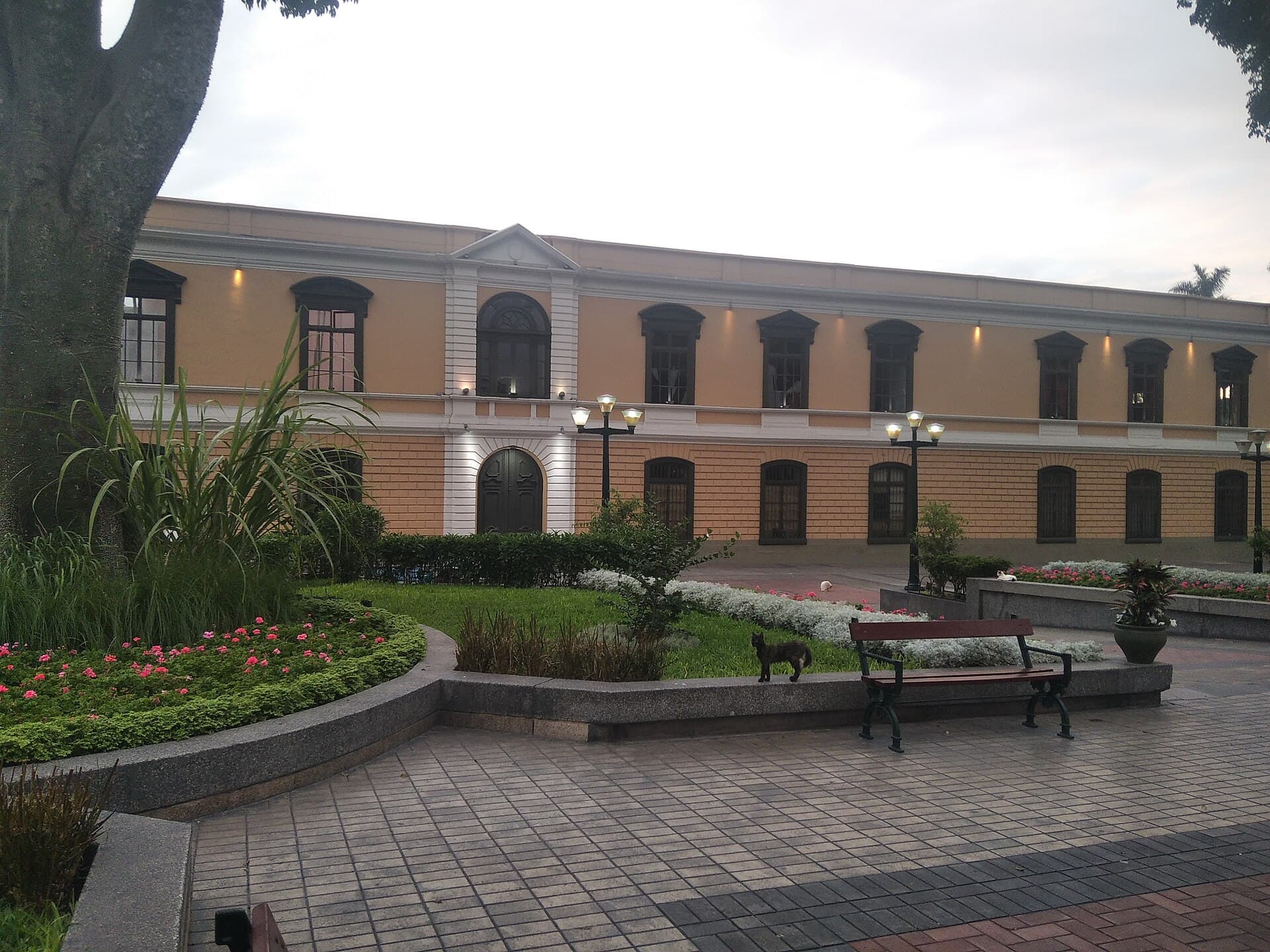
The National University of San Marcos is the national university of Peru and the institution Peruvians call la Decana de América, the dean of the Americas. Its founding order was signed at Valladolid on 12 May 1551 by Charles I of Spain and his mother Juana of Castile. Teaching began on 2 January 1553 in the chapter house of the Dominican convent of the Rosary, now Santo Domingo.
Its oldest surviving home, the Casona de San Marcos on the Parque Universitario, still houses the archaeological museum founded inside it in 1919. Two of the scholars who filled that museum turned the Andean past into a subject Peruvians could study at home rather than read about from abroad.
The early university was a Dominican foundation. A lay rector was elected in 1571, the year a bull of Pius V granted it pontifical standing, and in 1574 it drew the name of Saint Mark by lot from among the four evangelists. It taught theology, arts, canon law, civil law, and medicine, and by the mid-1570s had moved out of the convent into a house of its own.
One chair set it apart from its Spanish models. In July 1579 the university founded a chair in the general language of the Indians, meaning Quechua, with Juan de Balboa as its first professor. The purpose was administrative: priests were being sent into parishes where Spanish was not spoken. It also made Quechua a subject with a professor and a syllabus, three centuries before Lima thought of Andean culture as heritage.
San Marcos is generally recognised as the oldest officially chartered university still operating in the Americas, but the claim has a rival. In Santo Domingo, on Hispaniola, a Dominican house was raised to university rank by the papal bull In Apostolatus Culmine of 28 October 1538, thirteen years earlier. Critics of that claim answer that the bull carried papal rather than royal authority, that the crown withheld recognition until 1558, and that the institution closed under occupation in 1801 and again in 1823, making the modern Autonomous University of Santo Domingo a revival rather than a continuation. San Marcos rests on a royal charter and on teaching never interrupted for long; the argument is about what the word oldest is measuring.
Peru's first constituent congress met in the university chapel from 20 September 1822. The university later took over the Real Convictorio de San Carlos next door, a Jesuit novitiate of 1605, and that building, the Casona de San Marcos, was its seat until 1966. Sánchez Cerro's government closed the university by decree in 1932, and it stayed shut until 1935. The Ciudad Universitaria was begun in 1951, four hundred years after the charter, and the faculties moved out over the following fifteen years; during Peru's internal armed conflict of the late 1980s and early 1990s the campus was occupied by the armed forces.
The Ciudad Universitaria lies west of the historic centre in Lima Cercado, a walled campus of faculties, libraries, a stadium, and a botanical garden laid out over remains of the Maranga culture. Seventeen of the twenty faculties sit there, grouped into five academic areas and some seventy professional schools. Entry is by a national examination taken by far more candidates than there are places. The university enrols roughly thirty thousand undergraduates and six thousand postgraduates.
The Casona and the Parque Universitario remain its public face in the old city, inside the Historic Centre of Lima inscribed by UNESCO in 1988; the Casona now operates as the Centro Cultural de San Marcos.
Two San Marcos figures, working in different rooms of the same institution, made Andean memory into a discipline.
Julio C. Tello was born in 1880 in the province of Huarochirí, into a Quechua-speaking highland family, and came to Lima to study medicine. He took his bachelor's degree at San Marcos in 1908 with a thesis on the antiquity of syphilis in Peru, his collection of trepanned skulls carrying him from medicine into anthropology. After a master's degree at Harvard in 1911 he returned as Peru's first professionally trained archaeologist, founded the university's Museum of Archaeology and Ethnology in 1919, and sat as a deputy for Huarochirí, pressing for legal protection of ancient sites.
His fieldwork produced two defining discoveries. At Chavín de Huántar in 1919 he excavated the highland ceremonial centre and recovered the carved shaft now known as the Tello Obelisk. On the Paracas peninsula he opened the cemeteries in 1925, and in October 1927 his team reached the burial ground at Wari Kayan, where more than four hundred bodies lay wrapped in layer upon layer of embroidered cloth, among the finest textiles from the ancient world. Tello argued that Andean civilisation had developed in place, its formative culture in the northern highlands at Chavín, against the diffusionist view, associated with Max Uhle, that the high cultures of the coast had arrived from Mesoamerica. Later work has found older monumental building on the coast, notably at Caral, excavated from 1994 by Ruth Shady, herself a San Marcos professor. His chronology has been superseded; his contention that the answer lay inside Peru has not.
José María Arguedas came at the same past from the other side. Born in Andahuaylas in 1911, he was placed after his father's remarriage among the Quechua-speaking servants of the household and then with an Indigenous family, and grew up bilingual. He entered the faculty of letters at San Marcos in 1931. Jailed for eight months in 1937 and 1938 after a student protest against a visiting Italian fascist envoy, he spent the sentence translating Quechua songs, published in 1938 as Canto kechwa. He returned for a degree in ethnology in 1957 and a doctorate in 1963, taught ethnology at San Marcos from 1958 and at the agrarian university at La Molina from 1962, directed the Casa de la Cultura and the National Museum of History, and in 1966 published the first Spanish translation of the Huarochirí Manuscript, the one surviving extended account of pre-Hispanic Andean religion written in an Andean language. Its stories come from Tello's home province.
His novels, Yawar Fiesta of 1941, Los ríos profundos of 1958, and Todas las sangres of 1964, tried to make Spanish carry a Quechua way of hearing the world. "Yo no soy un aculturado," he said in 1968, refusing the idea that he had been absorbed. He took his own life in 1969. Between them they had made two unlikely things admissible as evidence: a song sung in a village, and a bundle wrapped in a desert tomb.
San Marcos has supplied Peru with its professions and much of its political class, twenty-one presidents among them. Hipólito Unanue, who took his degree there in 1783, founded the San Fernando college of medicine in 1811, now the university's medical faculty. Daniel Alcides Carrión, a medical student, had himself inoculated in 1885 with matter from a patient's skin lesion to prove that Oroya fever and verruga peruana were one disease. He was right, and it killed him on 5 October 1885, a date Peru still keeps as its day of medicine.
Its best-known graduate chose it over the Catholic university on principle: Mario Vargas Llosa enrolled in 1953 to read law and literature, submitted a thesis on Rubén Darío in 1958, and left for Madrid on a scholarship the same year. He won the Nobel Prize in Literature in 2010.
San Marcos is placed first among Peru's public universities and appears within the top thousand of the main international league tables. Its research runs from medicine and public health to biology in one of the most biodiverse countries on Earth, alongside the archaeology and linguistics for which it is known abroad. Its civic role resembles that of the University of Buenos Aires: a state institution whose lecture halls double as a forum for national argument.
The Casona stands at Avenida Nicolás de Piérola 1222, facing the Parque Universitario and its clock tower, five minutes' walk from the Plaza San Martín. The Centro Cultural de San Marcos shows the cloisters, the old lecture halls, the chapel where the first congress met, and the museums of archaeology and of art; it opens Monday to Saturday and closes on Sundays and public holidays, so confirm times through the centre before travelling. The Museum of Natural History at Avenida Arenales 1256 in Jesús María repays a separate morning. The Ciudad Universitaria, a few kilometres west off Avenida Venezuela, is worth the trip mainly for its botanical garden, and gate procedures there change with the academic calendar.
History
Campus and academics
Arguedas, Tello, and the Andean past
Scholarship
The university today
Visiting
References and resources
- National University of San Marcos (official)
- National University of San Marcos: History (official)
- Centro Cultural de San Marcos (official)
- Wikipedia: National University of San Marcos
- Wikipedia: Julio C. Tello
- Wikipedia: José María Arguedas
- Wikipedia: Casona of the National University of San Marcos