For families who want their stories to last. learn about the founding circle.

Heritage · Legacy

Charles Darwin Legacy

Charles Darwin (1809–1882): evolution by natural selection. A fact-checked account of Charles Darwin's life and legacy.

Written to last.

By Confinity Heritage Editorial · Updated 2026-07-20 · 6-minute read
Quiet tools, kept out of the way.
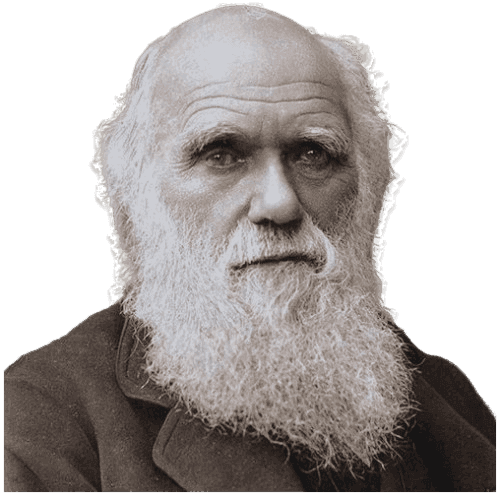
Portrait of Charles Darwin
Charles Robert Darwin (1809–1882) was an English naturalist who changed how people understand the living world and their own place within it. His theory of evolution by natural selection gave biology a single organizing idea: that species are not fixed, that they descend with modification from shared ancestors, and that the differences we see among them accumulate slowly across very long stretches of time. He set out this argument in On the Origin of Species, published in 1859, and it remains the foundation of modern biology. What makes Darwin unusual among great scientists is that his central claim was not a single flash of insight but the product of decades of patient observation, breeding experiments, correspondence, and doubt. He collected facts for more than twenty years before he committed his theory fully to print, and he tested his own idea against the strongest objections he could imagine. The result was a body of work careful enough to survive more than a century and a half of scrutiny, and consequential enough to reshape geology, medicine, agriculture, and philosophy along with biology. Darwin was born on 12 February 1809 in Shrewsbury, Shropshire, into a prosperous and intellectually restless family, as Britannica records. His grandfather was Erasmus Darwin, a physician and poet who had himself speculated about the transmutation of species. His father, Robert Darwin, was a successful doctor, and his mother, Susannah, came from the Wedgwood pottery family. His mother died when he was eight, and the young Darwin grew up hunting, collecting beetles, and reading widely in natural history rather than excelling at the classical schooling of the day. At sixteen he was sent to the University of Edinburgh to study medicine, following his father and grandfather. He found the lectures dull and the surgery of the time, performed without anaesthetic, unbearable to watch. He did, however, learn to study marine invertebrates under the naturalist Robert Grant, and he was exposed to lively debates about the origins of life. When it became clear that medicine was not his path, his father sent him to Christ's College, Cambridge, from 1828 to 1831, intending him for the Church of England clergy, a respectable career that would leave time for the natural history he loved. Cambridge shaped him more than theology ever did. He became close to the botanist John Stevens Henslow, whose Friday evening gatherings drew Darwin into serious scientific company, and he learned field geology from Adam Sedgwick on a mapping expedition through Wales. It was Henslow who, in 1831, recommended Darwin for the position that would define his life: a place aboard HMS Beagle, a Royal Navy survey ship preparing to chart the coasts of South America. Darwin joined as a self-funded gentleman naturalist and companion to the ship's young captain, Robert FitzRoy. The Beagle sailed from Plymouth on 27 December 1831 and did not return until October 1836, a voyage of nearly five years. Darwin spent much of that time ashore, and the range of what he saw was extraordinary: the fossil bones of giant extinct mammals in Argentina, an earthquake that visibly lifted the Chilean coast, coral atolls in the Pacific, and the deep forests of Brazil. He read Charles Lyell's Principles of Geology as he travelled, absorbing its argument that the Earth had been shaped gradually over immense periods by the same slow processes still at work. That idea of deep time and gradual change became a lasting habit of thought. In September and October 1835 the Beagle reached the Galápagos Islands off the coast of Ecuador. Darwin noticed that the mockingbirds differed from one island to the next, and he collected finches, tortoises, and plants without at first grasping how important the pattern would prove. The full significance emerged only after his return to England, when the ornithologist John Gould examined his bird specimens in 1837 and showed that the Galápagos finches Darwin had loosely labelled were in fact a cluster of closely related but distinct species. That a single ancestral stock could diverge into many forms suited to different conditions on neighbouring islands pointed Darwin toward a mechanism of change he did not yet have a name for. Back in London, Darwin opened a series of private notebooks in 1837 and began to work through the question of how species might change. The decisive step came in late 1838. On 28 September of that year he read the essay on population by Thomas Malthus, which argued that populations tend to grow faster than their food supply, so that many more individuals are born than can survive. Darwin recognised that in this competition to survive and reproduce, favourable variations would tend to be preserved and unfavourable ones destroyed. Over many generations this steady sorting would remodel a population, and given enough time it could produce entirely new species. He called the process natural selection. Darwin knew how radical the claim was, and he did not rush it. He drafted a short sketch of the theory in 1842 and a fuller essay in 1844, but he set them aside and told almost no one. Instead he spent years building his case, including an exhaustive study of barnacles that ran from 1846 to 1854 and established his standing as a careful working naturalist. He married his cousin Emma Wedgwood in January 1839, and in 1842 the couple moved to Down House in Kent, where Darwin lived and worked for the rest of his life. They had ten children, and the death of his daughter Annie in 1851 was a private grief that some scholars connect to his growing distance from religious orthodoxy. The long delay nearly cost Darwin priority. In June 1858 he received a manuscript from Alfred Russel Wallace, a younger naturalist working in the Malay Archipelago, that outlined a theory of natural selection strikingly close to his own. Anxious not to be scooped yet unwilling to treat Wallace unfairly, Darwin turned to his friends Charles Lyell and the botanist Joseph Dalton Hooker. They arranged a joint presentation to the Linnean Society of London on 1 July 1858, reading extracts from Darwin's earlier writings alongside Wallace's essay so that both men shared the credit. The joint paper drew little immediate notice, but it established the theory in print. The reading spurred Darwin to write quickly. On 24 November 1859 the publisher John Murray issued On the Origin of Species by Means of Natural Selection, in a print run of 1,250 copies priced at fifteen shillings; the entire stock was taken up by booksellers and libraries at once, as the Smithsonian Libraries note. The book was written as one long, closely reasoned argument. Darwin marshalled evidence from animal breeding, embryology, geographical distribution, the fossil record, and the anatomy of related species, and he confronted the hardest objections directly, including the incompleteness of the fossil record and the difficulty of explaining complex organs like the eye. He deliberately said almost nothing in it about human beings, writing only that "light will be thrown on the origin of man and his history." The Origin provoked immediate and lasting argument. Some naturalists accepted common descent quickly, while others, and much of the clergy, rejected it. Darwin, chronically unwell and averse to public conflict, rarely defended the theory in person. That role fell largely to allies such as Thomas Henry Huxley, whose vigorous advocacy earned him the nickname "Darwin's bulldog," and to Hooker, Lyell, and the American botanist Asa Gray. A famous exchange at the 1860 meeting of the British Association in Oxford, between Huxley and Bishop Samuel Wilberforce, became a symbol of the clash between the new biology and religious authority, though contemporary accounts of exactly what was said vary. Darwin kept working. He extended his argument to plants in a series of detailed studies of orchids, climbing plants, and insectivorous species, showing how ordinary adaptations could be explained by selection. In 1868 he published a large work on variation under domestication. Then, in the two-volume The Descent of Man, and Selection in Relation to Sex, issued on 24 February 1871, he finally applied evolution directly to humanity. He argued that human beings share common ancestry with other primates, that human mental and moral faculties differ from those of animals in degree rather than in kind, and he developed his second major mechanism, sexual selection, to explain traits that help an individual attract mates even when they carry a survival cost. The following year, in 1872, he published The Expression of the Emotions in Man and Animals, an early study of behaviour that used photographs and cross-cultural observation. His final years were spent on quieter subjects. His last book, published in 1881, examined the slow work of earthworms in forming soil, a characteristically Darwinian demonstration that vast effects can arise from small, unglamorous causes acting over long periods. Throughout his adult life he was troubled by a recurring illness whose cause has never been settled, with proposed explanations ranging from an infection contracted in South America to a chronic stress-related condition. Whatever its source, it kept him close to Down House and to a strict daily routine of work, walks, and correspondence. That correspondence was itself a scientific instrument. Darwin exchanged some fifteen thousand letters with naturalists, breeders, diplomats, and gardeners around the world, gathering the observations he could not make himself, and those letters are now catalogued by the Darwin Correspondence Project. By the time of his death, evolution as common descent was widely accepted among scientists, even though the specific mechanism of natural selection remained contested until it was reconciled with genetics in the twentieth century. Darwin died at Down House on 19 April 1882. He had expected a quiet burial in the village, but leading scientists and members of Parliament petitioned for a national honour, and on 26 April he was buried in Westminster Abbey, close to the astronomer John Herschel and a few feet from Isaac Newton. Darwin's central idea proved both durable and generative. In the early twentieth century, the rediscovery of Gregor Mendel's work on inheritance supplied the mechanism of heredity that Darwin had lacked, and the fusion of natural selection with genetics in the 1930s and 1940s, known as the modern synthesis, placed evolution on a firm footing. The later discovery of DNA gave the theory a molecular basis and turned "descent with modification" into something that can be read directly in the genomes of living things. Today evolution by natural selection underpins fields far beyond biology's origins. It explains the emergence of antibiotic resistance in bacteria and drug resistance in cancers, guides conservation and wildlife management, informs crop and livestock breeding, and structures the study of human prehistory. Darwin's insistence that humans belong within the same tree of life as every other organism, controversial in 1871, is now the working assumption of genetics and medicine alike. His influence also reached into thought more broadly, with consequences that were sometimes ugly. In the decades after his death, some writers misapplied his biology to human society under the banner of "social Darwinism," using the language of struggle and fitness to justify inequality and, later, eugenics. These uses distorted his science, which described how populations change rather than prescribing how societies should be organised, and Darwin himself did not endorse them. Separating what he actually argued from what was done in his name remains part of reading him honestly. What endures most is a method. Darwin showed that the deepest questions about life could be approached through patient observation, comparison, and evidence rather than through authority or assumption. He was candid about the weaknesses in his own case and generous toward rivals such as Wallace. That combination of ambition and intellectual honesty is a large part of why his work still repays reading. Darwin's legacy survives in unusual detail because so much of his record was preserved: his Beagle diary, the private notebooks in which he first sketched natural selection, the successive drafts of his theory, and the tens of thousands of letters now gathered by the Darwin Correspondence Project and Darwin Online. Because these materials were kept, historians can trace not only what he concluded but how he arrived there, including the years of hesitation and the objections he wrestled with. The reasoning behind the ideas turns out to be as valuable as the ideas themselves. That is the wider lesson for anyone thinking about how a life is recorded. A single dated achievement tells you little; the notebooks, the correspondence, the false starts, and the revisions are what let a later generation understand a person's mind. Darwin's carefully preserved archive is a reminder of how much becomes possible when a record is kept with care.
What we preserve here

A life worth keeping is a life worth re-reading. Confinity exists so the lives in your own family are kept with the same care.

More legacies to read

All legacies
Heritage library
Start your own archive