For families who want their stories to last. learn about the founding circle.

Heritage · Legacy

Charles Dickens Legacy

Discover the legacy of Charles Dickens, Victorian England’s beloved novelist, whose works like Oliver Twist and A Tale of Two Cities exposed social injustices and shaped literature. Explore his journey from hardship to celebrated author and reformer.

Written to last.

By Confinity Heritage Editorial · Updated 2026-07-20 · 6-minute read
Quiet tools, kept out of the way.
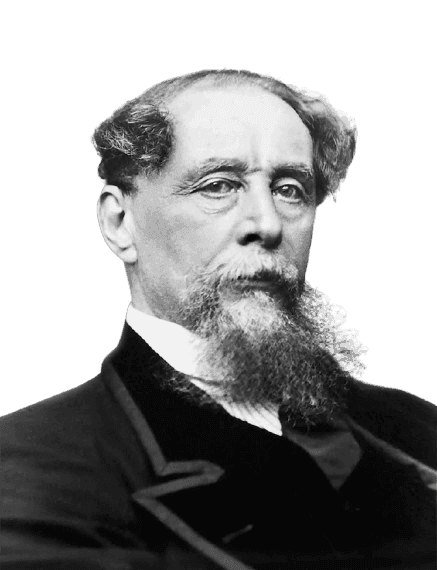
A black-and-white portrait of a distinguished man with a neatly groomed goatee and wavy hair swept back from his forehead. He wears a formal suit with a high-collared shirt, gazing intently forward with a thoughtful, slightly stern expression. The image's plain background draws attention to his facial features and styled beard, creating a classic, intellectual aura.
Charles Dickens was the most widely read English novelist of the nineteenth century and, in effect, the first mass-market celebrity author. He was born in Portsmouth in 1812 and died near Rochester in 1870 at the age of 58. Across those years he produced fifteen novels, five novellas, and hundreds of short stories and articles, most of them issued in cheap monthly or weekly parts that a clerk or a shop assistant could afford. His fiction placed child poverty, debt, and legal cruelty in front of an audience that ran into the millions, and his own hard childhood, including the months he spent pasting labels in a riverside warehouse while his father sat in a debtors' prison, runs beneath almost everything he wrote. What follows is an account of where he came from, what he made, and why his name still carries weight more than 150 years after his death. Dickens was born on 7 February 1812 at Mile End Terrace in Portsmouth, the second of eight children of John and Elizabeth Dickens. His father was a clerk in the Navy Pay Office, a respectable post that never quite covered the way the family lived. Navy work meant frequent moves, and Charles spent formative years in Chatham, Kent, before the household settled in London. He was a small, bookish child who read the eighteenth-century novels on his father's shelves and remembered them for the rest of his life. The turning point came in 1824. John Dickens had borrowed steadily beyond his income, and when his creditors finally moved against him he was arrested and sent to the Marshalsea debtors' prison in Southwark. Under the practice of the day, most of his family moved into the prison with him. Charles, then twelve years old, was instead sent out to work at Warren's Blacking Warehouse near Hungerford Stairs, a run-down building by the Thames, where he pasted labels onto pots of boot polish for about six shillings a week. The work itself was dull, but the shame of it cut deep. He felt abandoned by the adults who were meant to protect him, and he told almost no one about it for the rest of his life; the episode only became widely known after his death, through the biography written by his friend John Forster. The crisis ended almost as suddenly as it began. A family inheritance allowed John Dickens to clear his debts and leave the Marshalsea after a few months, and Charles was eventually taken out of the warehouse and sent back to school at the Wellington House Academy in London. His formal education was patchy and ended for good in his mid-teens. He then worked as a junior clerk in a solicitor's office, taught himself shorthand, and moved into journalism as a reporter, first in the law courts and then in Parliament for the Morning Chronicle. Reporting trained his ear for how people actually spoke and gave him a close view of politics, law, and administration that would feed directly into his novels. His first published sketch, "A Dinner at Poplar Walk," appeared in 1833, and a collection of his early pieces came out in 1836 as Sketches by Boz, under the pen name he used in these years. Dickens's breakthrough was The Pickwick Papers, issued in monthly parts across 1836 and 1837. Sales were modest at first, then surged after he introduced the sharp-tongued servant Sam Weller in the fourth number, and the book turned into a genuine publishing event. That format shaped his whole career: a novel released a few chapters at a time, each part sold cheaply, each ending pitched to make readers buy the next. The method built suspense, allowed him to respond to how audiences reacted, and put his work within reach of people who could never have bought a three-volume novel outright. The books came quickly after that. Oliver Twist, serialized from 1837, followed a workhouse orphan through London's criminal underworld and is often called the first Victorian novel with a child at its centre. Nicholas Nickleby attacked the brutal Yorkshire boarding schools of the day. In December 1843 he published A Christmas Carol, the story of the miser Ebenezer Scrooge; the first print run of 6,000 copies sold out by Christmas Eve, and the book did much to fix the modern shape of the English Christmas. David Copperfield, serialized across 1849 and 1850, was the most autobiographical of his novels and the one he named as his own favourite; the blacking-warehouse humiliation is written straight into the boy David's factory ordeal. His later fiction grew darker and more tightly built. Bleak House (1852–53) turns on an endless lawsuit in the Court of Chancery and is often read as his most ambitious social novel. Hard Times (1854) took aim at the mill towns and the cold arithmetic of industrial economics. Little Dorrit (1855–57) returned to the Marshalsea directly, using the prison he knew as a child as the emotional core of the book. A Tale of Two Cities (1859), set against the French Revolution, became one of the best-selling novels ever written. Great Expectations ran in his own weekly magazine from December 1860 to August 1861 and traced the young Pip's rise from a Kentish forge to a false gentility funded by a secret benefactor. His final novel, The Mystery of Edwin Drood, was left half-finished when he died, its ending unknown. Alongside the fiction, Dickens married Catherine Hogarth on 2 April 1836, and the couple had ten children over the following two decades. His home life would prove far less settled than his output suggested. Dickens did not confine his views on society to his novels. In 1850 he founded the weekly journal Household Words, which he replaced in 1859 with All the Year Round after a dispute with his publishers; he edited one or other of these magazines continuously from 1850 until his death, using them to run both his own serialized fiction and journalism on public questions. Through his writing and his platform he pressed for reform on child labour, popular education, public sanitation, and the treatment of the poor, and in book after book he cast himself as an advocate for the outcast and the overlooked. He also acted in a more direct, practical way. With the banking heiress Angela Burdett-Coutts, one of the wealthiest women in Britain, he helped set up and run Urania Cottage, a home in west London for homeless and destitute women, and involved himself closely in its day-to-day management. From the late 1850s he began giving paid public readings of his own work, performing scenes from the novels to packed halls across Britain and Ireland with a stagecraft that astonished audiences. He first toured the United States in 1842 and returned for a demanding reading tour in 1867 and 1868. Over his career an estimated 1.5 million people heard him read in person, an extraordinary reach for the age and one that both made him wealthy and wore down his health. His private life was less admirable and, by the standards of the day, scandalous. In 1857 he met the young actress Ellen Ternan, and the following year he separated from Catherine after twenty-two years of marriage, publishing a defensive statement about the split that dismayed many friends. His relationship with Ternan continued, largely out of public view, for the rest of his life. It was while travelling with Ternan and her mother that Dickens survived the disaster that shadowed his final years. On 9 June 1865 the boat train from Folkestone to London ran onto a viaduct at Staplehurst in Kent where the track had been taken up for repair; a foreman had misread the timetable, and the flagman sent to warn oncoming trains stood far short of the required distance. The train derailed at about 3:13 in the afternoon. Ten people were killed and around forty injured. Dickens's first-class carriage was left hanging off the bridge but did not fall into the riverbed. He climbed out, helped the two women to safety, then went among the dead and injured with brandy and water from his hat, before climbing back into the dangling carriage to retrieve the manuscript of the current instalment of Our Mutual Friend. He was left badly shaken, lost his voice for a period afterward, and never regained his old ease on the railways. Charles Dickens died on 9 June 1870 at Gad's Hill Place, his house near Rochester in Kent, having suffered a stroke the previous day while working on Edwin Drood. It was, by a grim coincidence, exactly five years after the Staplehurst crash. He was 58. His will asked for a plain and private burial near Rochester, without public display. National feeling, pressed hard by The Times, overruled that wish, and it was agreed that a writer of his standing should lie in Poets' Corner at Westminster Abbey. The funeral on 14 June 1870 was kept small, with only about a dozen mourners, in keeping with his instructions, but the grave was then left open, and over the following days thousands of ordinary readers filed past to leave flowers. The gravestone carries only his name and dates, as he had asked. The word "Dickensian" entered the English language, used to describe both the squalor and hardship he documented and the vivid, teeming characters he created. His novels have never gone out of print, and they have been adapted continuously for the stage, radio, film, and television; A Christmas Carol alone has been retold on screen dozens of times and helped shape how the Victorian Christmas is still imagined today. Beyond the individual books, Dickens changed what a novel could do: he showed that serious literature could reach a mass readership, that popular fiction could carry a moral and political argument, and that a writer could shape public feeling on questions of poverty and reform. Dickens is remembered so clearly partly because so much of the record survived. His manuscripts, corrected proofs, and thousands of letters are held in libraries and archives; his last London home in Bloomsbury is now the Charles Dickens Museum; and his own account of his life, filtered through Forster's biography, means we can trace the line from the blacking warehouse to Westminster Abbey. Without those kept papers, the boy at Hungerford Stairs would simply have vanished, as most twelve-year-old factory workers of 1824 did, and the connection between his childhood and his fiction would have been lost. That is the practical lesson in a life like his. A story does not endure on its own. It endures because someone writes it down, keeps the letters, labels the photographs, and passes on the details that would otherwise fade within a generation. Dickens understood the power of a well-kept record better than almost anyone, and he built his own into the most durable body of work in English fiction. The rest of us leave behind smaller archives, but the principle is the same: what is preserved can be read, and what is read can outlast us.
What we preserve here

A life worth keeping is a life worth re-reading. Confinity exists so the lives in your own family are kept with the same care.

More legacies to read

All legacies
Heritage library
Start your own archive