Heritage · Landmark
Bagan: Ancient Temple City of Myanmar
On a bend of the Irrawaddy River, the plain of Bagan holds more than two thousand Buddhist temples, pagodas, and stupas raised by the kings of the Pagan Kingdom. Inscribed by UNESCO in 2019, it remains a living place of pilgrimage where each surviving monument was built as an act of remembrance and merit.Written to last.
By Confinity Heritage Editorial · Updated 2026-07-31 · 7-minute readQuiet tools, kept out of the way.
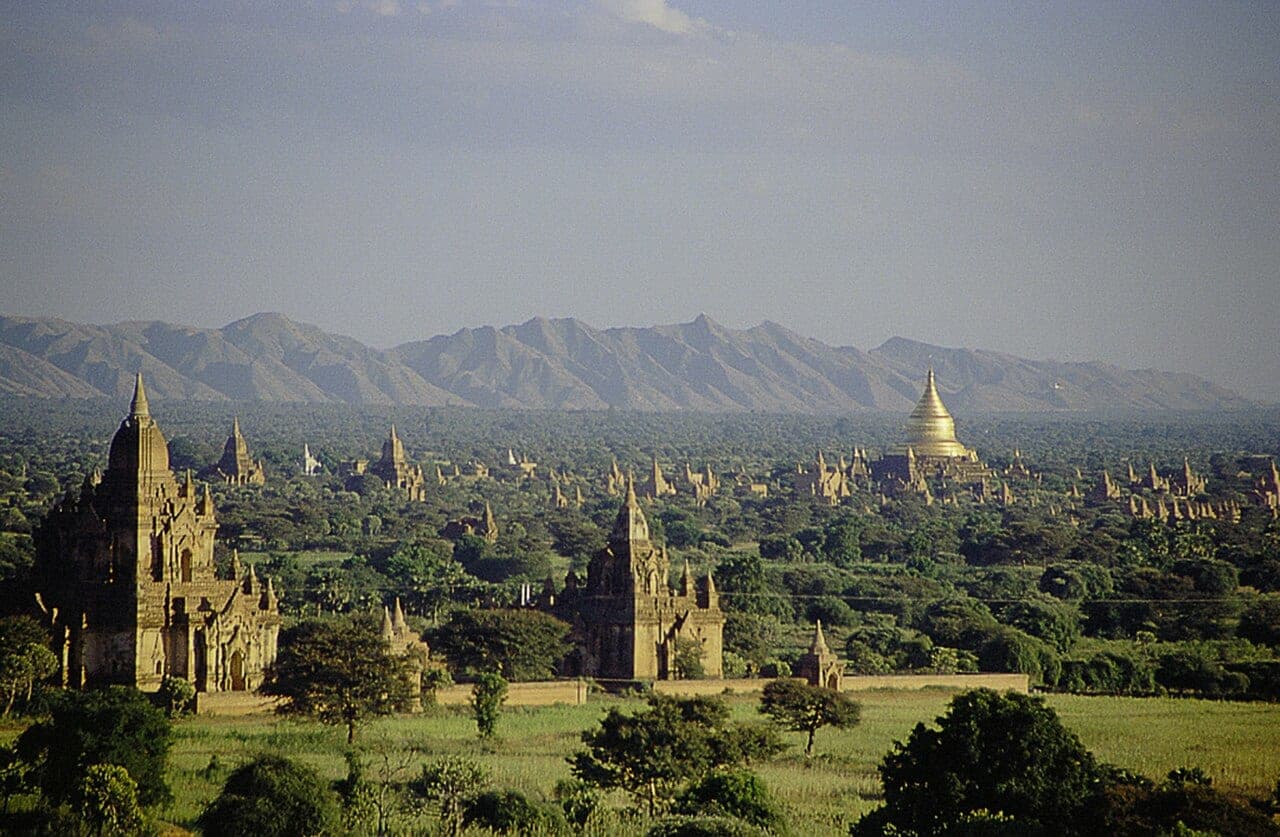
On a dry bend of the Irrawaddy River in central Myanmar, the plain of Bagan carries the memory of a kingdom in brick. Across roughly a hundred square kilometres of scrubland and low ridges stand the spires and bells of more than two thousand Buddhist temples, pagodas, and stupas, the surviving remnant of a building programme that once covered the plain with many thousands more. Each was raised as an act of devotion and of remembrance, a permanent record of a donor's name, a family's merit, or a ruler's piety, laid down in the confidence that the structure would outlast the hand that paid for it. For the most part, it has.
Bagan (long written Pagan in English) was the seat of the Pagan Kingdom, the first realm to draw the regions of present-day Myanmar under a single crown, and it flourished as a religious and political centre from the ninth to the thirteenth centuries. What remains is not a ruin sealed against the present but a working landscape of faith. Monks still keep the older shrines, pilgrims still climb to gild a stupa or leave an offering, and the daily rhythm of merit-making continues among monuments that are, in some cases, nine hundred years old. UNESCO inscribed the whole plain on the World Heritage List in 2019, after a long and difficult path to recognition described below.
Burman settlers appear to have moved into the middle Irrawaddy valley in the mid-to-late ninth century, and tradition places the founding of a walled settlement at Bagan around 849, though the small principality that grew there remained one power among several for nearly two centuries. Its transformation into an empire is credited to one reign. King Anawrahta, who ruled from 1044 to 1077, unified the valley by conquest and diplomacy and set the pattern that his successors would follow, turning a regional court into the capital of a realm that reached from the northern hills to the sea.
Anawrahta's most lasting decision was religious. Under the influence of the monk Shin Arahan, he adopted Theravada Buddhism as the faith of his court and worked to establish it across his territory, drawing scriptures and learned monks from the Mon kingdom of Thaton to the south. Earlier and rival traditions, including Mahayana and Tantric forms of Buddhism, the worship of the indigenous spirits known as nats, and Hindu practice, did not vanish, and they left their mark on Bagan's art. But the turn toward Theravada under Anawrahta shaped the kingdom's identity and, in time, the religious character of the country as a whole.
The two centuries that followed were the age of building. Anawrahta's successors, among them Kyanzittha, Alaungsithu, and Narapatisithu, competed to endow the plain with ever grander monuments, and the wealth of a kingdom that controlled trade and agriculture along the Irrawaddy was poured into brick and mortar. At its height, from roughly the eleventh to the thirteenth centuries, the court and its wealthy subjects are estimated to have raised more than ten thousand religious monuments on the plain, financed as merit-making offerings that would improve the donor's standing in this life and the next. Temple-building on this scale was an economy in itself, absorbing land, labour, and revenue that increasingly passed, tax-free, to the religious establishment.
That flow of resources to the monasteries has been proposed as one strain on the later kingdom. The immediate cause of its fall came from outside. In the late thirteenth century the Mongol empire of Kublai Khan pressed on Bagan's northern frontier, and a series of campaigns between 1277 and 1301 broke the kingdom's power. The central authority collapsed around 1287, and Bagan formally ceased to be the capital in the 1290s as smaller successor states took its place. The city dwindled to a modest settlement, but it never emptied. Pilgrims kept coming, older temples were maintained, and new ones were added over the following centuries, so that the plain remained a place of continuous worship even after the crown that made it had gone.
Bagan's monuments take two broad forms. The stupa, a solid bell or dome raised over relics, was meant to be circled rather than entered; the hollow temple, often called a gu, encloses vaulted corridors and shrine chambers around a central core, allowing worshippers to move inside among images of the Buddha. Between them they range from small votive shrines to some of the largest brick structures of the medieval world, and four in particular anchor a local saying that the plain's finest temple is the Ananda, its tallest the Thatbyinnyu, and its largest the Dhammayangyi.
 Something over two thousand monuments survive on the plain, out of perhaps ten thousand raised between the eleventh and thirteenth centuries. Photograph by Jakub Halun, CC BY-SA 4.0, via Wikimedia Commons.
The Ananda Temple, completed about 1105 under King Kyanzittha, is widely regarded as the most refined of them all. Built on a Greek-cross plan and rising to a gilded spire roughly 51 metres high, its whitewashed mass encloses four great standing Buddha images that face the cardinal directions, lit by high windows so that daylight falls on the figures. The base and terraces carry hundreds of glazed terracotta plaques, some 554 of them, illustrating the Jataka stories of the Buddha's previous lives, a picture-scripture set into the fabric of the building. The nearby Shwezigon Pagoda, begun by Anawrahta and completed under Kyanzittha in the early twelfth century, is a gilded bell-shaped stupa said to enshrine sacred relics, and its graceful profile became the model for Burmese stupas for centuries afterward.
The Thatbyinnyu Temple, raised around 1150 in the reign of Alaungsithu, is the tallest on the plain at roughly 66 metres, a two-storeyed cube of receding terraces whose name evokes the omniscience of the Buddha. The most imposing in bulk is the Dhammayangyi Temple, built about 1167 to 1170 under King Narathu. Its massive pyramidal form is celebrated for the quality of its brickwork, laid so tightly that, by tradition, a needle could not be pushed between the courses, though its inner sanctuaries were bricked up in antiquity for reasons that remain unexplained. Inside many of the hollow temples, wall paintings survive in reds, ochres, and greens, showing Jataka scenes, cosmological diagrams, and rows of seated Buddhas, among the most important bodies of medieval mural painting in Southeast Asia.
Bagan lies in an active seismic zone, and earthquakes have repeatedly reshaped what survives. A severe quake on 8 July 1975 damaged many of the major monuments, toppling spires and cracking vaults, and prompted a first large campaign of repair. The character of the work done in the decades that followed became the central obstacle to the plain's international recognition. During the 1990s a national programme of rebuilding restored hundreds of structures at speed, frequently using modern materials such as reinforced concrete and adding towers, terraces, and decorative features for which there was little or no historical evidence. Conservation specialists criticised the results as conjectural and damaging to the site's authenticity, and when Bagan was first nominated for World Heritage status in 1995, the nomination was set aside.
A second major earthquake struck on 24 August 2016, a magnitude 6.8 event that damaged close to 400 monuments across the archaeological zone. The response differed markedly from earlier decades. Working with UNESCO and international experts, Myanmar's heritage authorities adopted a more cautious, evidence-based approach to stabilisation and repair, prioritising the securing of original fabric over speculative reconstruction and strengthening risk-reduction and disaster planning. That shift helped rebuild the confidence of the World Heritage Committee.
Nearly a quarter-century after the first attempt, the committee inscribed Bagan on the World Heritage List on 6 July 2019, at its 43rd session in Baku, under cultural criteria (iii), (iv), and (vi); it became Myanmar's second World Heritage property. The inscription came with expectations rather than a clean bill of health. The committee and its advisory body pointed to the need to correct earlier over-restoration where feasible, to control development inside the zone, and to resolve the presence of hotels and a large modern viewing tower built within the monument landscape. The government had already announced plans to relocate hotels away from the core zone, and the intrusive 60-metre viewing tower near the temples remained a point of concern for the site's visual integrity.
Bagan is a heritage site and, at the same time, an active centre of Theravada practice, and the two roles are inseparable. The impulse that built the plain, the making of merit through religious donation, continues in the upkeep of its shrines. Devotees whitewash and re-gild the working temples, apply gold leaf to revered images, offer flowers and candles, and endow repairs, each act understood as a contribution to a favourable rebirth and a way of honouring both the Buddha and the memory of ancestors. Monasteries on and around the plain keep the monuments in daily use, and the great pagodas remain destinations of national pilgrimage.
The living calendar sits alongside the ancient stone. The Ananda Temple festival, held around the full moon of the lunar month of Pyatho (December to January), draws pilgrims and traders who camp on the surrounding fields in a tradition centuries old, and other pagodas hold their own festival days through the year. For many in Myanmar, a visit to Bagan is an act of faith before it is an act of tourism, and the plain functions as a shared memorial in which the piety of medieval kings and the devotion of present-day worshippers meet at the same altars.
The gateway to the plain is the town of Nyaung-U, near the northern edge of the archaeological zone, with the settlements of Old Bagan and New Bagan close by; the regional hub is Mandalay, some 170 kilometres to the north. Visitors typically pay an entry fee for the archaeological zone that supports conservation, and explore by bicycle, electric scooter, horse-cart, or hired car along the tracks that link the monuments. Sunrise and sunset over the temple-studded plain are the classic sights, long viewed from terraces and, more recently, from hot-air balloons.
Bagan's temples are sacred spaces, and the usual courtesies of a Buddhist site apply: remove shoes and socks before entering temple platforms, dress modestly with shoulders and knees covered, and keep quiet near worshippers and monks. Following the 2016 earthquake and in line with conservation policy, climbing on the monuments has been restricted to protect both fragile structures and visitors, and dedicated viewing mounds and platforms have been provided instead. The dry, hot centre of the country is most comfortable in the cooler months from roughly November to February. Travellers should check current conditions and access with official and reputable sources before planning a trip.
Something over two thousand monuments survive on the plain, out of perhaps ten thousand raised between the eleventh and thirteenth centuries. Photograph by Jakub Halun, CC BY-SA 4.0, via Wikimedia Commons.
The Ananda Temple, completed about 1105 under King Kyanzittha, is widely regarded as the most refined of them all. Built on a Greek-cross plan and rising to a gilded spire roughly 51 metres high, its whitewashed mass encloses four great standing Buddha images that face the cardinal directions, lit by high windows so that daylight falls on the figures. The base and terraces carry hundreds of glazed terracotta plaques, some 554 of them, illustrating the Jataka stories of the Buddha's previous lives, a picture-scripture set into the fabric of the building. The nearby Shwezigon Pagoda, begun by Anawrahta and completed under Kyanzittha in the early twelfth century, is a gilded bell-shaped stupa said to enshrine sacred relics, and its graceful profile became the model for Burmese stupas for centuries afterward.
The Thatbyinnyu Temple, raised around 1150 in the reign of Alaungsithu, is the tallest on the plain at roughly 66 metres, a two-storeyed cube of receding terraces whose name evokes the omniscience of the Buddha. The most imposing in bulk is the Dhammayangyi Temple, built about 1167 to 1170 under King Narathu. Its massive pyramidal form is celebrated for the quality of its brickwork, laid so tightly that, by tradition, a needle could not be pushed between the courses, though its inner sanctuaries were bricked up in antiquity for reasons that remain unexplained. Inside many of the hollow temples, wall paintings survive in reds, ochres, and greens, showing Jataka scenes, cosmological diagrams, and rows of seated Buddhas, among the most important bodies of medieval mural painting in Southeast Asia.
Bagan lies in an active seismic zone, and earthquakes have repeatedly reshaped what survives. A severe quake on 8 July 1975 damaged many of the major monuments, toppling spires and cracking vaults, and prompted a first large campaign of repair. The character of the work done in the decades that followed became the central obstacle to the plain's international recognition. During the 1990s a national programme of rebuilding restored hundreds of structures at speed, frequently using modern materials such as reinforced concrete and adding towers, terraces, and decorative features for which there was little or no historical evidence. Conservation specialists criticised the results as conjectural and damaging to the site's authenticity, and when Bagan was first nominated for World Heritage status in 1995, the nomination was set aside.
A second major earthquake struck on 24 August 2016, a magnitude 6.8 event that damaged close to 400 monuments across the archaeological zone. The response differed markedly from earlier decades. Working with UNESCO and international experts, Myanmar's heritage authorities adopted a more cautious, evidence-based approach to stabilisation and repair, prioritising the securing of original fabric over speculative reconstruction and strengthening risk-reduction and disaster planning. That shift helped rebuild the confidence of the World Heritage Committee.
Nearly a quarter-century after the first attempt, the committee inscribed Bagan on the World Heritage List on 6 July 2019, at its 43rd session in Baku, under cultural criteria (iii), (iv), and (vi); it became Myanmar's second World Heritage property. The inscription came with expectations rather than a clean bill of health. The committee and its advisory body pointed to the need to correct earlier over-restoration where feasible, to control development inside the zone, and to resolve the presence of hotels and a large modern viewing tower built within the monument landscape. The government had already announced plans to relocate hotels away from the core zone, and the intrusive 60-metre viewing tower near the temples remained a point of concern for the site's visual integrity.
Bagan is a heritage site and, at the same time, an active centre of Theravada practice, and the two roles are inseparable. The impulse that built the plain, the making of merit through religious donation, continues in the upkeep of its shrines. Devotees whitewash and re-gild the working temples, apply gold leaf to revered images, offer flowers and candles, and endow repairs, each act understood as a contribution to a favourable rebirth and a way of honouring both the Buddha and the memory of ancestors. Monasteries on and around the plain keep the monuments in daily use, and the great pagodas remain destinations of national pilgrimage.
The living calendar sits alongside the ancient stone. The Ananda Temple festival, held around the full moon of the lunar month of Pyatho (December to January), draws pilgrims and traders who camp on the surrounding fields in a tradition centuries old, and other pagodas hold their own festival days through the year. For many in Myanmar, a visit to Bagan is an act of faith before it is an act of tourism, and the plain functions as a shared memorial in which the piety of medieval kings and the devotion of present-day worshippers meet at the same altars.
The gateway to the plain is the town of Nyaung-U, near the northern edge of the archaeological zone, with the settlements of Old Bagan and New Bagan close by; the regional hub is Mandalay, some 170 kilometres to the north. Visitors typically pay an entry fee for the archaeological zone that supports conservation, and explore by bicycle, electric scooter, horse-cart, or hired car along the tracks that link the monuments. Sunrise and sunset over the temple-studded plain are the classic sights, long viewed from terraces and, more recently, from hot-air balloons.
Bagan's temples are sacred spaces, and the usual courtesies of a Buddhist site apply: remove shoes and socks before entering temple platforms, dress modestly with shoulders and knees covered, and keep quiet near worshippers and monks. Following the 2016 earthquake and in line with conservation policy, climbing on the monuments has been restricted to protect both fragile structures and visitors, and dedicated viewing mounds and platforms have been provided instead. The dry, hot centre of the country is most comfortable in the cooler months from roughly November to February. Travellers should check current conditions and access with official and reputable sources before planning a trip.
History
The temples
Earthquakes and preservation
Cultural and religious significance
Visiting
References and resources
- UNESCO World Heritage Centre: Bagan (Site 1588)
- Encyclopaedia Britannica: Pagan, ancient city, Myanmar
- Wikipedia: Bagan
- Wikipedia: Pagan Kingdom
- UNESCO Bangkok: After the earthquake, a unified approach to conservation and restoration in Bagan
- The Irrawaddy: Bagan Makes UNESCO List, but Challenges Remain