Heritage · Country
Iceland Culture and Heritage
On a rift-valley plain where two continents pull apart, Norse settlers founded one of the world's oldest parliaments in 930 and returned to the same ground to declare a republic in 1944. This is a guide to Iceland's heritage, from the sagas and the returned medieval manuscripts to the candle-lit graves of a people who still remember their dead by name.Written to last.
By Confinity Heritage Editorial · Updated 2026-07-31 · 8-minute readQuiet tools, kept out of the way.
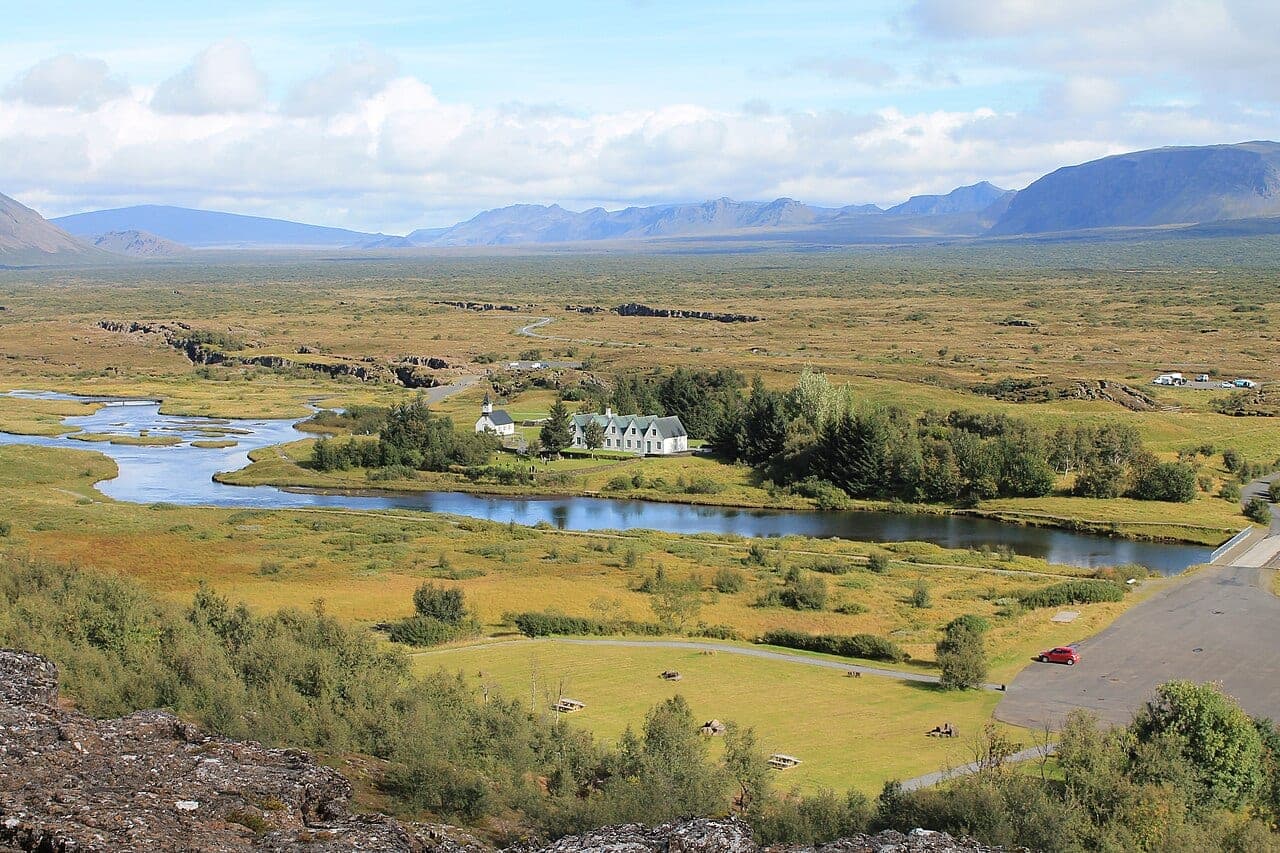
Iceland keeps its memory in ink and in stone. In a rift valley where the North American and Eurasian plates pull visibly apart, a free assembly of Norse settlers founded the Althing in the year 930, one of the oldest surviving parliaments on earth, and returned to the same ground in 1944 to declare a republic. In the centuries between, farmers on a treeless island in the North Atlantic wrote down sagas, family histories and myths so exact, and so widely copied, that their descendants can still read them without translation.
Few peoples have staked identity so squarely on the written word and the remembered name. The medieval manuscripts that carried the sagas were taken to Denmark and, after a long campaign, brought home again across the sea; the language has changed so little that a schoolchild can open a thirteenth-century text; and nearly every Icelander alive can trace a line back through a national genealogy to the settlement itself.
Iceland is a volcanic island of about 103,000 square kilometres near the Arctic Circle, the most sparsely populated country in Europe, with roughly 390,000 inhabitants of whom close to two-thirds live in the Reykjavik capital region. Its interior is a mostly uninhabited highland of glaciers, lava fields and black sand, ringed by a coastal fringe of fjords and farmland; Vatnajökull, the largest glacier in Europe by volume, covers a tenth of the country, and the island sits astride the Mid-Atlantic Ridge, which gives it both frequent eruptions and the geothermal heat that warms most of its homes. Settled by Norse and Celtic voyagers in the ninth century and independent since 1944, Iceland is a parliamentary republic whose legislature, the Althing, still carries the name it was given in 930. Icelandic is the national language, spoken by nearly the whole population, and the country is consistently ranked among the most literate and most peaceful in the world.
Reykjavik. The capital sits on the bay where, by tradition, the first settler Ingólfur Arnarson made his home around 874; its name means "smoky bay", for the columns of geothermal steam the early Norse saw rising from the ground (Britannica). It is the northernmost capital of a sovereign state, and its skyline is crowned by Hallgrímskirkja, the concrete church whose facade steps upward in ranks that echo the basalt columns of Iceland's cliffs, designed by the state architect Guðjón Samúelsson and completed in 1986 after four decades of building. The National Museum of Iceland holds the settlement finds, while the Culture House and the Árni Magnússon Institute keep the medieval manuscripts, and the harbourside Harpa concert hall and the old corrugated-iron houses of the centre carry the modern city.
Akureyri. The unofficial capital of the north, set at the head of the long Eyjafjörður fjord about 100 kilometres from the Arctic Circle, Akureyri is Iceland's second urban centre and the gateway to the volcanic lake of Mývatn and the great waterfalls of the north.
Thingvellir and the historic sites. East of Reykjavik lies Thingvellir, the assembly plain where the Althing met in the open air for centuries; with the Geysir hot springs and the Gullfoss falls it forms the Golden Circle, the ground on which Icelandic history and Icelandic geology are the same story. Other memory-places include Skálholt and Hólar, the two medieval bishoprics and centres of learning, and Reykholt, the farm of the saga-writer Snorri Sturluson.
The Norse settlement of Iceland began in the 870s, when chieftains leaving the consolidating kingdom of Norway, together with people of Celtic origin from the British Isles, crossed the Atlantic to a previously uninhabited island; the medieval Book of Settlements, Landnámabók, names Ingólfur Arnarson as the first permanent settler around 874. Within about sixty years the scattered farming chieftaincies agreed a common law and founded the Althing at Thingvellir in 930, an annual open-air assembly of free men that made and judged the law and became one of the oldest parliaments in the world (Britannica).
 The Althing met in this rift from 930, and Icelanders returned to the same ground to declare a republic in 1944. The cliff carries sound, which is why the assembly used it. Photograph by Olga Ernst, CC BY-SA 4.0, via Wikimedia Commons.
Around the year 1000 the same assembly took a decision without close parallel in medieval Europe. Facing the threat of civil war between pagans and Christians, the Althing asked the pagan lawspeaker Thorgeir Thorkelsson to arbitrate; after a day and a night in silence he ruled that all Icelanders should accept Christianity, while some private pagan practice was tolerated for a time (World History Encyclopedia). This peaceful conversion, the kristnitaka, "the taking of Christianity", is remembered as the moment a fractious island chose one law over war.
The following centuries, the age of the sagas, produced the prose narratives of Njáls saga, Egils saga and Laxdæla saga and the mythological handbooks of Snorri Sturluson. But feuding among powerful families brought the Free State to an end, and in 1262–1264 Iceland submitted to the Norwegian crown; when the Scandinavian kingdoms united, the island passed to Danish rule. Centuries of Danish control, trade monopoly, epidemics and volcanic catastrophe followed, among them the Laki eruption of 1783, whose famine killed roughly a fifth of the population. A nineteenth-century independence movement, led by the scholar Jón Sigurðsson, won home rule and then sovereignty in stages, and on 17 June 1944, Jón's birthday, Icelanders gathered at Thingvellir to declare the modern republic (nordics.info).
Icelandic is a North Germanic language descended, with remarkably little change, from the Old Norse brought by the settlers. Isolation and a strong tradition of purism have kept its grammar and vocabulary so conservative that modern Icelanders can read the medieval sagas with only minor help, a continuity almost unique among European languages (Wikipedia). Rather than borrow foreign technical words, Iceland characteristically coins new ones from native roots: the word for computer, tölva, was built from tala, "number", and völva, "prophetess", and a network of committees under the Icelandic Language Council still mints such neologisms.
The name Iceland comes from the settlement age itself. According to Landnámabók, the Norse voyager Flóki Vilgerðarson, remembered as Hrafna-Flóki or "Raven Flóki", climbed a mountain after a hard winter, saw a fjord choked with drift ice, and named the country Ísland, "ice land" (World History Encyclopedia). The capital's name, Reykjavík, "smoky bay", and countless farm and fjord names across the map are equally transparent Old Norse, so that to those who know the tongue the Icelandic landscape reads as a continuous medieval text.
Iceland's central inheritance is literary. The sagas of the Icelanders, written in the thirteenth and fourteenth centuries about the settlement generations, are among the great prose narratives of medieval Europe, and the two Eddas, the Poetic Edda preserved in the Codex Regius and the Prose Edda compiled by Snorri Sturluson around 1220, are the primary sources for Norse mythology, the well from which most modern knowledge of Odin, Thor and the world-tree is drawn (Britannica). That literary vocation never lapsed: in 1955 Halldór Laxness won the Nobel Prize in Literature "for his vivid epic power which has renewed the great narrative art of Iceland", the country's only Nobel laureate (NobelPrize.org), and Iceland today publishes and reads books at a rate matched almost nowhere, with the pre-Christmas book flood, the jólabókaflóð, a national ritual.
The Althing met in this rift from 930, and Icelanders returned to the same ground to declare a republic in 1944. The cliff carries sound, which is why the assembly used it. Photograph by Olga Ernst, CC BY-SA 4.0, via Wikimedia Commons.
Around the year 1000 the same assembly took a decision without close parallel in medieval Europe. Facing the threat of civil war between pagans and Christians, the Althing asked the pagan lawspeaker Thorgeir Thorkelsson to arbitrate; after a day and a night in silence he ruled that all Icelanders should accept Christianity, while some private pagan practice was tolerated for a time (World History Encyclopedia). This peaceful conversion, the kristnitaka, "the taking of Christianity", is remembered as the moment a fractious island chose one law over war.
The following centuries, the age of the sagas, produced the prose narratives of Njáls saga, Egils saga and Laxdæla saga and the mythological handbooks of Snorri Sturluson. But feuding among powerful families brought the Free State to an end, and in 1262–1264 Iceland submitted to the Norwegian crown; when the Scandinavian kingdoms united, the island passed to Danish rule. Centuries of Danish control, trade monopoly, epidemics and volcanic catastrophe followed, among them the Laki eruption of 1783, whose famine killed roughly a fifth of the population. A nineteenth-century independence movement, led by the scholar Jón Sigurðsson, won home rule and then sovereignty in stages, and on 17 June 1944, Jón's birthday, Icelanders gathered at Thingvellir to declare the modern republic (nordics.info).
Icelandic is a North Germanic language descended, with remarkably little change, from the Old Norse brought by the settlers. Isolation and a strong tradition of purism have kept its grammar and vocabulary so conservative that modern Icelanders can read the medieval sagas with only minor help, a continuity almost unique among European languages (Wikipedia). Rather than borrow foreign technical words, Iceland characteristically coins new ones from native roots: the word for computer, tölva, was built from tala, "number", and völva, "prophetess", and a network of committees under the Icelandic Language Council still mints such neologisms.
The name Iceland comes from the settlement age itself. According to Landnámabók, the Norse voyager Flóki Vilgerðarson, remembered as Hrafna-Flóki or "Raven Flóki", climbed a mountain after a hard winter, saw a fjord choked with drift ice, and named the country Ísland, "ice land" (World History Encyclopedia). The capital's name, Reykjavík, "smoky bay", and countless farm and fjord names across the map are equally transparent Old Norse, so that to those who know the tongue the Icelandic landscape reads as a continuous medieval text.
Iceland's central inheritance is literary. The sagas of the Icelanders, written in the thirteenth and fourteenth centuries about the settlement generations, are among the great prose narratives of medieval Europe, and the two Eddas, the Poetic Edda preserved in the Codex Regius and the Prose Edda compiled by Snorri Sturluson around 1220, are the primary sources for Norse mythology, the well from which most modern knowledge of Odin, Thor and the world-tree is drawn (Britannica). That literary vocation never lapsed: in 1955 Halldór Laxness won the Nobel Prize in Literature "for his vivid epic power which has renewed the great narrative art of Iceland", the country's only Nobel laureate (NobelPrize.org), and Iceland today publishes and reads books at a rate matched almost nowhere, with the pre-Christmas book flood, the jólabókaflóð, a national ritual.
 Turf building lasted in Iceland into the twentieth century because there was almost no timber, and a turf house has to be rebuilt roughly every human lifetime. Photograph by Jakub Halun, CC BY 4.0, via Wikimedia Commons.
Music runs alongside the word, from the medieval hymn tradition and the stark harmonies of rímur chanting to the global reach of Björk, Sigur Rós and the country's choral culture. The food heritage is a record of survival on a hard island: skyr, the thick cultured dairy eaten since the settlement; wind-dried fish and smoked lamb; rye bread baked in geothermal ground; and the fermented shark and singed sheep's heads of the midwinter þorramatur, eaten now as much for memory as for taste.
For most of its history Iceland has been a Christian country, Catholic until the Danish crown imposed the Lutheran Reformation in the sixteenth century, and the Evangelical Lutheran Church remains the established national church to which a majority of Icelanders still belong, though regular attendance is low and the religiously unaffiliated are a growing share. Older layers survive in memory and in law: the pre-Christian Norse religion has been revived in the modern pagan association Ásatrúarfélagið, founded in 1972 and now one of the larger non-Christian communities in the country.
Beneath both Christianity and the neo-pagan revival runs a persistent folk belief in the huldufólk, the "hidden people", elf-like beings held to live in rocks, hills and lava fields (Wikipedia). Surveys have repeatedly found that many Icelanders will not flatly deny their existence, and roads have on occasion been rerouted around boulders thought to be their homes. Whether taken literally or as inherited courtesy toward the land, the huldufólk express an old Icelandic sense that the landscape is inhabited and owed respect.
Icelandic mourning joins Lutheran restraint to a deep culture of ancestry and remembrance. A death is usually followed by a church or chapel funeral and burial, and then by the erfidrykkja, the funeral reception at which family and community gather over coffee and cakes to share memories of the dead (Wikipedia). Graves are tended with care, and the country keeps one of the most affecting remembrance customs in Europe: in the dark days around Christmas, and especially on Christmas Eve, families walk to the cemeteries and set candles or electric lights on the graves of their dead, so that whole graveyards glow through the long northern night as a sign that the departed are not forgotten (Reykjavik Grapevine).
The sagas themselves are a monument of remembrance, written so that the deeds and lineages of the settlement generations would not be lost, and that impulse survives in the Icelandic passion for genealogy. The patronymic naming system keeps ancestry audible: most Icelanders bear not a family surname but a name formed from a parent's first name, with -son or -dóttir added, so that a father or mother is named every time the person is. That living chain has been gathered into Íslendingabók, an online genealogical database compiled by the company deCODE genetics that links more than a million Icelanders, living and dead, back toward the settlement, letting almost anyone in the country trace a line to the age of the sagas (Wikipedia).
Iceland can do something no other country can. Íslendingabók, the Book of Icelanders, is a genealogical database that links essentially the entire population, living and dead, back through the settlement, and any Icelandic citizen can log in and see how they are related to anyone else. It was built from church registers, censuses and family records, and its coverage is close to complete because the population was small, literate and never left.
The sources underneath it are exceptional in their own right. The census of 1703 named every inhabitant of the country with age and household position, and it is the oldest surviving complete census of a whole nation anywhere. UNESCO added it to the Memory of the World Register. Church registers of baptism, marriage and burial run from the seventeenth century in most parishes, and the National Archives publish a great deal free.
Names are the practical obstacle for anyone unfamiliar. Icelanders use patronymics, not surnames: a woman is her father's daughter and does not change her name on marriage, so there is no family name to follow and every generation's name changes. The way through is the farm, which is why the old records name the place a person lived as reliably as they name the person.
The sagas sit behind all of it. Landnámabók, the book of settlements, names the first settlers and their descent, and the genealogical habit it established is why the rest of this exists.
Iceland holds three UNESCO World Heritage Sites, two of them central to its identity. Thingvellir National Park was inscribed in 2004 for the Althing assembly ground and the rift-valley setting where the tectonic plates diverge (UNESCO). Surtsey, a volcanic island off the south coast that rose from the sea in the eruption of 1963–1967, was inscribed in 2008 as a pristine natural laboratory, protected from the moment of its birth and closed to all but a few scientists (UNESCO). The third, Vatnajökull National Park, protects the great ice cap and its landscape of fire and ice.
The manuscripts have their own long preservation story. The scholar Árni Magnússon gathered Iceland's medieval books to Copenhagen in the early eighteenth century, saving many from loss but leaving them abroad; after independence Iceland pressed for their return, and from 1971, beginning with the Codex Regius of the Poetic Edda and the great Flateyjarbók, Denmark handed back the bulk of the collection over the following decades (Iceland Review). Conserved now by the Árni Magnússon Institute in Reykjavik, and recognised on UNESCO's Memory of the World Register in 2009, the manuscripts are at once objects of scholarship and relics brought home (UNESCO Memory of the World).
Iceland has put its documentary memory online with unusual thoroughness. The Árni Magnússon Institute and its partners digitise and publish the medieval manuscripts through the handrit.is portal, so that the Codex Regius and its companions can be read page by page from anywhere. The national genealogy Íslendingabók is freely searchable by every Icelander, an entire nation's family tree on the web. The national and university library maintains digital collections of Icelandic texts and newspapers, and the sagas, long in the public domain, circulate freely in digital editions in Icelandic and in translation. For a country of a few hundred thousand people, the result is a densely connected digital record in which manuscript, genealogy and landscape can be followed from a single screen.
Modern Iceland exports its heritage as culture. Its music carries the old soundscape into the present, from Björk and Sigur Rós to a celebrated choral and film-score tradition; its writers sustain the saga inheritance, and its crime fiction and literary novels are widely translated. The landscape that shaped the sagas now draws travellers from around the world to Thingvellir, Geysir and Gullfoss, and serves as a backdrop for international film and television. Icelandic design, cuisine and the revived interest in Norse belief all trade on a heritage kept legible by the language. The challenge Icelanders name most often is protecting that language and those places from the pressures of English-language media and mass tourism, so that the continuity which makes Iceland distinctive is not worn thin by the attention it attracts.
The manuscripts came home. After centuries in Copenhagen, the medieval books that carry the sagas were returned to Iceland from 1971 onward, beginning with the Codex Regius and Flateyjarbók, and are now conserved and displayed in Reykjavik and inscribed on UNESCO's Memory of the World Register.
A language that still reads its own past. Through isolation and deliberate purism, Icelandic has stayed close enough to Old Norse that ordinary readers can open the thirteenth-century sagas, a continuity that language planners elsewhere study as a model.
An island born and kept pristine. Surtsey, which rose from the sea in the 1960s, was protected from its first day and reserved for science, becoming a World Heritage Site and a rare record of how life colonises new land.
A nation that can find its ancestors. Íslendingabók has assembled the genealogy of more than a million Icelanders into a single free database, letting almost any citizen trace a continuous line back to the settlement age.
Turf building lasted in Iceland into the twentieth century because there was almost no timber, and a turf house has to be rebuilt roughly every human lifetime. Photograph by Jakub Halun, CC BY 4.0, via Wikimedia Commons.
Music runs alongside the word, from the medieval hymn tradition and the stark harmonies of rímur chanting to the global reach of Björk, Sigur Rós and the country's choral culture. The food heritage is a record of survival on a hard island: skyr, the thick cultured dairy eaten since the settlement; wind-dried fish and smoked lamb; rye bread baked in geothermal ground; and the fermented shark and singed sheep's heads of the midwinter þorramatur, eaten now as much for memory as for taste.
For most of its history Iceland has been a Christian country, Catholic until the Danish crown imposed the Lutheran Reformation in the sixteenth century, and the Evangelical Lutheran Church remains the established national church to which a majority of Icelanders still belong, though regular attendance is low and the religiously unaffiliated are a growing share. Older layers survive in memory and in law: the pre-Christian Norse religion has been revived in the modern pagan association Ásatrúarfélagið, founded in 1972 and now one of the larger non-Christian communities in the country.
Beneath both Christianity and the neo-pagan revival runs a persistent folk belief in the huldufólk, the "hidden people", elf-like beings held to live in rocks, hills and lava fields (Wikipedia). Surveys have repeatedly found that many Icelanders will not flatly deny their existence, and roads have on occasion been rerouted around boulders thought to be their homes. Whether taken literally or as inherited courtesy toward the land, the huldufólk express an old Icelandic sense that the landscape is inhabited and owed respect.
Icelandic mourning joins Lutheran restraint to a deep culture of ancestry and remembrance. A death is usually followed by a church or chapel funeral and burial, and then by the erfidrykkja, the funeral reception at which family and community gather over coffee and cakes to share memories of the dead (Wikipedia). Graves are tended with care, and the country keeps one of the most affecting remembrance customs in Europe: in the dark days around Christmas, and especially on Christmas Eve, families walk to the cemeteries and set candles or electric lights on the graves of their dead, so that whole graveyards glow through the long northern night as a sign that the departed are not forgotten (Reykjavik Grapevine).
The sagas themselves are a monument of remembrance, written so that the deeds and lineages of the settlement generations would not be lost, and that impulse survives in the Icelandic passion for genealogy. The patronymic naming system keeps ancestry audible: most Icelanders bear not a family surname but a name formed from a parent's first name, with -son or -dóttir added, so that a father or mother is named every time the person is. That living chain has been gathered into Íslendingabók, an online genealogical database compiled by the company deCODE genetics that links more than a million Icelanders, living and dead, back toward the settlement, letting almost anyone in the country trace a line to the age of the sagas (Wikipedia).
Iceland can do something no other country can. Íslendingabók, the Book of Icelanders, is a genealogical database that links essentially the entire population, living and dead, back through the settlement, and any Icelandic citizen can log in and see how they are related to anyone else. It was built from church registers, censuses and family records, and its coverage is close to complete because the population was small, literate and never left.
The sources underneath it are exceptional in their own right. The census of 1703 named every inhabitant of the country with age and household position, and it is the oldest surviving complete census of a whole nation anywhere. UNESCO added it to the Memory of the World Register. Church registers of baptism, marriage and burial run from the seventeenth century in most parishes, and the National Archives publish a great deal free.
Names are the practical obstacle for anyone unfamiliar. Icelanders use patronymics, not surnames: a woman is her father's daughter and does not change her name on marriage, so there is no family name to follow and every generation's name changes. The way through is the farm, which is why the old records name the place a person lived as reliably as they name the person.
The sagas sit behind all of it. Landnámabók, the book of settlements, names the first settlers and their descent, and the genealogical habit it established is why the rest of this exists.
Iceland holds three UNESCO World Heritage Sites, two of them central to its identity. Thingvellir National Park was inscribed in 2004 for the Althing assembly ground and the rift-valley setting where the tectonic plates diverge (UNESCO). Surtsey, a volcanic island off the south coast that rose from the sea in the eruption of 1963–1967, was inscribed in 2008 as a pristine natural laboratory, protected from the moment of its birth and closed to all but a few scientists (UNESCO). The third, Vatnajökull National Park, protects the great ice cap and its landscape of fire and ice.
The manuscripts have their own long preservation story. The scholar Árni Magnússon gathered Iceland's medieval books to Copenhagen in the early eighteenth century, saving many from loss but leaving them abroad; after independence Iceland pressed for their return, and from 1971, beginning with the Codex Regius of the Poetic Edda and the great Flateyjarbók, Denmark handed back the bulk of the collection over the following decades (Iceland Review). Conserved now by the Árni Magnússon Institute in Reykjavik, and recognised on UNESCO's Memory of the World Register in 2009, the manuscripts are at once objects of scholarship and relics brought home (UNESCO Memory of the World).
Iceland has put its documentary memory online with unusual thoroughness. The Árni Magnússon Institute and its partners digitise and publish the medieval manuscripts through the handrit.is portal, so that the Codex Regius and its companions can be read page by page from anywhere. The national genealogy Íslendingabók is freely searchable by every Icelander, an entire nation's family tree on the web. The national and university library maintains digital collections of Icelandic texts and newspapers, and the sagas, long in the public domain, circulate freely in digital editions in Icelandic and in translation. For a country of a few hundred thousand people, the result is a densely connected digital record in which manuscript, genealogy and landscape can be followed from a single screen.
Modern Iceland exports its heritage as culture. Its music carries the old soundscape into the present, from Björk and Sigur Rós to a celebrated choral and film-score tradition; its writers sustain the saga inheritance, and its crime fiction and literary novels are widely translated. The landscape that shaped the sagas now draws travellers from around the world to Thingvellir, Geysir and Gullfoss, and serves as a backdrop for international film and television. Icelandic design, cuisine and the revived interest in Norse belief all trade on a heritage kept legible by the language. The challenge Icelanders name most often is protecting that language and those places from the pressures of English-language media and mass tourism, so that the continuity which makes Iceland distinctive is not worn thin by the attention it attracts.
The manuscripts came home. After centuries in Copenhagen, the medieval books that carry the sagas were returned to Iceland from 1971 onward, beginning with the Codex Regius and Flateyjarbók, and are now conserved and displayed in Reykjavik and inscribed on UNESCO's Memory of the World Register.
A language that still reads its own past. Through isolation and deliberate purism, Icelandic has stayed close enough to Old Norse that ordinary readers can open the thirteenth-century sagas, a continuity that language planners elsewhere study as a model.
An island born and kept pristine. Surtsey, which rose from the sea in the 1960s, was protected from its first day and reserved for science, becoming a World Heritage Site and a rare record of how life colonises new land.
A nation that can find its ancestors. Íslendingabók has assembled the genealogy of more than a million Icelanders into a single free database, letting almost any citizen trace a continuous line back to the settlement age.
National Overview
Notable Cities
Historical Foundations
Linguistic and Etymological Roots
Cultural Identity
Religion and Spirituality
Remembrance and Mourning Traditions
Tracing a Family in Iceland
Heritage Preservation Efforts
Digital Heritage
Contemporary Cultural Influences
Success Stories
References and resources
- UNESCO World Heritage Centre, Iceland: state-party page for Thingvellir, Surtsey and Vatnajökull.
- UNESCO, Thingvellir National Park: the Althing assembly ground and rift-valley landscape, inscribed 2004.
- UNESCO, Surtsey: the volcanic island of 1963–1967 as a protected natural laboratory, inscribed 2008.
- Encyclopaedia Britannica, Althing: the founding of the assembly in 930 and its later history.
- Christianization of Iceland, World History Encyclopedia: the conversion of the year 1000 and the ruling of Thorgeir.
- The Legendary Settlement of Iceland, World History Encyclopedia: Ingólfur Arnarson, Hrafna-Flóki and the naming of Iceland.
- Linguistic Purism in Icelandic, Wikipedia: the language's conservatism and its neologism tradition.
- UNESCO Memory of the World, Arnamagnæan Manuscript Collection: the medieval manuscripts and their 2009 inscription.
- Iceland Review, 50 Years Since the First Manuscripts Returned: the 1971 homecoming of the Codex Regius and Flateyjarbók.
- Íslendingabók (genealogical database), Wikipedia: the national genealogy of more than a million Icelanders.
- The Nobel Prize in Literature 1955, Halldór Laxness: Iceland's only Nobel laureate and his citation.
- Reykjavik Grapevine, Why Icelanders Honour the Dead at Christmas: the custom of candles on graves in December.
- Encyclopaedia Britannica, Iceland: geography, history and society.