For families who want their stories to last. learn about the founding circle.

Heritage · Legacy

Galileo Galilei Legacy

Discover Galileo Galilei legacy

Written to last.

By Confinity Heritage Editorial · Updated 2026-07-20 · 6-minute read
Quiet tools, kept out of the way.
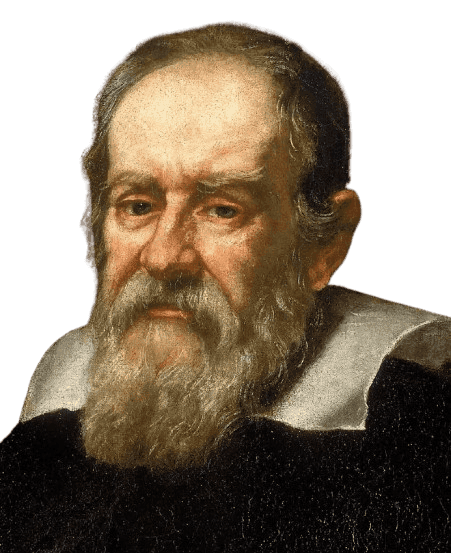
Portrait of Galileo Galilei in his later years, wearing a dark robe with a white collar.
Galileo Galilei (1564–1642) turned a newly invented spyglass toward the night sky and changed what people could know about the universe by looking at it. In the winter of 1609 and 1610 he saw mountains on the Moon, four points of light circling Jupiter, and the faint band of the Milky Way resolved into countless separate stars. Those observations, and the argument he built on them, supported the idea that Earth is a planet moving around the Sun rather than the fixed center of creation. The claim brought him into direct conflict with the Roman Catholic Church, led to a trial before the Inquisition in 1633, and left him under house arrest for the last nine years of his life. He is often called the father of observational astronomy, and Albert Einstein described him as "the father of modern science." Galileo was born on 15 February 1564 in Pisa, then part of the Duchy of Florence, the eldest of six children of Vincenzo Galilei, a lutenist and music theorist, and Giulia Ammannati. His father's studies of the mathematics of musical strings gave Galileo an early example of testing received ideas against measurement. He was educated for a time at the monastery of Vallombrosa and enrolled at the University of Pisa in 1580 to study medicine, the career his father had chosen for him. Mathematics drew him away from medicine. According to a tradition recorded by his early biographer Vincenzo Viviani, Galileo watched a swinging lamp in Pisa Cathedral and timed its arc against his own pulse, concluding that a pendulum takes the same time to complete each swing regardless of how wide the swing is, a property called isochronism. Whether or not the cathedral story is exact, the isochronism of the pendulum became one of his lasting results and later underpinned the design of pendulum clocks. He left Pisa in 1585 without a degree and supported himself in Florence by teaching mathematics and writing on the hydrostatic balance. In 1589 Galileo was appointed to the chair of mathematics at the University of Pisa. There he studied falling bodies and argued, against Aristotle, that objects of different weight fall at the same rate when air resistance is set aside. The often-repeated account of him dropping weights from the Leaning Tower of Pisa also comes from Viviani and is probably a later embellishment; his real evidence came from rolling balls down inclined planes, which slowed the motion enough to time it. In 1592 he moved to the University of Padua in the Republic of Venice, where he taught geometry, mechanics and astronomy until 1610. The Padua years, which he later called the happiest of his life, produced his early work on motion, a practical geometric and military compass that he manufactured and sold, and an early thermoscope. During this period he formed a lasting relationship with Marina Gamba, with whom he had three children: Virginia, Livia and Vincenzo. His elder daughter, who took the name Sister Maria Celeste in a convent near Florence, remained a close correspondent for the rest of her life. Galileo did not invent the telescope. The device was first recorded in the Netherlands in 1608, when the spectacle-maker Hans Lippershey applied to patent a way of making distant things appear near. Word of it reached Galileo in 1609, and within months he had ground his own lenses and built instruments far better than the Dutch originals, reaching about twenty times magnification. His decisive step was to point the improved instrument at the sky and to publish, quickly and in detail, what he saw. The results appeared in March 1610 in a short Latin book, Sidereus Nuncius (The Starry Messenger), printed in Venice. Galileo reported that the Moon was not a smooth sphere but a rugged world of mountains and valleys, that the faint light of the Milky Way dissolved under magnification into a multitude of stars, and, most striking of all, that four small bodies moved back and forth around Jupiter from night to night. He recognized them as moons orbiting the planet and named them the Medicean Stars in honor of Cosimo II de' Medici, the Grand Duke of Tuscany, a gesture that soon won him a post as court mathematician and philosopher in Florence. Astronomers now call these four bodies the Galilean moons: Io, Europa, Ganymede and Callisto. The moons of Jupiter mattered for more than their novelty. In the accepted geocentric picture, everything in the heavens circled the Earth. A planet carrying its own satellites showed that at least one center of motion existed somewhere other than Earth, which weakened the assumption that Earth had to be the single hub of the cosmos. Later in 1610 Galileo made another key observation: seen through the telescope, Venus showed a full cycle of phases like the Moon, from thin crescent to nearly full disc. In the old Ptolemaic arrangement Venus could never appear fully lit, so the phases ruled that model out. They fit the Sun-centered system of Copernicus, though they also fit the hybrid model proposed by Tycho Brahe, a point that made the evidence strong without being conclusive on its own. Galileo also observed dark sunspots and tracked their motion across the Sun's face, adding to the case that the heavens were changeable rather than perfect and unchanging. By 1613 Galileo was defending the Copernican system in print and in letters, and arguing that Scripture should not be read as a manual of astronomy. Church authorities responded. In February 1616 a panel of theological advisers to the Inquisition judged the proposition that the Sun is motionless at the center of the world to be "foolish and absurd in philosophy, and formally heretical." On 26 February 1616 Cardinal Robert Bellarmine warned Galileo to abandon the opinion and not to hold, teach or defend it, and on 5 March the Congregation of the Index suspended Copernicus's own book pending correction. Galileo was not punished, but the boundary had been drawn. He worked within it for years, then tested it. In 1632, with what he believed was official permission, he published the Dialogue Concerning the Two Chief World Systems, a debate in Italian among three speakers weighing the Ptolemaic and Copernican views. The book plainly favored the Sun-centered system. It also placed the geocentric arguments, including a point about divine power that Pope Urban VIII had made to Galileo in person, in the mouth of a slow-witted character named Simplicio. Urban, once a supporter, took offense, and the reaction was swift. Galileo was summoned to Rome and tried by the Inquisition in 1633. On 22 June 1633 he was found "vehemently suspect of heresy" for holding that the Sun is stationary and the Earth moves. Aged sixty-nine, he was made to kneel and to abjure, curse and detest his errors. The Dialogue was placed on the Index of Forbidden Books, and further publication of his work was prohibited. His formal sentence of imprisonment was at once commuted to house arrest, which he served first briefly in Siena and then at his villa in Arcetri, in the hills above Florence, for the rest of his life. Confinement did not stop his science. At Arcetri, and increasingly blind, Galileo returned to the study of motion and materials he had begun decades earlier. In 1638 his last and in many ways greatest book appeared, the Discourses and Mathematical Demonstrations Relating to Two New Sciences, carried out of Italy and printed in Leiden by the Dutch house of Elzevir, beyond the reach of the Inquisition. The two sciences were the strength of materials and the mathematics of motion. In it Galileo set out that falling bodies accelerate uniformly and that a projectile follows a parabolic path, and he described the tendency of a moving body to keep moving, ideas that Isaac Newton would build into his laws of motion a generation later. Galileo lost his sight entirely in 1638 and died at Arcetri on 8 January 1642, aged seventy-seven, still under the terms of his sentence. Galileo's discoveries reshaped astronomy, but his deeper influence lies in method. He insisted that nature should be described in the language of mathematics and tested by careful observation and controlled experiment rather than settled by the authority of ancient texts. That approach, applied to falling bodies, pendulums, floating objects and the sky, helped found the experimental science of the seventeenth century. Newton's mechanics rested directly on Galileo's results about inertia and acceleration, and the pattern of measure, model and test that Galileo pressed remains the working core of the physical sciences. The clash with the Church became one of the most studied episodes in the history of ideas, and the Church's own position shifted slowly over the following centuries. Heliocentric works were removed from the Index of Forbidden Books in stages: the general prohibition on books teaching the Earth's motion was dropped in 1758, and the Dialogue and Copernicus's book were dropped by 1835. In 1979 Pope John Paul II called for a fresh study of the case, and on 31 October 1992, addressing the Pontifical Academy of Sciences, he presented the commission's findings. He said the theologians who condemned Galileo had erred by treating a particular reading of Scripture as settled physical fact, and he described the whole affair as a "painful misunderstanding" that should not be repeated. It was an acknowledgment of fault rather than a retrial, since the astronomy itself had long since been accepted. Galileo's name is now attached to instruments and missions that continue his work. NASA's Galileo spacecraft, launched in 1989, spent roughly eight years studying Jupiter and the moons he first recorded. The unit of acceleration used in gravity surveying, the gal, is named for him, and the four Galilean moons still carry the identification he gave them. Galileo's life holds together two things that are easy to separate: a body of exact, checkable results, and a human account of what it cost to state them. The observations in Sidereus Nuncius can be repeated tonight by anyone with a small telescope, and the moons of Jupiter will be where he said they would be. That is part of why his record has lasted. It rests not on reputation or opinion but on evidence that anyone can test. The rest of the story is why it still moves people. Galileo was an old man when he knelt to sign a statement he did not believe, and he spent his final years watched, forbidden to publish, and going blind, yet he wrote the book that carried his best work to the rest of Europe. A heritage record that keeps his life keeps both halves: the specific things he found and the conditions under which he found them. Names, dates and places anchor the account so that later readers meet the person and not a slogan. Galileo matters because he looked, measured and reported honestly, and because the details of what he saw, and what it cost him to say so, are worth preserving accurately rather than in outline.
What we preserve here

A life worth keeping is a life worth re-reading. Confinity exists so the lives in your own family are kept with the same care.

More legacies to read

All legacies
Heritage library
Start your own archive