For families who want their stories to last. learn about the founding circle.

Heritage · Legacy

Claude Monet Legacy

Explore the life and legacy of Claude Monet, the visionary artist behind Impressionism. From Impression, Sunrise to the iconic Water Lilies series, discover how Monet's art transformed landscapes and captured the beauty of light and atmosphere.

Written to last.

By Confinity Heritage Editorial · Updated 2026-07-20 · 6-minute read
Quiet tools, kept out of the way.
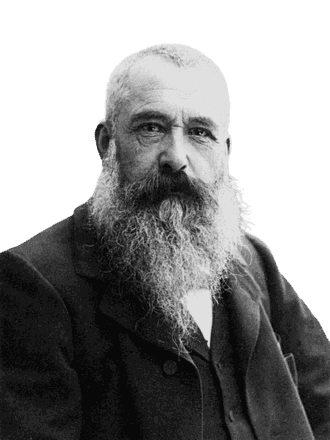
Photographic portrait of Claude Monet as an older man, with a full grey beard, wearing a dark suit and white shirt, seated against a plain background.
Claude Monet photographed in his later years. Claude Monet (1840–1926) was a French painter and one of the founders of Impressionism, the movement that took its name from his 1872 canvas Impression, Sunrise. Across a career of more than sixty years he moved the aim of landscape painting away from fixed, finished detail and toward the passing effects of light, weather, and time of day. He worked outdoors, in front of his subject, and returned to the same motifs again and again as the conditions changed. In his last decades Monet built a water garden at his home in Giverny and made it the subject of hundreds of paintings, ending with the large Water Lilies panels now installed at the Musée de l'Orangerie in Paris. He kept painting through failing eyesight caused by cataracts, and he died in 1926 as one of the most admired artists in France. Monet was born Oscar-Claude Monet in Paris on 14 November 1840. Around 1845 the family moved to Le Havre, on the Normandy coast, where his father worked in the family's wholesale grocery and ship-supply trade. His mother, Louise-Justine, was a singer, and the household expected the boy to enter commerce rather than art. As a teenager Monet was known around Le Havre for charcoal caricatures of local figures, which he sold for a few francs each. The decisive early encounter was with the landscape painter Eugène Boudin, who worked along the same coast. Boudin urged the younger man to stop drawing in the studio and to paint outdoors, directly from nature, capturing the sky and sea as they actually appeared. This practice, painting en plein air, shaped everything that followed. Monet later said that the day Boudin persuaded him to paint from life was the day he became a painter. In 1859 Monet went to Paris to study, working for a time at the Académie Suisse, an informal studio where artists could draw from a model without a rigid academic program. His training was interrupted in 1861 when he was called up for military service and sent to Algeria with a light cavalry regiment. Illness cut the posting short, but the strong North African light stayed with him. After an aunt helped buy him out of the army on the condition that he study art seriously, he entered the Paris studio of the academic painter Charles Gleyre in 1862. There he met Pierre-Auguste Renoir, Alfred Sisley, and Frédéric Bazille, the friends with whom he would later break from official taste. Monet's model and companion in these years was Camille Doncieux, who sat for many of his early figure paintings. Their son Jean was born in 1867, and the couple married in 1870. Money was scarce, and Monet's letters from the period are full of requests for loans and worry about unsold work, a pattern that would continue for much of his early career. In nineteenth-century France, an artist's reputation ran through the official Salon, the state-sponsored exhibition whose jury decided what the public saw. The jury favored polished historical and mythological subjects, and it often rejected the looser, brighter landscapes that Monet and his circle were making. Rather than keep waiting on that approval, the group organized their own show. The painting that gave the movement its name came out of Monet's home port. Impression, Sunrise, made in 1872, shows the harbor at Le Havre at dawn, an orange sun hanging over hazy water and dim ships, painted in quick, visible strokes rather than smooth finish. It hangs today at the Musée Marmottan Monet in Paris. In April 1874 Monet and his colleagues, working as the Anonymous Society of Painters, Sculptors, and Engravers, held their first independent exhibition in the former studio of the photographer Nadar on the Boulevard des Capucines. Reviewing the show for the satirical paper Le Charivari on 25 April 1874, the critic Louis Leroy seized on the title of Monet's canvas and mocked the whole group as "Impressionists," meaning that their work looked like unfinished sketches. The insult stuck, and within a few years the artists had adopted the label themselves. Two events on either side of the exhibition shaped Monet's method. During the Franco-Prussian War of 1870 to 1871 he spent time in London, where he studied the atmospheric landscapes of J. M. W. Turner and John Constable and met the dealer Paul Durand-Ruel, who became a crucial buyer and champion. Back in France, Monet settled at Argenteuil on the Seine from 1871 to 1878, one of his most productive stretches, painting the river, boats, gardens, and the changing sky in bright, broken color. The hardship did not end with recognition of the movement. Sales stayed uncertain, and Camille died in 1879 after a long illness, leaving Monet with two young sons. He kept painting through the loss, and his attention began to shift from single scenes toward a new idea: taking one subject and following it through many canvases as the light and season changed. In 1883 Monet moved to Giverny, a village in Normandy about seventy-five kilometers northwest of Paris. He rented a house with a large garden there and bought the property in 1890 once his finances allowed. The household included Alice Hoschedé and her children; Alice and Monet married in 1892, after Camille's death, and Giverny became the fixed center of his life and work for more than forty years. At Giverny the series idea came fully into its own. Monet would set up several canvases at once and move between them as the light shifted, so that each painting recorded a specific moment. The grainstacks in the fields near his house became the Haystacks series of 1890 and 1891, the same shapes seen through frost, mist, and low winter sun; Durand-Ruel showed a group of them together in 1891 to strong acclaim. A related Poplars series followed. Between 1892 and 1894 Monet painted the west front of Rouen Cathedral roughly thirty times, tracking how the stone changed color from grey dawn to golden afternoon. On trips to London in the early 1900s he painted the Houses of Parliament across the Thames, wrapped in fog and shifting light, working on these views between about 1900 and 1905. His largest project grew out of the garden itself. In 1893 Monet bought a strip of land at the bottom of his property, across the railway line, and diverted the Ru, a small branch of the river Epte, to create a pond. He planted water lilies, added weeping willows and wisteria, and built an arched Japanese-style footbridge inspired by the prints he collected. From 1899 onward the pond became his main subject. Over the last twenty-five years of his life he made more than two hundred and fifty paintings of the water surface, its reflections, and its flowers, a group known collectively as the Nymphéas, or Water Lilies. The culmination was a set of very large panels Monet called the Grandes Décorations. On 12 November 1918, the day after the Armistice that ended the First World War, he offered a group of these panels to the French state as a gift, writing to his friend the statesman Georges Clemenceau that it was his way of taking part in the victory. He signed the formal donation in 1922 but kept working on the canvases until his death. The panels were installed in two oval rooms at the Musée de l'Orangerie in Paris, which opened to the public in 1927, a few months after he died, surrounding the viewer with water, sky, and light on every side. Through these later years Monet struggled with his sight. He developed cataracts in both eyes, and by the 1910s he complained that colors had lost their intensity and that reds looked muddy while blues seemed to disappear. Studies of the work from this period note that his canvases grew darker and more heavily weighted toward warm yellows, oranges, and reds, closer to what the clouded lenses actually let through. He resisted an operation for years, afraid of what surgery might do to his sense of color, before finally agreeing to have his right eye operated on in 1923. Afterward his perception of blue returned, and he reworked or set aside a number of paintings he had made while his vision was failing. Monet lived to see his reputation secured. The painter who had once begged dealers for advances died wealthy and celebrated, his gift to the nation already agreed and his home a place of pilgrimage for younger artists. He died at Giverny on 5 December 1926, of lung cancer, at the age of eighty-six. His influence reached well beyond Impressionism. The way he dissolved a solid subject into shimmering strokes of color, and above all the way the late Water Lilies fill the whole surface with an even field of paint, gave later painters a precedent for abstraction. Several of the American Abstract Expressionists of the mid-twentieth century looked back to the Orangerie panels as an early model for large, immersive, all-over painting, and interest in Monet's final works grew sharply in that period. His house and gardens at Giverny survive as well. Restored and now cared for by the Fondation Claude Monet, the property is open to visitors, who can walk the flower beds of the Clos Normand and stand on the Japanese bridge above the same lily pond he painted. The site lets people see the actual conditions, the light, water, and planting, from which the paintings came. Monet's canvases hang in major museums across Europe, the United States, and Asia, and individual works have sold at auction for very large sums, including grainstack and water-lily paintings that have set records for the artist. More than the prices, what endures is the shift he helped bring about: the idea that a painting can be less a record of an object than a record of a moment of seeing, held still. Monet's whole method was a form of attention over time. He did not paint a haystack once and move on; he painted it in frost and in August heat, at dawn and at dusk, because the thing that interested him was not the stack but the way a single subject keeps changing. To do that he had to keep coming back, keep looking, and keep a record of what each moment actually looked like rather than what he assumed it should. That is a useful way to think about any life. A person, like a pond at Giverny, is not one fixed image but a long series of moments under different light. The details that seem ordinary at the time, a garden, a bridge, the exact color of a morning, turn out to be the material from which a lasting record is made. Monet kept his by returning to the same places with a brush; most of us keep ours in photographs, letters, recordings, and the small stories that get passed along. His example is worth holding onto for a plain reason: he showed that patient, honest attention to how someone or something appears over time can outlast the moment it captures. Preserving a life carefully, in its specifics and its changes, is a way of letting others stand where he stood and see what he saw.
What we preserve here

A life worth keeping is a life worth re-reading. Confinity exists so the lives in your own family are kept with the same care.

More legacies to read

All legacies
Heritage library
Start your own archive