Heritage · Landmark
The Palace of Versailles: the theatre of a court
A hunting lodge in the woods west of Paris became the largest palace in Europe and the stage on which a whole monarchy performed itself. Its mirrored gallery has reflected the ceremonies of kings, the proclamation of an empire and the peace that ended the First World War.Written to last.
By Confinity Heritage Editorial · Updated 2026-07-31 · 7-minute readQuiet tools, kept out of the way.
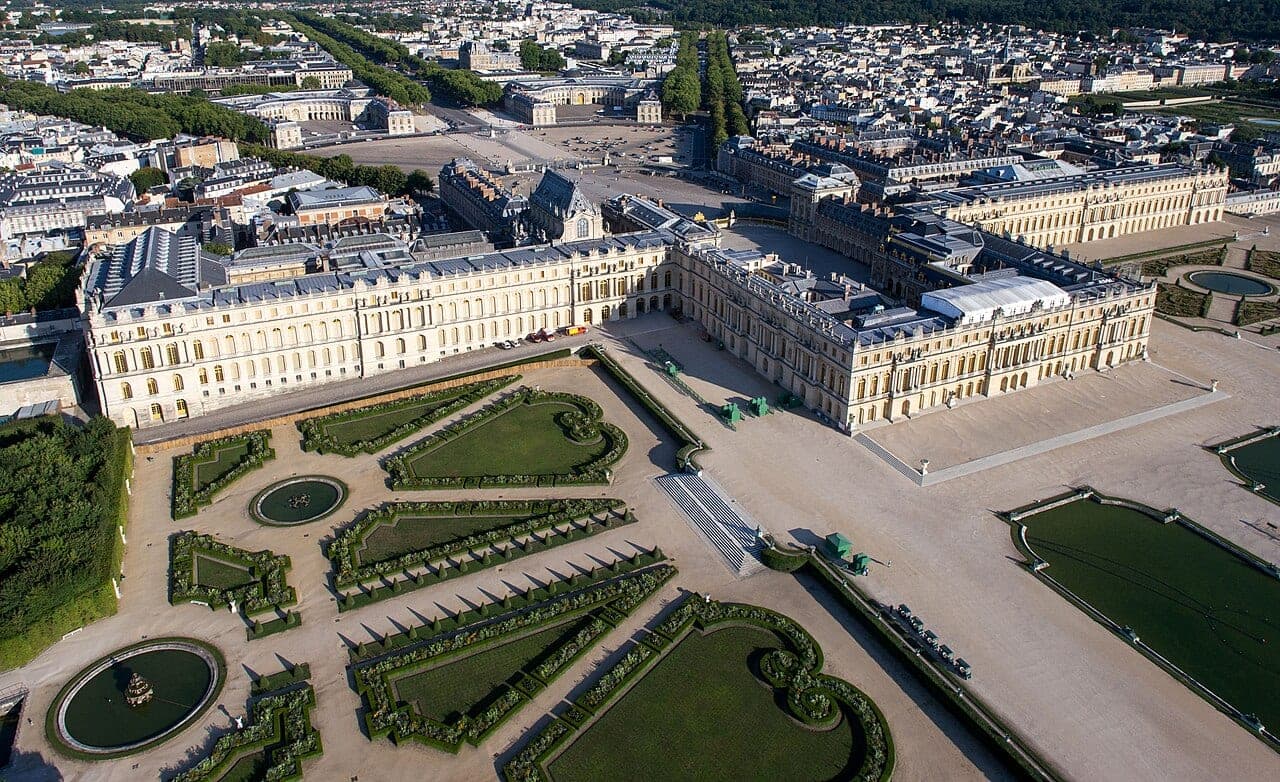
West of Paris, where Louis XIII once rode out to hunt across marshy woodland, sits one of the most complete records in stone of what a monarchy believed about itself. The Palace of Versailles was never only a house for a king. It was an argument made in architecture, gardens and ceremony, a place designed so that power could be seen, rehearsed and remembered.
For a little over a century, from 1682 until the Revolution carried the court back to Paris in 1789, Versailles was the seat of the French state and the setting for its court life. UNESCO, which inscribed the Palace and Park of Versailles on the World Heritage List in 1979, describes the ensemble as a unique artistic achievement that gave Europe a model of the ideal royal residence for more than a hundred years. To walk its galleries now is to move through the memory of that world, and through the many later histories that have gathered in its rooms.
Versailles began as something modest. In 1623 Louis XIII built a small brick-and-stone lodge, barely thirty-five metres across, on high ground where he liked to hunt. Courtiers of the next generation would remember it dismissively as a poor little chateau. Its transformation came from his son. In 1661 the young Louis XIV attended a lavish festival that his finance minister, Nicolas Fouquet, threw at the newly built Vaux-le-Vicomte. The king recognised both an insult and an opportunity: he arrested Fouquet and gathered the same artists who had made Vaux, then turned them loose on his father's hunting ground.
Over the following decades Versailles grew into the largest palace in Europe, with roughly 2,300 rooms behind a garden facade some 400 metres long. The purpose behind the scale was political as much as domestic. By drawing the nobility to live under his eye, in a place governed by elaborate etiquette, Louis XIV made attendance on the king the centre of French public life. On 6 May 1682 the king, the court and the royal government took up permanent residence, and Versailles became in effect the capital of France, a role it held until 6 October 1789. Everything about the building was arranged so that daily existence itself, from the king's waking to his supper, became a ceremony to be witnessed.
The great enlargement was the work of a succession of gifted hands. The architect Louis Le Vau wrapped the old lodge in a new Italianate shell, the so-called enveloppe, between 1668 and 1671, keeping the original at the heart of the plan. After Le Vau's death the commission passed to Jules Hardouin-Mansart, appointed First Architect in 1678, who more than doubled the palace and gave it the long, ordered horizon it still shows today. Throughout, the painter Charles Le Brun directed the interior decoration, marshalling sculptors, gilders and craftsmen into a single vision of royal glory.
 Seventeen mirrored arches face seventeen windows onto the garden. Venice held the monopoly on mirror glass and guarded it; France broke it to build this room. Photograph by Myrabella, CC BY-SA 3.0, via Wikimedia Commons.
Inside, the King's and Queen's State Apartments formed two parallel sequences of rooms, several of them named for the planets and their governing Roman deities, so that a visitor climbing towards the sovereign passed symbolically through the heavens. At the centre, joining the two apartments, is the Hall of Mirrors, begun in 1678 and ready by the mid-1680s. It runs about 73 metres long, 10.4 metres wide and 12.2 metres high. Along the wall facing the tall garden windows, seventeen arches hold 357 mirrors, a display that announced French glassmaking could rival the Venetian monopoly. Overhead, thirty painted compositions by Le Brun narrate the first eighteen years of Louis XIV's personal rule. The gallery was a corridor of state, walked by ambassadors and courtiers, and a room built so that light, glass and gold would multiply the presence of the king.
If the palace was the argument, the gardens were its extension into the landscape. From the early 1660s the designer Andre Le Notre laid out an ordered world of parterres, groves and long perspectives that carried the eye far past the walls. Water was the signature of the scheme. Hundreds of jets fed a company of fountains, many of them staged as scenes from mythology, and the whole was tuned to be read from the palace windows. The Grand Canal, dug between 1667 and 1679 and stretching some 1,670 metres, drew the sunset along its axis and served for boating parties and mock naval displays.
Away from the formal gardens lay quieter retreats. Louis XIV built the Grand Trianon of pink marble in 1687 as a place to escape the weight of the court. In the following century Louis XV added the smaller, restrained Petit Trianon, completed in the 1760s. It became the favourite refuge of Marie-Antoinette, who reshaped its grounds in the informal English manner and, in 1783, had the Hameau de la Reine built nearby: a cluster of thatched cottages, a mill and a working dairy where the queen and her circle could imagine a simpler, rustic life. These corners of the estate remember a monarchy that had begun to long for privacy from the very spectacle it had created.
The eighteenth century left its own layers on the palace. Louis XV completed the Salon d'Hercule and, after long delay, opened the Royal Opera in 1770, a hall of remarkable acoustics carried on a structure of wood. His grandson Louis XVI, who came to the throne in 1774, made few structural changes, and by his reign many courtiers were already drifting back towards the pleasures of Paris.
The end came quickly. On 5 October 1789, driven by the scarcity and price of bread, a crowd of several thousand, many of them women, marched the twenty or so kilometres from Paris to Versailles. The next day they compelled the royal family to return with them to the capital. The court never came back. The palace was closed, and between 1793 and 1794 its contents were dispersed, roughly 17,000 lots of furniture and works of art sold at auction to raise funds for the Revolution. For a moment it seemed possible that the building itself might be pulled down. What survived was the great architectural shell, emptied of the life it had been built to hold.
Versailles was saved by being given a new meaning. In 1837 King Louis-Philippe opened within its walls a Museum of the History of France, dedicating the palace, in his phrase, to all the glories of France. Long galleries of history painting, among them the vast Galerie des Batailles, turned the former royal residence into a national record of the country's past. The move preserved the fabric by making the whole building a work of remembrance.
Great events kept returning to it. On 18 January 1871, after the Franco-Prussian War, the German Empire was proclaimed in the Hall of Mirrors, a humiliation for France staged in the heart of its old monarchy. Nearly half a century later, in the same gallery, that history was answered: on 28 June 1919 the Treaty of Versailles, ending the First World War, was signed there. From 1892 the conservator Pierre de Nolhac began the long labour of scholarly restoration, and in the 1920s a substantial gift from the American philanthropist John D. Rockefeller Jr. funded urgent repairs. Since 1995 the estate has been managed as a public establishment under the French Ministry of Culture, and conservation continues across palace, gardens and Trianons.
Versailles endures because it holds so many histories at once. It is the record of an idea of kingship pushed to its furthest expression, a monarchy that tried to make itself visible in every mirror, fountain and staircase. It is also the place where that world ended, where a hungry crowd forced open the gate between the court and the country, and where the treaties of two great wars were written into the same room that had once glorified a king.
To visit now is to stand inside layered remembrance. The gilded apartments recall the Sun King; the Queen's hamlet recalls a monarchy dreaming of escape; the Hall of Mirrors recalls both imperial pride and hard-won peace. Millions come each year to walk the gardens Le Notre traced and to look into the glass that has reflected so much. Versailles keeps the memory of power and of its limits, and in doing so it reminds each generation how carefully the past deserves to be preserved and understood.
Seventeen mirrored arches face seventeen windows onto the garden. Venice held the monopoly on mirror glass and guarded it; France broke it to build this room. Photograph by Myrabella, CC BY-SA 3.0, via Wikimedia Commons.
Inside, the King's and Queen's State Apartments formed two parallel sequences of rooms, several of them named for the planets and their governing Roman deities, so that a visitor climbing towards the sovereign passed symbolically through the heavens. At the centre, joining the two apartments, is the Hall of Mirrors, begun in 1678 and ready by the mid-1680s. It runs about 73 metres long, 10.4 metres wide and 12.2 metres high. Along the wall facing the tall garden windows, seventeen arches hold 357 mirrors, a display that announced French glassmaking could rival the Venetian monopoly. Overhead, thirty painted compositions by Le Brun narrate the first eighteen years of Louis XIV's personal rule. The gallery was a corridor of state, walked by ambassadors and courtiers, and a room built so that light, glass and gold would multiply the presence of the king.
If the palace was the argument, the gardens were its extension into the landscape. From the early 1660s the designer Andre Le Notre laid out an ordered world of parterres, groves and long perspectives that carried the eye far past the walls. Water was the signature of the scheme. Hundreds of jets fed a company of fountains, many of them staged as scenes from mythology, and the whole was tuned to be read from the palace windows. The Grand Canal, dug between 1667 and 1679 and stretching some 1,670 metres, drew the sunset along its axis and served for boating parties and mock naval displays.
Away from the formal gardens lay quieter retreats. Louis XIV built the Grand Trianon of pink marble in 1687 as a place to escape the weight of the court. In the following century Louis XV added the smaller, restrained Petit Trianon, completed in the 1760s. It became the favourite refuge of Marie-Antoinette, who reshaped its grounds in the informal English manner and, in 1783, had the Hameau de la Reine built nearby: a cluster of thatched cottages, a mill and a working dairy where the queen and her circle could imagine a simpler, rustic life. These corners of the estate remember a monarchy that had begun to long for privacy from the very spectacle it had created.
The eighteenth century left its own layers on the palace. Louis XV completed the Salon d'Hercule and, after long delay, opened the Royal Opera in 1770, a hall of remarkable acoustics carried on a structure of wood. His grandson Louis XVI, who came to the throne in 1774, made few structural changes, and by his reign many courtiers were already drifting back towards the pleasures of Paris.
The end came quickly. On 5 October 1789, driven by the scarcity and price of bread, a crowd of several thousand, many of them women, marched the twenty or so kilometres from Paris to Versailles. The next day they compelled the royal family to return with them to the capital. The court never came back. The palace was closed, and between 1793 and 1794 its contents were dispersed, roughly 17,000 lots of furniture and works of art sold at auction to raise funds for the Revolution. For a moment it seemed possible that the building itself might be pulled down. What survived was the great architectural shell, emptied of the life it had been built to hold.
Versailles was saved by being given a new meaning. In 1837 King Louis-Philippe opened within its walls a Museum of the History of France, dedicating the palace, in his phrase, to all the glories of France. Long galleries of history painting, among them the vast Galerie des Batailles, turned the former royal residence into a national record of the country's past. The move preserved the fabric by making the whole building a work of remembrance.
Great events kept returning to it. On 18 January 1871, after the Franco-Prussian War, the German Empire was proclaimed in the Hall of Mirrors, a humiliation for France staged in the heart of its old monarchy. Nearly half a century later, in the same gallery, that history was answered: on 28 June 1919 the Treaty of Versailles, ending the First World War, was signed there. From 1892 the conservator Pierre de Nolhac began the long labour of scholarly restoration, and in the 1920s a substantial gift from the American philanthropist John D. Rockefeller Jr. funded urgent repairs. Since 1995 the estate has been managed as a public establishment under the French Ministry of Culture, and conservation continues across palace, gardens and Trianons.
Versailles endures because it holds so many histories at once. It is the record of an idea of kingship pushed to its furthest expression, a monarchy that tried to make itself visible in every mirror, fountain and staircase. It is also the place where that world ended, where a hungry crowd forced open the gate between the court and the country, and where the treaties of two great wars were written into the same room that had once glorified a king.
To visit now is to stand inside layered remembrance. The gilded apartments recall the Sun King; the Queen's hamlet recalls a monarchy dreaming of escape; the Hall of Mirrors recalls both imperial pride and hard-won peace. Millions come each year to walk the gardens Le Notre traced and to look into the glass that has reflected so much. Versailles keeps the memory of power and of its limits, and in doing so it reminds each generation how carefully the past deserves to be preserved and understood.
From hunting lodge to the seat of a kingdom
A palace built to be seen: the apartments and the Hall of Mirrors
The gardens of Le Notre: water, geometry and the Trianons
The last court: Louis XV, Louis XVI and the Revolution
A museum of memory: Louis-Philippe, 1919 and conservation
A place of memory and meaning
References and resources
- UNESCO World Heritage Centre. "Palace and Park of Versailles." whc.unesco.org/en/list/83. Inscription 1979, criteria (i), (ii) and (vi).
- Encyclopaedia Britannica. "Palace of Versailles" and "Palace of Versailles: The gardens." britannica.com.
- Wikipedia. "Palace of Versailles." en.wikipedia.org/wiki/Palace_of_Versailles.
- Château de Versailles (official site). "The Hall of Mirrors." en.chateauversailles.fr/discover/estate/palace/hall-mirrors.
- Wikipedia. "Grand Canal of Versailles" and "Hameau de la Reine." en.wikipedia.org.