For families who want their stories to last. learn about the founding circle.

Heritage · Legacy

Marie Curie Legacy

Discover the legacy of Marie Curie, the groundbreaking physicist and chemist who discovered polonium and radium. As the first person to win Nobel Prizes in two sciences, Curie’s work in radioactivity continues to impact medicine and science.

Written to last.

By Confinity Heritage Editorial · Updated 2026-07-20 · 6-minute read
Quiet tools, kept out of the way.
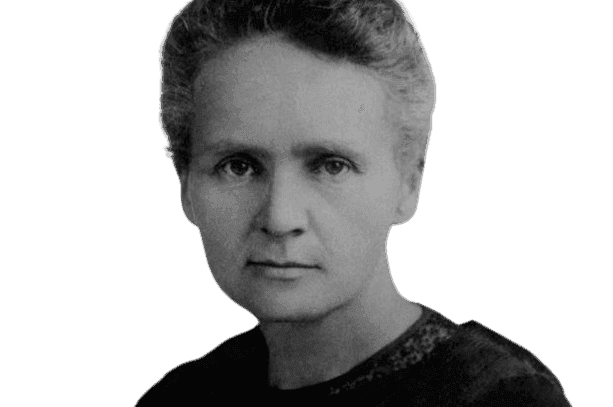
Black-and-white portrait of Marie Curie, the Polish-French physicist and chemist who discovered polonium and radium and won Nobel Prizes in physics and chemistry.
Marie Curie was a physicist and chemist whose research on radioactivity reshaped both the physical sciences and modern medicine. Born Maria Salomea Skłodowska in Warsaw in 1867, she studied in secret in occupied Poland, earned her degrees in Paris, and, with her husband Pierre Curie, identified two new chemical elements, polonium and radium, in 1898. Her research brought two Nobel Prizes: the 1903 Prize in Physics, shared with Pierre Curie and Henri Becquerel, and the 1911 Prize in Chemistry, awarded to her alone. She was the first woman to receive a Nobel Prize and remains the only person to win Nobel Prizes in two separate sciences. That record understates how unusual her path was. Curie built a scientific career at a time when Polish and French universities largely excluded women, processed tonnes of raw ore by hand to isolate a fraction of a gram of radium, and later drove X-ray equipment to the front lines of the First World War. The same radioactivity she named eventually killed her. She died in 1934 of aplastic anaemia, a bone-marrow disease that physicians linked to decades of radiation exposure. Maria Salomea Skłodowska was born on 7 November 1867 in Warsaw, then part of the Russian Empire. She was the youngest of five children in a family of teachers. Her father, Władysław Skłodowski, taught mathematics and physics; her mother, Bronisława, ran a respected boarding school for girls. Russian rule pressed hard on Polish intellectual life, and the family lost income and savings. Curie's early years were marked by loss: her mother died of tuberculosis in 1878, and one of her sisters had died of typhus two years earlier, according to biographical accounts. Barred from Warsaw's universities because she was a woman, she took classes at the clandestine Flying University, a mobile network that taught Polish students outside the reach of the authorities. To pay her way, she worked for several years as a governess, partly to fund her elder sister Bronisława's medical studies in Paris, on the understanding that Bronisława would later help her in turn. It was a slow, deliberate plan built around a career that was far from guaranteed. In 1891 she moved to Paris and enrolled at the University of Paris, the Sorbonne, signing her name in the French form, Marie. She lived frugally, sometimes cold and underfed while she studied. She completed a degree in physics in 1893, finishing first in her class, and a second degree in mathematics in 1894. Around this time she met Pierre Curie, a physicist already known for his work on magnetism and on the electrical properties of crystals. The two shared a devotion to research that left little room for anything else, and they married in a civil ceremony at Sceaux on 26 July 1895. The prompt for Curie's central work came from Henri Becquerel, who had found in 1896 that uranium salts emit penetrating rays without any external energy source. Curie chose this puzzling phenomenon as the subject of her doctoral research. Using a sensitive electrometer that Pierre and his brother Jacques had developed, she measured the tiny electrical currents the rays produced in air. Her careful measurements showed that the intensity of the radiation depended only on the quantity of uranium present, whatever its chemical combination or physical state. That pointed to something happening inside the atom itself. She coined the term radioactivity to name the behaviour. Testing a wide range of minerals, Curie found that pitchblende, an ore of uranium, was far more active than its uranium content alone could account for. She reasoned that it must contain one or more undiscovered elements, each more radioactive than uranium. Pierre set aside his own research on crystals to join her, and the collaboration became one of the most productive in the history of science. In July 1898 they announced the first new element, which they named polonium after Curie's homeland; on 26 December 1898 they announced a second, radium. Announcing the elements was one thing; proving they existed by isolating them was another. The Curies obtained tonnes of pitchblende residue left over from mining and refined it in a converted shed with a leaking roof and poor ventilation. The work was physically brutal: Curie stirred boiling vats of material with an iron rod nearly as tall as she was. From a full tonne of ore, they separated only about a tenth of a gram of radium chloride by 1902. Curie's 1903 doctoral thesis, titled Recherches sur les substances radioactives, gathered the results. The Curies chose not to patent their process for isolating radium, keeping it open for other researchers and for medical use even though it left them with little of the wealth their discovery generated. In 1903 the Royal Swedish Academy of Sciences awarded the Nobel Prize in Physics for work on radiation. Half went to Becquerel; the other half was shared by Pierre and Marie Curie, cited "in recognition of the extraordinary services they have rendered by their joint researches on the radiation phenomena discovered by Professor Henri Becquerel," per the official record. Marie Curie was the first woman to receive a Nobel Prize. The committee had at first planned to honour only Pierre and Becquerel; Pierre intervened, prompted by a sympathetic committee member, so that Marie's contribution was recognised, according to Nobel accounts. The partnership ended abruptly. On 19 April 1906, Pierre was killed in a street accident in Paris, struck by a horse-drawn cart and suffering a fractured skull. Marie, widowed with two young daughters, took over his teaching post. In May 1906 she became the first woman to hold a professorship at the University of Paris, per Britannica. She pressed on with the chemistry of radium. In 1910, working with André-Louis Debierne, she isolated radium as a pure metal by passing an electric current through dissolved radium chloride, and she helped establish an international standard for radioactive measurement; the unit of activity, the curie, was later named for the Curies. In 1911 she received the Nobel Prize in Chemistry, this time alone, cited "in recognition of her services to the advancement of chemistry by the discovery of the elements radium and polonium, by the isolation of radium and the study of the nature and compounds of this remarkable element." No one else has since won Nobel Prizes in two different sciences. The same year brought public hostility. A campaign in the French press over her relationship with the physicist Paul Langevin, combined with prejudice against her Polish origins, coincided with her narrow failure to be elected to the French Academy of Sciences. She kept working through the scandal, and the second Nobel Prize arrived within weeks of the worst of the coverage. When the First World War began in 1914, Curie turned her expertise toward battlefield medicine. She fitted cars with X-ray equipment so that surgeons near the front could locate bullets and shrapnel in wounded men. Soldiers nicknamed the vehicles "petites Curies," little Curies. She directed the installation of roughly 20 mobile units and some 200 radiological posts, learned to drive and to service the vehicles herself, and trained women, including her teenage daughter Irène, to operate the equipment. By some estimates, more than a million wounded soldiers were examined with the radiology service she organised. After the war she led the Radium Institute in Paris, founded in 1914 as a joint center for research and cancer treatment. Her reputation carried her abroad: in 1921 an American fundraising campaign led by the journalist Marie Meloney gathered donations from women across the United States to buy Curie a gram of radium for her laboratory, presented to her at the White House. A second Radium Institute opened in Warsaw in 1932, directed by her sister Bronisława. Curie travelled and raised funds to keep both running. Curie's discoveries reshaped the understanding of the atom. Radioactivity showed that atoms were not permanent and indivisible, as classical physics had assumed, but could transform and release energy from within. That insight fed directly into twentieth-century physics and, eventually, into nuclear science. Her work also underpinned radiation therapy, which uses controlled doses to destroy cancerous tissue, and the wider field of nuclear medicine that grew from it. Her influence continued through her family and her institutes. Her daughter Irène Joliot-Curie shared the 1935 Nobel Prize in Chemistry with her husband Frédéric Joliot for their discovery of artificial radioactivity, making the Curies the most decorated family in the history of the science prizes. The Curie Institutes in Paris and Warsaw remain active research and treatment centres today. The cost of the work is part of the record. In the early decades no one understood how dangerous prolonged radiation exposure could be, and Curie handled radioactive material with bare hands and carried test tubes of it in her pockets. She died on 4 July 1934, at the age of 66, at a sanatorium in Passy, in the French Alps, of aplastic anaemia that physicians attributed to her long exposure. Her laboratory notebooks from the 1890s are still so radioactive that they are kept in lead-lined boxes and handled only with protective equipment. In 1995 the remains of Marie and Pierre Curie were transferred to the Panthéon in Paris, and she became the first woman interred there for achievements of her own. Her firsts extend well beyond the laboratory: first woman to win a Nobel Prize, first person to win two, first woman to teach at the Sorbonne, and first woman honoured in the Panthéon on her own merits. She reached each of them in institutions that had been closed to women for centuries. A life like Curie's is easy to flatten into a list of records. The records are real, but they leave out what made them possible: years of unpaid tutoring, a shed with a leaking roof, a marriage that was also a scientific partnership, and a persistence that outlasted grief and public scorn. Those details are what let later generations understand not only what she achieved but how she achieved it, and at what price. Careful records are what preserve those details. Curie's own notebooks, her Nobel lectures, the letters between her and Pierre, and the institutes that still carry her name are the reason we can check the facts of her life rather than repeat a legend. The same holds for any life worth understanding after it ends: the specifics are the first thing to fade, and once they are gone they are rarely recovered.
What we preserve here

A life worth keeping is a life worth re-reading. Confinity exists so the lives in your own family are kept with the same care.

You're reading 2 of 8 in 'Lives that changed how we remember'

More legacies to read

All legacies
Heritage library
Start your own archive