For families who want their stories to last. learn about the founding circle.

Heritage · Legacy

William Shakespeare Legacy

William Shakespeare: the plays and sonnets. A fact-checked account of William Shakespeare's life and legacy.

Written to last.

By Confinity Heritage Editorial · Updated 2026-07-20 · 6-minute read
Quiet tools, kept out of the way.
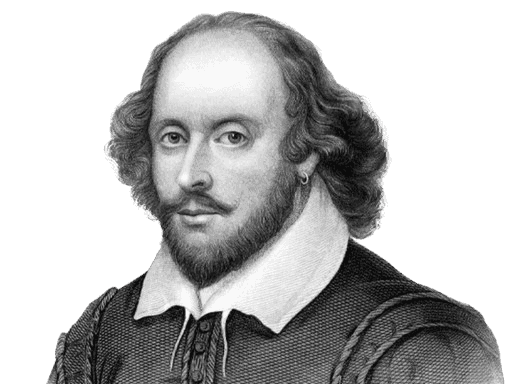
Portrait of William Shakespeare
William Shakespeare was baptised in Stratford-upon-Avon on 26 April 1564 and was buried in the same town fifty-two years later, in April 1616. In the span between those two parish records he wrote roughly three dozen plays and 154 sonnets, and those texts became the most performed and most studied body of work in the English language. What is striking, once you look past the fame, is how little of his private life the archive actually holds. We have legal documents, baptismal and burial entries, a will, and the printed plays. We have almost nothing in his own voice about what he thought or felt. The Folger Shakespeare Library is candid on this point, noting repeatedly that we do not know his exact birthdate, how he broke into the theatre, or the cause of his death. This article sets out what the record does establish, and marks clearly where it goes quiet. Shakespeare's baptism is recorded on 26 April 1564. His actual date of birth is not documented, and the familiar 23 April, Saint George's Day, is a later tradition rather than a fact from the register. He was the third of eight children and the eldest son to survive infancy. His father, John Shakespeare, worked as a glover and leatherworker and rose to become an alderman of the town; his mother, Mary Arden, came from a landowning family in the surrounding countryside. Stratford was a market town in Warwickshire with a free grammar school, the King's New School. No attendance records from the period survive, so we cannot prove Shakespeare studied there, but most biographers accept that he probably did, which would have given him a grounding in Latin grammar, rhetoric, and classical authors such as Ovid. He did not attend university, a point his later rivals in London would use against him. His father's fortunes rose and then faltered during these years: John Shakespeare ran into financial and legal trouble in the later 1570s and withdrew from public life, which may have shaped the son's early sense of security and status. The surviving siblings included Gilbert, Richard, Edmund, and Joan, though almost nothing is recorded of the family's daily life. The next firm record is his marriage. In November 1582, at eighteen, he married Anne Hathaway, who was twenty-six and already pregnant; a licence was issued by the Diocese of Worcester and the banns were read only once rather than the usual three times, which points to some haste. Their first child, Susanna, was baptised in May 1583. Twins followed in February 1585, a son named Hamnet and a daughter named Judith. Hamnet died in 1596 at the age of eleven and was buried in Stratford that August. The loss of his only son has drawn endless speculation about its effect on the plays, though Shakespeare himself left no direct comment on it. After the twins' baptism the trail disappears. Scholars call the period from 1585 to 1592 the "lost years," because Shakespeare leaves almost no historical trace until he surfaces as a working figure in the London theatre. Various stories fill the gap, that he taught school in the country, that he fled Stratford after poaching deer, but these were collected as hearsay long after his death and cannot be verified. This is the first of several places where an honest biography has to say plainly that we do not know. Shakespeare re-enters the record in 1592, and he does so as a target. The playwright Robert Greene attacked him in print as an "upstart crow," which is the earliest surviving mention of Shakespeare working in the theatre and shows he was already established enough to provoke jealousy. By this date he was acting as well as writing, and he had begun to build the position that would make him unusual among Elizabethan dramatists: he was not only a hired pen but a shareholder in the business. That business took firm shape in 1594 with the formation of the Lord Chamberlain's Men, a company that quickly became the leading troupe in London and performed his plays more or less exclusively. Shakespeare was a founding member and part-owner, which meant he shared in the profits rather than selling scripts for a flat fee. When Queen Elizabeth died and James I came to the throne, the new king took the company under his own patronage in 1603, and it changed its name to the King's Men. Few writers of the age enjoyed that kind of royal association. The company's most famous home was the Globe. In 1599 its members built their own open-air playhouse on the south bank of the Thames, financing it as sharers, with Shakespeare among them. Julius Caesar was one of the first plays staged there. In 1608 the company also took over the indoor Blackfriars theatre, which allowed performances by candlelight through the winter. The original Globe burned to the ground in June 1613 when a stage cannon set the thatch alight during a performance of Henry VIII, and a second Globe was built on the site the following year. The theatre made Shakespeare prosperous. Property records show that in 1597 he bought New Place, the second-largest house in Stratford, and in 1605 he invested in a share of the parish tithes there. He kept his family and his money in Stratford while he worked in London, a division that tells us he never fully became a Londoner. Shakespeare produced most of his known writing between about 1589 and 1613. His plays are usually grouped as comedies, histories, and tragedies, and modern scholarship counts some thirty-nine plays in all, a figure that has shifted slightly over time as attributions are debated and collaborations recognised. His career has a rough shape. He began mainly with comedies and English history plays, including the sequence on the Wars of the Roses and reigns such as Richard III and Henry V. He then turned to the great tragedies, writing Hamlet, Othello, King Lear, and Macbeth in the years up to about 1608. In his final phase he wrote the late romances, or tragicomedies, among them The Winter's Tale and The Tempest, plays that move from loss toward reconciliation. He was also a poet. The 1609 quarto of Shakespeare's Sonnets, printed by Thomas Thorpe, gathers 154 poems, most of them concerned with love, time, beauty, and mortality. Editors have long divided the sequence into a large group addressed to a young man and a later group to a woman known as the "Dark Lady," though the identities behind the poems, and the meaning of the volume's cryptic dedication to "Mr. W.H.," remain unsettled. Alongside the sonnets he wrote longer narrative poems, notably Venus and Adonis in 1593 and The Rape of Lucrece in 1594, both dedicated to the Earl of Southampton. His plays began appearing in cheap quarto editions from 1594, and by 1598 his name had become a selling point printed on the title pages. Not all of the work is solely his: several plays, especially the earliest and the latest, are now understood as collaborations with other dramatists such as George Peele, Thomas Middleton, and John Fletcher, which is normal for the commercial theatre of the day. Shakespeare is often credited with inventing hundreds or even thousands of English words, and the original version of this page repeated a figure of "over 1700." That claim needs care. He is the earliest recorded source in the Oxford English Dictionary for a large number of words, but "first recorded use" is not the same as "invention." As lexicographers at Merriam-Webster and others have pointed out, the dictionary logs the earliest surviving written example, and early readers combed Shakespeare far more thoroughly than they combed ledgers, sermons, or court papers where a word might appear sooner. What is fair to say is that he used the language with unusual range and freedom, and that a great many phrases still in circulation are first attested in his work. Shakespeare appears to have retired to Stratford around 1613, though he continued to visit London and was still writing occasionally in collaboration. He died on 23 April 1616 at the age of fifty-two. No contemporary source records why. One later anecdote, written down decades afterward by a Stratford vicar named John Ward, claims he caught a fever after a "merry meeting" with fellow writers, but there is no evidence for it. He was buried in the chancel of Holy Trinity Church two days later, beneath a stone carrying a rhymed curse against anyone who would disturb his bones. His will, which famously left his wife his "second best bed," has been read both as a slight and as an ordinary provision of the time; the debate continues without resolution. His lasting monument was assembled by his colleagues. In 1623, seven years after his death, two fellow members of the King's Men, John Heminges and Henry Condell, published the First Folio, a collected edition of thirty-six plays. Eighteen of them, including Macbeth, Julius Caesar, and The Tempest, had never been printed before and might otherwise have been lost. The volume opens with a poem by Ben Jonson praising Shakespeare as "not of an age, but for all time," a judgement that turned out to be accurate. Without the Folio the shape of English literature would be measurably poorer. His reach since has been genuinely global. The plays have been translated into every major living language and are performed more often than those of any other playwright, staged everywhere from the reconstructed Globe in London to school halls and open-air festivals across the world. They have also fed a long line of adaptation, from opera and ballet to film versions such as Franco Zeffirelli's and Baz Luhrmann's competing takes on Romeo and Juliet. Reputations have risen and fallen over four centuries, but his has held, in part because the plays keep yielding new readings to each generation that returns to them. Because so little personal detail survives, a fringe tradition has long argued that someone else, often the Earl of Oxford or Francis Bacon, wrote the plays. Mainstream scholarship does not accept this. The documentary evidence tying the Stratford man to the plays, including the First Folio testimony of people who knew and acted with him, is far stronger than the alternatives, which rest largely on the assumption that a provincial glover's son could not have written such work. The honest position is that the gaps in the record are real, and that they do not require an alternative author to explain them. There is a quiet lesson in how thin the Shakespeare archive is. This is the most studied writer in the language, the subject of more books than almost any other human being, and we still cannot say for certain when he was born, what he looked like, what he believed, or how he died. The plays survive because a company of friends thought them worth printing after he was gone. The facts of his life survive because clerks happened to write down a baptism, a marriage licence, a few property deeds, and a burial. That fragility is the ordinary condition of memory. Most lives leave far less than Shakespeare's did, and even his came within a few decisions of vanishing. Preserving a person's record, the dates and documents alongside the stories told about them, is what keeps a life legible to the people who come afterward. Shakespeare's story is a reminder of both the value of what gets kept and the cost of what does not.
What we preserve here

A life worth keeping is a life worth re-reading. Confinity exists so the lives in your own family are kept with the same care.

More legacies to read

All legacies
Heritage library
Start your own archive