Heritage · Landmark
Ibrahimi Mosque: History, Attractions & Visitor Guide
The Ibrahimi Mosque in Hebron, known in Jewish tradition as the Cave of the Patriarchs, is held by both faiths to stand over the tomb of Abraham.Written to last.
By Confinity Heritage Editorial · Updated 2026-07-20 · 7-minute readQuiet tools, kept out of the way.
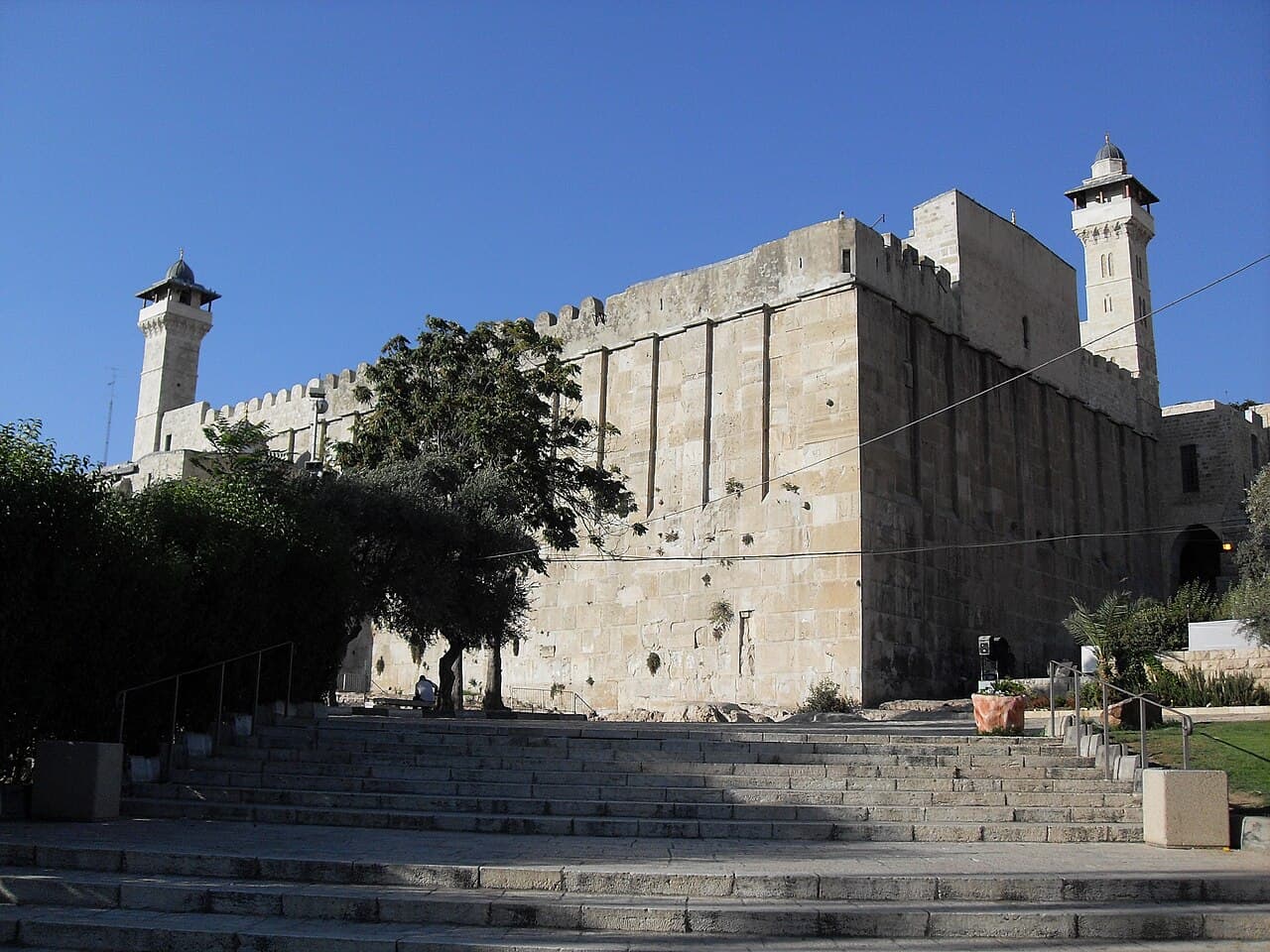
The Ibrahimi Mosque, known in Jewish tradition as the Cave of the Patriarchs (Hebrew Me'arat ha-Machpela) and in Arabic as al-Haram al-Ibrahimi, stands in the old town of Hebron, called Al-Khalil in Arabic, in the southern West Bank. The building encloses a cave that Jews, Christians and Muslims each traditionally hold to be the burial place of the patriarch Abraham, called Ibrahim in Islam, together with members of his family. A rectangular stone enclosure raised in the 1st century BCE, during the reign of Herod the Great, still surrounds the tombs and is widely described as the only Herodian-era structure to survive largely intact. Across two millennia the same walls have sheltered a Byzantine church, a mosque, a Crusader church and a mosque again, and the interior is today divided into areas set aside for Muslim and for Jewish worship. In 2017 UNESCO inscribed the Old Town of Hebron/Al-Khalil, with the sanctuary at its centre, on the World Heritage List and placed it at the same time on the List of World Heritage in Danger.
The site's traditional origin lies in the biblical account of the cave of Machpelah. In the Book of Genesis, Abraham buys the field of Machpelah and its cave from Ephron the Hittite for four hundred shekels of silver in order to bury his wife Sarah, and the cave then receives Abraham himself and later generations of the family. This narrative, shared in different forms across Jewish, Christian and Islamic tradition, fixed Hebron as a place of pilgrimage long before any surviving structure was built above the tombs.
The oldest visible part of the complex is the great enclosure attributed to Herod the Great, who ruled Judaea under Rome between roughly 37 and 4 BCE. Herod's builders surrounded the traditional burial cave with a high rectangular wall of massive dressed stone, monumentalising a site already venerated. The cave itself was left sealed beneath the paved court, and access to the chambers below has been restricted throughout recorded history, so that most of what is known of the interior comes from a small number of documented descents rather than open excavation.
Under Byzantine Christian rule a basilica was built inside the Herodian court, honouring Abraham as a father of faith. After the Muslim conquest of the region in the seventh century CE, the building was adapted for Islamic worship, and the city took the Arabic name Al-Khalil, "the friend", after the epithet Khalil Allah, "friend of God", applied to Abraham in Islamic tradition. The sanctuary became an established stop for Muslim pilgrims travelling in the wider region.
During the Crusades the site changed hands again. Crusader forces took Hebron around 1100 CE and converted the building into a church, sometimes recorded as the Church of Saint Abraham, served by Augustinian canons; access for Muslims and Jews was curtailed. The Romanesque prayer hall that still forms the heart of the interior dates in large part from this Frankish rebuilding. After Saladin (Salah al-Din) recovered the region for the Ayyubids following his victories of 1187, the church was returned to use as a mosque, a mihrab was installed to mark the direction of prayer, and minarets were added.
One of the most celebrated furnishings arrived at this point. The mosque's carved wooden minbar, or pulpit, had been commissioned in 1091 by the Fatimid vizier Badr al-Jamali for a shrine in Ascalon. When Saladin resolved to dismantle the coastal defences of Ascalon in 1191, he had the minbar moved inland to the Ibrahimi Mosque, where it remains one of the oldest Islamic wooden pulpits still in use.
The Mamluk sultanate, which governed the region from 1250 to 1517, gave the interior much of its present character. A further prayer hall, associated with the amir Sanjar al-Jawali, was added in the early fourteenth century; the tomb chambers were faced with coloured marble; and the tent-shaped cenotaphs that mark the patriarchs and matriarchs were set in place. Mamluk rulers also imposed strict limits on non-Muslim access, and by long-standing tradition Jews and Christians were permitted to approach only as far as a step on the outside of the eastern wall, commonly counted as the seventh step, a restriction that endured for centuries.
Ottoman administration, from 1517 to the end of the First World War, maintained the mosque and its endowments. The site later passed under the British Mandate for Palestine and, from 1948 to 1967, under Jordanian rule, functioning throughout this period as a mosque. Following the 1967 war the sanctuary came under Israeli military control, and Jewish worship inside the building, long prevented, was permitted for the first time in centuries, so that the mosque and the newly established synagogue areas came to share the same enclosure.
In February 1994 a gunman opened fire on Muslim worshippers during dawn prayers inside the sanctuary, killing 29 people and wounding many others before he was overpowered and killed; further deaths followed in the unrest of the following days. After the attack the site was closed and later reopened under an arrangement that partitioned the interior into separate sections for Muslim and for Jewish worship, an arrangement that broadly remains in place and that is administered under distinct security and access provisions.
The defining feature of the complex is its outer wall, a rectangle of about 60 by 34 metres enclosing the traditional tombs. The masonry is Herodian work of the first century BCE, built of finely dressed limestone blocks; the wall is roughly two and a half metres thick, and individual stones reach lengths of more than seven metres and heights of about a metre and a half. Shallow pilasters articulate the exterior in the same idiom seen on Herod's retaining walls in Jerusalem, and the survival of this enclosure largely to its original height makes it an unusually complete witness to monumental architecture of the Herodian period.
 The enclosure wall is Herodian, built in the first century BC and never destroyed, which makes it one of the oldest structures anywhere still standing intact and in use. Photograph by Djampa, CC BY-SA 4.0, via Wikimedia Commons.
The court was originally open to the sky, and the roofed structures within it belong to later eras. The principal prayer hall, with its rounded arches and vaulting, reflects the Romanesque building of the Crusader period, subsequently adapted for Islamic use with the addition of the mihrab. Rising above the walls are two minarets of Mamluk date, while inside the halls the visitor encounters carved and inlaid detail from several centuries, including the polychrome marble panelling of the tomb chambers and the twelfth-century wooden minbar transferred from Ascalon.
Six large cenotaphs, resembling draped canopies or tents, stand within the halls as memorials to the three patriarchs and three matriarchs of tradition: Abraham and Sarah, Isaac and Rebecca, and Jacob and Leah. These monuments sit at ground level within the building; the sealed cave that gives the site its name lies beneath the paving, and it is that hidden chamber, rather than the visible cenotaphs, that tradition holds to be the actual place of burial. The layout distributes the memorials and their surrounding halls across the enclosure, a division that later shaped how the space could be allotted between different communities of worshippers.
For Jews, the Cave of the Patriarchs is commonly regarded as the second holiest site in Judaism after the Temple Mount in Jerusalem. Its standing rests on the Genesis narrative, in which the cave of Machpelah is bought by Abraham and becomes the burial place of the patriarchs Abraham, Isaac and Jacob and the matriarchs Sarah, Rebecca and Leah. A separate strand of Jewish tradition, drawn from rabbinic midrash, also associates the site with the burial of Adam and Eve and connects it to the ancient name of Hebron, Kiryat Arba.
For Muslims, the sanctuary is venerated as the resting place of the prophet Ibrahim and of the prophets and family figures buried with him, and it is often listed among the holiest sites in Islam. The Arabic name of the city, Al-Khalil, preserves Abraham's title as the friend of God, and the mosque has drawn pilgrims since the early Islamic centuries. Ottoman and later furnishings within the building, including inscriptions and coverings dedicated to the patriarchs, reflect this long tradition of Islamic devotion.
For Christians, Abraham holds a foundational place as a patriarch and exemplar of faith, and the site was honoured with a church in both the Byzantine and Crusader periods. Christian pilgrims have visited Hebron across the centuries as one of the places most closely tied to the shared ancestor of the three Abrahamic traditions. Because each faith locates part of its own history in the same cave, the sanctuary is one of a small number of places of deep and simultaneous significance to Judaism, Christianity and Islam.
The interior is now divided into a Muslim mosque and Jewish synagogue areas, each with its own entrances and each administered separately, with a small number of days in the year on which arrangements change to allow one community broader access. The specific terms of entry, timing and control at the site are the subject of long-standing dispute between the parties concerned, and this article does not adjudicate those competing claims; visitors should expect security screening and should confirm current conditions before travelling.
The wider setting was recognised internationally in July 2017, when the World Heritage Committee, meeting in Krakow, inscribed the Old Town of Hebron/Al-Khalil on the World Heritage List on the nomination of the State of Palestine. The Committee cited the town's dense Mamluk and Ottoman urban fabric, developed in local limestone between the thirteenth and twentieth centuries around the Ibrahimi Mosque complex, and inscribed the property under cultural criteria (ii), (iv) and (vi). At the same session it placed the site on the List of World Heritage in Danger, reflecting concern for the conservation and integrity of the historic core.
Conservation of the old town and the sanctuary has been led on the ground by the Hebron Rehabilitation Committee, established in the 1990s, which has repaired historic houses and streets and carried out works within and around the mosque. Reporting to UNESCO in the years since inscription has continued to track the state of conservation, and the property has remained on the danger list in successive assessments.
The sanctuary sits at the heart of Hebron's old town, at approximately 31.53 degrees north and 35.10 degrees east, within a dense quarter of stone lanes, historic markets and the workshops for which the city is known, including its glass and ceramics trade. It is reached most often from Jerusalem or Bethlehem by road through the West Bank.
Because the building serves as an active place of worship for two communities, access follows the divided arrangement described above. There are separate entrances for the mosque and the synagogue sections, security checks apply at the approaches, and parts of the complex may be closed to one group or another at prayer times or on particular religious days. Modest dress is expected, head covering is required in the prayer areas, and photography should be avoided during worship and wherever it is signed against. Opening hours and the rules of entry can change at short notice, so travellers are advised to check the latest local guidance and to allow time for screening.
Visitors frequently combine the sanctuary with a walk through the surrounding old town, itself the UNESCO-listed property, where the restored streets, the historic covered market and the traditional crafts give a fuller sense of the setting in which the mosque has stood for two thousand years.
The enclosure wall is Herodian, built in the first century BC and never destroyed, which makes it one of the oldest structures anywhere still standing intact and in use. Photograph by Djampa, CC BY-SA 4.0, via Wikimedia Commons.
The court was originally open to the sky, and the roofed structures within it belong to later eras. The principal prayer hall, with its rounded arches and vaulting, reflects the Romanesque building of the Crusader period, subsequently adapted for Islamic use with the addition of the mihrab. Rising above the walls are two minarets of Mamluk date, while inside the halls the visitor encounters carved and inlaid detail from several centuries, including the polychrome marble panelling of the tomb chambers and the twelfth-century wooden minbar transferred from Ascalon.
Six large cenotaphs, resembling draped canopies or tents, stand within the halls as memorials to the three patriarchs and three matriarchs of tradition: Abraham and Sarah, Isaac and Rebecca, and Jacob and Leah. These monuments sit at ground level within the building; the sealed cave that gives the site its name lies beneath the paving, and it is that hidden chamber, rather than the visible cenotaphs, that tradition holds to be the actual place of burial. The layout distributes the memorials and their surrounding halls across the enclosure, a division that later shaped how the space could be allotted between different communities of worshippers.
For Jews, the Cave of the Patriarchs is commonly regarded as the second holiest site in Judaism after the Temple Mount in Jerusalem. Its standing rests on the Genesis narrative, in which the cave of Machpelah is bought by Abraham and becomes the burial place of the patriarchs Abraham, Isaac and Jacob and the matriarchs Sarah, Rebecca and Leah. A separate strand of Jewish tradition, drawn from rabbinic midrash, also associates the site with the burial of Adam and Eve and connects it to the ancient name of Hebron, Kiryat Arba.
For Muslims, the sanctuary is venerated as the resting place of the prophet Ibrahim and of the prophets and family figures buried with him, and it is often listed among the holiest sites in Islam. The Arabic name of the city, Al-Khalil, preserves Abraham's title as the friend of God, and the mosque has drawn pilgrims since the early Islamic centuries. Ottoman and later furnishings within the building, including inscriptions and coverings dedicated to the patriarchs, reflect this long tradition of Islamic devotion.
For Christians, Abraham holds a foundational place as a patriarch and exemplar of faith, and the site was honoured with a church in both the Byzantine and Crusader periods. Christian pilgrims have visited Hebron across the centuries as one of the places most closely tied to the shared ancestor of the three Abrahamic traditions. Because each faith locates part of its own history in the same cave, the sanctuary is one of a small number of places of deep and simultaneous significance to Judaism, Christianity and Islam.
The interior is now divided into a Muslim mosque and Jewish synagogue areas, each with its own entrances and each administered separately, with a small number of days in the year on which arrangements change to allow one community broader access. The specific terms of entry, timing and control at the site are the subject of long-standing dispute between the parties concerned, and this article does not adjudicate those competing claims; visitors should expect security screening and should confirm current conditions before travelling.
The wider setting was recognised internationally in July 2017, when the World Heritage Committee, meeting in Krakow, inscribed the Old Town of Hebron/Al-Khalil on the World Heritage List on the nomination of the State of Palestine. The Committee cited the town's dense Mamluk and Ottoman urban fabric, developed in local limestone between the thirteenth and twentieth centuries around the Ibrahimi Mosque complex, and inscribed the property under cultural criteria (ii), (iv) and (vi). At the same session it placed the site on the List of World Heritage in Danger, reflecting concern for the conservation and integrity of the historic core.
Conservation of the old town and the sanctuary has been led on the ground by the Hebron Rehabilitation Committee, established in the 1990s, which has repaired historic houses and streets and carried out works within and around the mosque. Reporting to UNESCO in the years since inscription has continued to track the state of conservation, and the property has remained on the danger list in successive assessments.
The sanctuary sits at the heart of Hebron's old town, at approximately 31.53 degrees north and 35.10 degrees east, within a dense quarter of stone lanes, historic markets and the workshops for which the city is known, including its glass and ceramics trade. It is reached most often from Jerusalem or Bethlehem by road through the West Bank.
Because the building serves as an active place of worship for two communities, access follows the divided arrangement described above. There are separate entrances for the mosque and the synagogue sections, security checks apply at the approaches, and parts of the complex may be closed to one group or another at prayer times or on particular religious days. Modest dress is expected, head covering is required in the prayer areas, and photography should be avoided during worship and wherever it is signed against. Opening hours and the rules of entry can change at short notice, so travellers are advised to check the latest local guidance and to allow time for screening.
Visitors frequently combine the sanctuary with a walk through the surrounding old town, itself the UNESCO-listed property, where the restored streets, the historic covered market and the traditional crafts give a fuller sense of the setting in which the mosque has stood for two thousand years.
History
The Herodian enclosure and architecture
Religious significance to three faiths
The site today
Visiting
References and resources
- UNESCO World Heritage Centre: Hebron/Al-Khalil Old Town
- UNESCO World Heritage Committee, Decision 41 COM 8B.1 (inscription, 2017)
- UNESCO List of World Heritage in Danger
- Encyclopaedia Britannica: Cave of the Patriarchs
- Encyclopaedia Britannica: Hebron
- Wikipedia: Cave of the Patriarchs
- Wikipedia: Minbar of the Ibrahimi Mosque
- Hebron Rehabilitation Committee: The Ibrahimi Mosque