Culture · Essay
The Proust effect: why a smell gets there before you do
Smell is the only sense that reaches memory without being checked by the thalamus first, which is why an old perfume can produce a whole room before you have identified what you are smelling. On what Proust actually wrote, and what the research found.Written to last.
By Confinity Editorial · 2026-04-23 · 6-minute readQuiet tools, kept out of the way.
You open a drawer in somebody's house and a smell comes out of it, and before you have worked out what the smell is you are eight years old and standing somewhere else entirely.
The sequence matters. The memory does not arrive after you identify the smell. It arrives first, and often you never do identify it.
That precedence is a fact about how the nose is wired, and it is the reason this particular trick belongs to smell and not to the other senses.
Sight, sound and touch all go through the thalamus. It is a relay and a sorting office: signals arrive, get routed, and are passed up to the cortex, where you become aware of them.
Olfaction does not do this. Receptors in the nose project to the olfactory bulb, and the bulb projects directly to the piriform cortex, the amygdala and the entorhinal cortex, which is the doorway to the hippocampus. Emotion and memory are one synapse away. Conscious identification, the part where you say "vanilla", happens elsewhere and later.
So the emotional and autobiographical response can be fully underway before the naming has started. Everyone has had the experience of being moved by a smell they cannot place, and almost nobody has been moved by a colour they could not name.
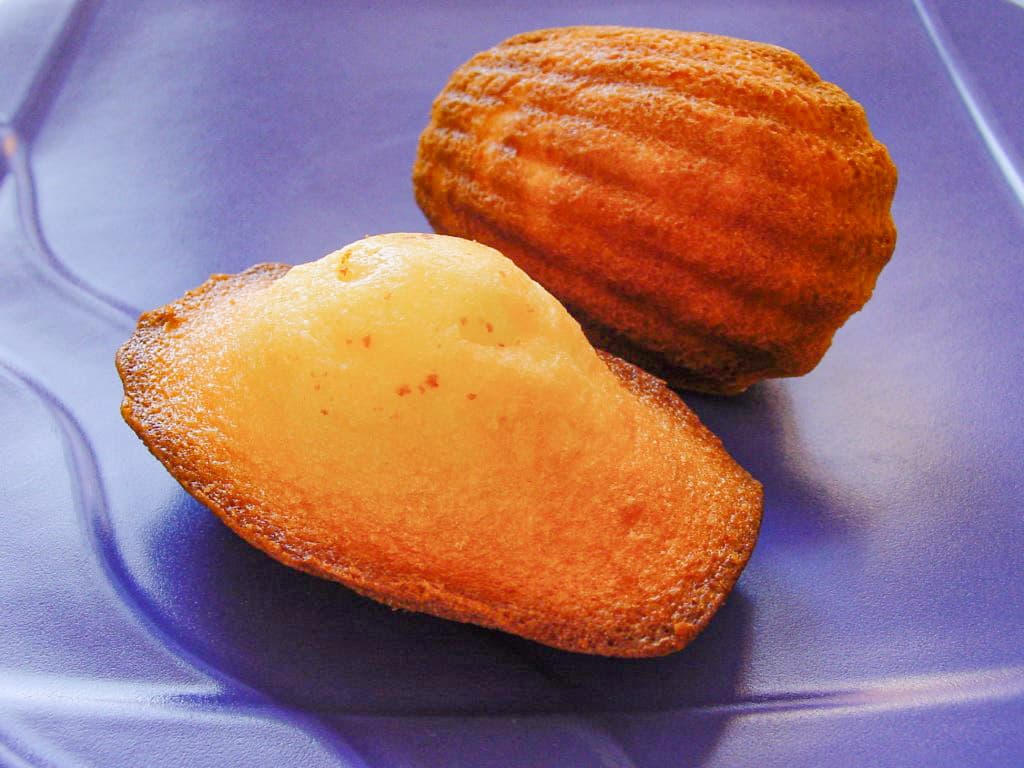 The passage everybody cites is at the start of In Search of Lost Time, and it is worth being accurate about it because it is usually misremembered.
The narrator, an adult, is given tea and a madeleine by his mother on a winter afternoon. He is not thinking about his childhood. He tastes it and is overcome by a pleasure whose cause he cannot locate. He tries the second mouthful, then a third, and finds the effect diminishing rather than growing.
Then he stops drinking, works at it deliberately, and the memory comes: his aunt Léonie at Combray, giving him a madeleine dipped in her tea on Sunday mornings. And the whole town assembles out of it, streets, gardens, the church, the people.
Three things in that account get dropped in the popular version. It is a taste and smell together, not a smell alone. The recall is not instantaneous; it takes real effort and several attempts. And the diminishing returns are explicit: repeating the stimulus weakens it, which anyone who has ever tried to re-experience a smell will recognise.
Proust's own term for what happens is involuntary memory, mémoire involontaire, set against the deliberate kind that produces facts and dates and nothing else.
Psychologists took the idea seriously from the 1970s onward and the findings are reasonably consistent.
Memories cued by odours are reported as more emotional and as producing a stronger sense of being brought back, of reliving rather than recalling, than memories cued by the same items presented as words or pictures.
They are also older. Verbal and visual cues tend to return memories from a person's teens and twenties, the reminiscence bump. Odour cues skew markedly earlier, into the first decade of life, which is roughly the period most of us have the least deliberate access to.
And they are less rehearsed. A memory you have told as a story a hundred times has been reshaped by the telling. A memory nothing has cued since it was laid down has not.
Smell recognition itself is unreliable in a different way. People are poor at naming odours even when they clearly recognise them, and that failure of naming sits alongside a strong sense of familiarity. The knowing and the saying come apart.
Every property that makes olfactory memory extraordinary also makes it unrecordable.
You cannot store a smell. There is no format, no file, no capture device that a family can use, and the objects that carried the smell lose it: clothes are washed, houses are sold, a perfume is reformulated and no longer smells the way it did in 1994. The trigger degrades even when everything else survives.
Nor can it be summoned. Involuntary memory is involuntary in both directions: it arrives unbidden and it cannot be commanded. The one category of memory that returns the past most completely is the one nobody can schedule.
Which leaves an odd division of labour. The smell will do something no record can do, on a day nobody can predict, perhaps once. What it will not do is arrive for somebody who was not there.
The madeleine did not give Proust's narrator the facts. It gave him the feeling, and the facts assembled behind it because he had them.
A grandchild who never met their great-grandmother gets no such assembly. The smell of her house, if it survived at all, means nothing to them: there is nothing behind it to come up. What can reach them is the ordinary, deliberate, unglamorous material the narrator already possessed. Her aunt's name. The shape of a Sunday. What was said in that kitchen and by whom.
That is the half a family can actually control, and Confinity is where it goes. The rest is a drawer in a house you no longer own, opening for somebody else.
The passage everybody cites is at the start of In Search of Lost Time, and it is worth being accurate about it because it is usually misremembered.
The narrator, an adult, is given tea and a madeleine by his mother on a winter afternoon. He is not thinking about his childhood. He tastes it and is overcome by a pleasure whose cause he cannot locate. He tries the second mouthful, then a third, and finds the effect diminishing rather than growing.
Then he stops drinking, works at it deliberately, and the memory comes: his aunt Léonie at Combray, giving him a madeleine dipped in her tea on Sunday mornings. And the whole town assembles out of it, streets, gardens, the church, the people.
Three things in that account get dropped in the popular version. It is a taste and smell together, not a smell alone. The recall is not instantaneous; it takes real effort and several attempts. And the diminishing returns are explicit: repeating the stimulus weakens it, which anyone who has ever tried to re-experience a smell will recognise.
Proust's own term for what happens is involuntary memory, mémoire involontaire, set against the deliberate kind that produces facts and dates and nothing else.
Psychologists took the idea seriously from the 1970s onward and the findings are reasonably consistent.
Memories cued by odours are reported as more emotional and as producing a stronger sense of being brought back, of reliving rather than recalling, than memories cued by the same items presented as words or pictures.
They are also older. Verbal and visual cues tend to return memories from a person's teens and twenties, the reminiscence bump. Odour cues skew markedly earlier, into the first decade of life, which is roughly the period most of us have the least deliberate access to.
And they are less rehearsed. A memory you have told as a story a hundred times has been reshaped by the telling. A memory nothing has cued since it was laid down has not.
Smell recognition itself is unreliable in a different way. People are poor at naming odours even when they clearly recognise them, and that failure of naming sits alongside a strong sense of familiarity. The knowing and the saying come apart.
Every property that makes olfactory memory extraordinary also makes it unrecordable.
You cannot store a smell. There is no format, no file, no capture device that a family can use, and the objects that carried the smell lose it: clothes are washed, houses are sold, a perfume is reformulated and no longer smells the way it did in 1994. The trigger degrades even when everything else survives.
Nor can it be summoned. Involuntary memory is involuntary in both directions: it arrives unbidden and it cannot be commanded. The one category of memory that returns the past most completely is the one nobody can schedule.
Which leaves an odd division of labour. The smell will do something no record can do, on a day nobody can predict, perhaps once. What it will not do is arrive for somebody who was not there.
The madeleine did not give Proust's narrator the facts. It gave him the feeling, and the facts assembled behind it because he had them.
A grandchild who never met their great-grandmother gets no such assembly. The smell of her house, if it survived at all, means nothing to them: there is nothing behind it to come up. What can reach them is the ordinary, deliberate, unglamorous material the narrator already possessed. Her aunt's name. The shape of a Sunday. What was said in that kitchen and by whom.
That is the half a family can actually control, and Confinity is where it goes. The rest is a drawer in a house you no longer own, opening for somebody else.
The anatomy, briefly
What Proust actually wrote