Comparison
Confinity vs Notion.
Notion brings pages, databases and collaboration together for work and personal projects. Its AI Meeting Notes also supports live transcription and uploaded audio.We'll tell you honestly when the other one is the better choice for you.
IHonest summary
Notion can hold family stories, not just work. Its meeting notes, sharing and export tools may already suit you. Confinity focuses on a journal, original recordings and family context, with linking and sharing as separate choices. Check the actual recovery and export limits before trusting either service with your only copy.
IIReal differences
- Built for
- All-purpose work: teams and individuals
- Confinity: a family's private memory.
- Family context
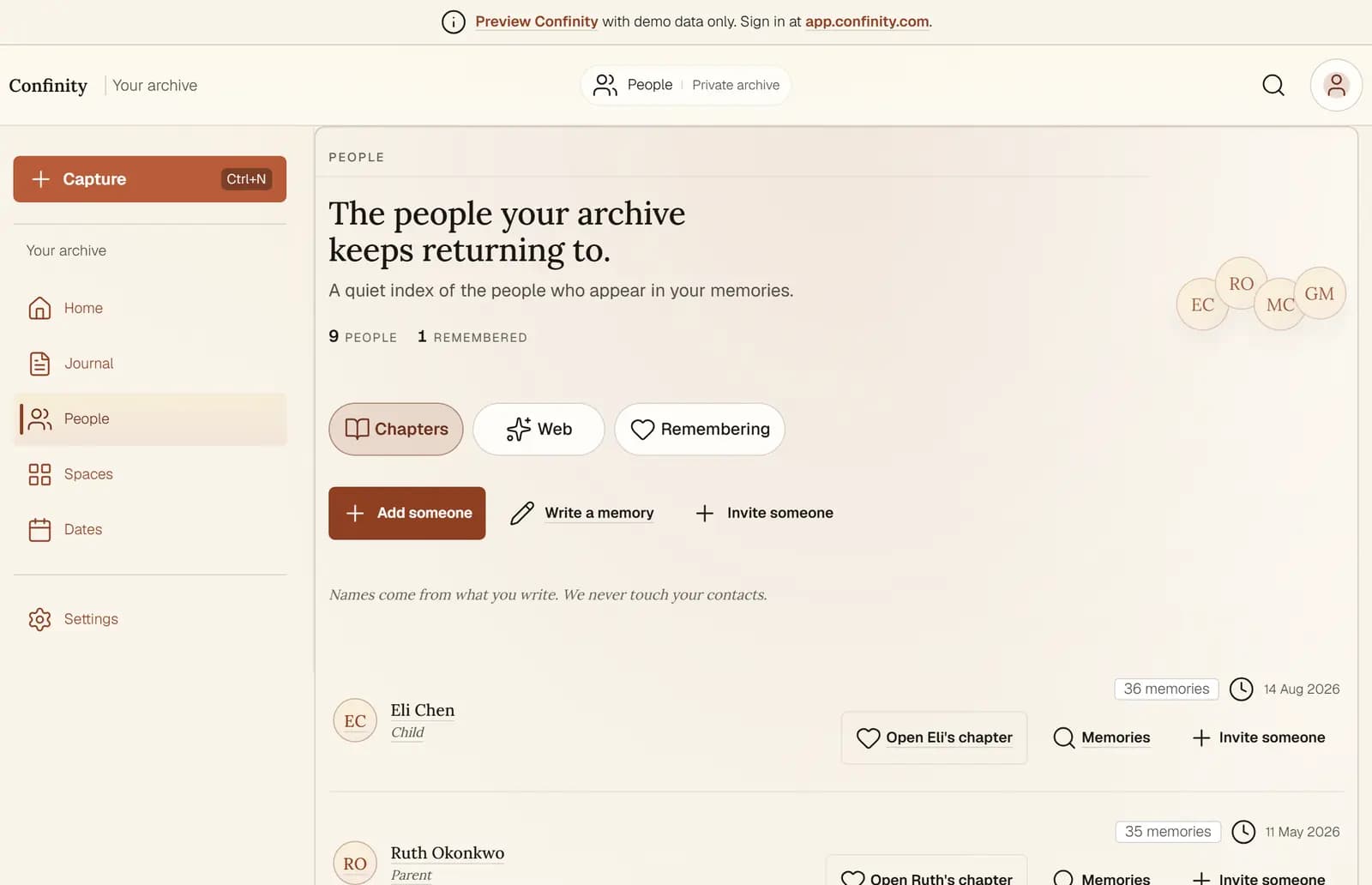
- Confinity links entries to people and spaces you choose
- Naming a person is not an invitation or a reading right.
- Notion audio guide
- Live transcription and existing audio uploads
- Plan, device and consent requirements apply. Confinity's network transcription is not currently enabled.
- Confinity export limits
- Browser backup and account-export requests have different coverage
- Neither is a verified complete copy of every original.
- Notion export guide
- HTML, Markdown and CSV; PDF support varies by scope and plan
- Check the guide for attachments, access limits and workspace export requirements.
- Confinity remembrance
- A dedicated place to remember someone
- Drafts start private. Successor handover and printed Yearbook fulfilment remain unqualified or unavailable.
- Notion pricing
- Free and paid per-member plans
- Check the current currency, billing period and AI eligibility. Compare Confinity's stated plan limits separately.
'A story can name someone without giving them access.'Confinity principle
IIIWho should pick which
Who should pick